
South Korea transport · Updated November 2026
How to Get Around South Korea: Trains, Buses, Flights & Jeju
Use trains for the main city-to-city journeys, buses for places the railway doesn’t reach, and a transport card for everyday metro and bus trips. Add a flight for Jeju—and decide separately whether you want to drive once you arrive.
I flew into Seoul, took trains to Gyeongju and then Busan, flew to Jeju, and flew back to Seoul before leaving Korea. On Jeju, I hired a car through Discover Cars. That’s one practical route through the country, but you don’t need to follow it: this guide also covers other destinations, bus travel, rail passes and getting around without a car.
Affiliate disclosure: Some flight, car-hire and Wise links are affiliate links. If you use them, I may earn a commission at no extra cost to you.
Which transport should you use?
Start with the journey between your accommodation and your next stop, rather than comparing ticket prices alone. A cheaper departure from the other side of Seoul—or a station outside your destination—can add another transfer, taxi fare and hour to your day.
| Option | When it makes sense | What to check |
|---|---|---|
| KTX / SRT | Long mainland journeys between cities served by high-speed rail. | Departure station, arrival station, seat availability and the transfer at each end. |
| Other trains | Routes served by slower services, or a lower fare when the extra journey time suits you. | The actual timetable: the cheapest train may be much slower or less frequent. |
| Express / intercity bus | Smaller towns, regional trips and direct connections that would be awkward by rail. | The exact terminal, traffic allowance, luggage rules and ticket collection instructions. |
| Domestic flight | Jeju, or a longer journey where the full airport-to-airport plan saves time. | Airport codes, checked-bag charges, airport transfers and separate-ticket connection risk. |
| Metro / local bus | Moving around cities and reaching many attractions without a car. | Your final stop, last service and the route back—especially outside the cities. |
| Rental car / taxi / tour | Scattered sights, rural detours, luggage-heavy transfers or a day with limited bus connections. | Total cost, driving eligibility, parking and whether a simpler public-transport route exists. |
My route: Seoul → Gyeongju → Busan → Jeju → Seoul
I used trains for the mainland part of this trip, then flights to reach Jeju and return to Seoul. If you want the same sequence, my two-week South Korea itinerary explains how to divide your time. Here are the transport decisions to make for each leg.
- Arrive in SeoulI flew into Seoul
Choose your airport transfer after checking your accommodation’s nearest station or bus stop. Seoul Station is useful, but it isn’t the closest arrival point for every neighbourhood.
- Seoul → GyeongjuI took the train
Allow for the onward journey from the high-speed station to your accommodation. The historic centre is not directly outside the station; check the station pin and a bus or taxi route before travelling.
- Gyeongju → BusanI took the train
Compare the full journey from your hotel to your next base. Busan Station and a beach neighbourhood are different destinations, so include the local transfer.
- Busan → JejuI flew, then hired a car
Match your car pickup time to the flight and the supplier’s opening hours. I booked my Jeju car through Discover Cars; the practical checks are in the rental section below.
- Jeju → Seoul → homeI flew back to Seoul, then flew out
Check whether your domestic arrival and international departure use the same airport. For separate tickets, leave a substantial buffer; returning to Seoul the day before is worth considering.
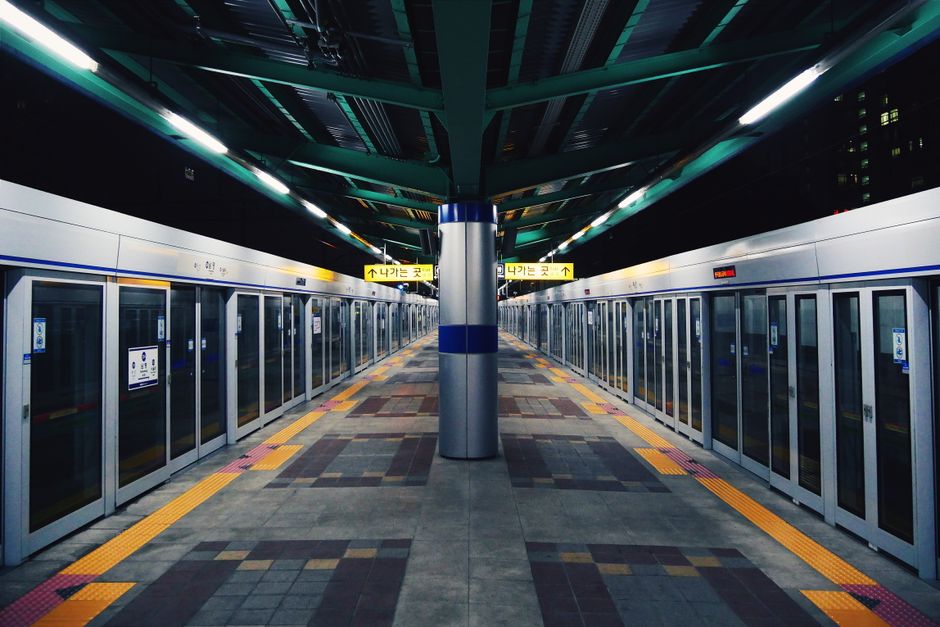
Trains: choosing a service and booking a seat
KTX is the obvious place to start for many longer mainland trips. SRT is another high-speed option, particularly worth comparing when Suseo in southeast Seoul is convenient. Check the station printed on your chosen service: don’t assume every fast train leaves from Seoul Station.
For a shorter journey or a slower itinerary, compare the other trains shown in the timetable too. The right choice depends on the departure time, total travel time and fare—not just whether the service is branded high-speed.
- Search your actual stations and date. Use the official KORAIL site or KORAIL+ app for KORAIL services. Compare SRT separately if it fits your route.
- Book fixed travel days when reservations open. Normal KORAIL bookings open one month ahead from 07:00 Korean time; holiday arrangements can differ. Busy weekends and national holidays deserve more advance planning.
- Check passenger details and ticket conditions before paying. Read the change and cancellation rules, then keep the issued ticket and booking reference accessible. Follow the operator’s ticket-display instructions rather than assuming a screenshot is valid.
- Plan the station arrival. Leave time to find the platform with your luggage. Check the carriage and seat on your ticket, and allow extra time if you need a lift or assistance.
Check official train times & fares →
Is a KORAIL Pass worth it?
Price your individual train journeys first, then compare the pass that covers those travel days. The current KORAIL Pass offers 2, 3, 4 or 5 flexible travel days within 10 days. You can make up to two seat reservations per day; the pass does not include SRT or ordinary subway travel.
For just Seoul–Gyeongju–Busan, two individual tickets are a sensible starting comparison. A busier rail itinerary may favour a pass, but a pass is not a guarantee of a seat on every departure. PASS+ adds a prepaid transport/payment function; that is not the same as unlimited free local transport. Check the current pass prices and conditions against your dates.
Buses and routes beyond Seoul–Busan
Don’t overlook buses just because Korea has excellent trains. Express and intercity buses reach places the railway doesn’t, and a direct bus can beat a train journey with several connections. Express services generally make fewer intermediate stops; intercity routes cover more regional destinations.
For Sokcho and a Seoraksan trip, look at the bus connections and your onward journey to the park. For Jeonju, Gangneung, Andong, Suncheon or Yeosu, compare rail and bus options for your exact starting point. For smaller towns or a multi-stop rural trip, check the last connection home before committing to a day’s sightseeing.
Use the official express and intercity bus guide for current booking platforms. Check the terminal name carefully: an express terminal and an intercity terminal may be in different places. Your booking may require collecting or printing a ticket before boarding.
When a tour or taxi is worth comparing
If a day involves several scattered temples, coastal stops or a trailhead with infrequent buses, compare the cost of a tour or taxi with the time you would spend connecting. For a simple city journey, public transport is usually the first option I’d investigate. For a remote stop, check how you’ll get back before being dropped off.
Local transport: T-money, EZL and the Climate Card
T-money or EZL for a multi-city trip
A rechargeable transport card is convenient for local buses and metros. T-money and EZL are sold and recharged at participating convenience stores nationwide. They are separate from your reserved intercity train ticket or domestic flight.
Keep some Korean won available for top-ups; don’t assume your overseas bank card will work at every reload point. Follow the card-reader instructions when boarding and leaving, and check your balance before a longer outing. The transport-card guide explains current card options and purchase locations.
Climate Card for several days in Seoul
The short-term Climate Card is worth comparing if you’ll make lots of journeys inside its coverage area. It offers 1-, 2-, 3-, 5- and 7-day options. It is not a nationwide pass: check that your stations and buses are included before choosing it.
Seoul’s newer machines on subway lines 1–8 accept international Visa and Mastercard payments for short-term Climate Card purchases and recharges, with a service fee. This does not mean all T-money top-ups accept foreign cards. The old 30-day prepaid Climate Card ended in August 2026; visitors should look at the short-term product, not assume the resident-focused replacement is available to them. See Seoul’s current Climate Card guidance.
Maps, taxis and staying connected
Set up Naver Map or KakaoMap before you need to navigate with luggage. Save accommodation addresses in Korean as well as English, and compare walking, bus and metro directions. For taxis, an app aimed at overseas visitors such as k.ride can be useful; check the quoted fare or charging basis before confirming.
Choose a South Korea eSIM before arrival if you want mobile directions immediately. For spending, compare Wise’s card and conversion fees with your own bank. A payment card and a local transport card serve different jobs, so carry a backup payment method too.
Airport transfers: AREX, buses and the right airport
At Incheon, the AREX Express runs nonstop to Seoul Station, taking about 43 minutes from Terminal 1 or 51 minutes from Terminal 2. The all-stop train serves intermediate stations, which may give you an easier connection to your accommodation. The express train needs its own ticket. Check the official AREX service information for your terminal and departure.
An airport bus may be more convenient if it stops near your hotel; a taxi may make sense with heavy luggage, a group or a late arrival. Compare the complete trip, including any stairs, walking and transfers—not just the airport train’s headline journey time.
Gimpo and Incheon are different airports
When booking a Jeju flight and an international departure, read the airport names and codes on both tickets. A domestic arrival in Seoul does not mean you are already at the airport for your flight home. Include baggage collection, any cross-city transfer, check-in deadlines and disruption time. Separate tickets may leave you responsible for a missed connection.
Jeju: flights, rental cars and travelling without a car
I flew from Busan to Jeju and then from Jeju back to Seoul. That lets you continue south through the mainland rather than returning to Seoul just to reach the island. Compare the options in my guide to reaching Jeju from Seoul or Busan.
Compare flight totals after adding the luggage you actually need. Include the airport transfer at both ends and check the rental desk’s hours before choosing a late arrival. If you prefer travelling by sea, check a currently operating ferry route, departure port and sailing conditions directly; don’t assume a mainland train connects neatly with a ferry.
Hiring a car on Jeju: what I booked and what to check
I hired my Jeju car through Discover Cars. It’s a booking platform, so check the actual rental supplier and that supplier’s conditions before paying. A low headline price is only useful if you qualify to collect the car and the pickup arrangements fit your flight.
- Check your documents before you leave home. Confirm the supplier accepts your licence and International Driving Permit. Bring the required original licence, valid IDP, passport and payment card; check age, driving-experience and vehicle-category rules for your booking.
- Compare the total and the cover. Look at the deposit, excess, exclusions, fuel policy, extra-driver charges and cancellation terms. Check how any booking-platform protection works alongside the supplier’s cover.
- Read the pickup instructions. Your rental may use a shuttle to an off-airport office. Allow time for the shuttle, paperwork and vehicle inspection rather than treating the landing time as the driving-away time.
- Leave a return buffer. Include refuelling or charging, the vehicle check and the shuttle back to departures. Keep photos of the car’s condition and follow the agreed return instructions.
Compare Jeju rental cars on Discover Cars →
Read my Jeju Airport car pickup and return guide before booking. The official Jeju transport guide also explains the island’s rental and transport arrangements.
Can you visit Jeju without driving?
Yes. Build your days around bus connections and a manageable group of sights, then use a taxi or organised day trip where it saves a difficult transfer. A car-free itinerary works better when you choose your base around the journeys you’ll actually make, rather than trying to cross the whole island repeatedly.
My Jeju car versus bus and taxi comparison helps with that decision. You can also compare Jeju accommodation areas before committing to a transport plan.
What to book before your trip
- Put your overnight stops in order. Choose the route before buying a pass. My Seoul–Gyeongju–Busan–Jeju itinerary is one starting point; leave room for other regions if they matter more to you.
- Reserve the journeys that fix your schedule. Prioritise important train or bus departures, Jeju flights and a rental car if you need one. Check change terms before choosing the cheapest fare.
- Match accommodation to your transport. A slightly cheaper hotel may add a long daily transfer. Save the address and arrival instructions before travel day.
- Prepare the local essentials. Set up a map app and data, keep a backup payment method, and get your transport card when you arrive. Save booking references somewhere accessible if your mobile data stops working.
- Check the next journey the evening before. Confirm the station or terminal, departure time, baggage rules and onward connection. For rural sightseeing, check the return service too.
The easy mistakes to avoid
Booking the right city but the wrong station or airport can create a costly transfer. Check the map pin before paying. Buying a rail pass before pricing your route can also add cost without helping your actual travel days.
Packing too many stops into a day is another trap, especially on Jeju or a regional bus trip. Leave time for lunch, missed connections and the walk from the stop to the attraction. If you have limited mobility or heavy luggage, check lifts and step-free access at the stations you plan to use.
South Korea transport questions
Can I travel around South Korea without renting a car?
Yes. Trains, intercity buses and city transport cover a broad range of trips. For rural sights or Jeju, choose accommodation and daily routes carefully and compare taxis or tours for the awkward sections.
Is the train always better than the bus?
No. A fast train is useful on major rail routes, but a direct bus may suit a smaller destination better. Compare the full journey from your accommodation, including the location of the arrival station or terminal.
Does T-money cover KTX or SRT?
No. Use your transport card for supported local transport and book an intercity train ticket separately. A Climate Card is also not a nationwide rail pass.
Should I buy a KORAIL Pass?
Only after comparing its price with the individual journeys you plan to take. Check qualifying trains, travel-day rules and seat reservations. SRT and ordinary subway journeys are not included.
Can I return from Jeju on the day I fly home?
It may be possible, but check both airports, the ticket arrangement and the connection time. Separate flights and an airport change increase the consequences of a delay. An overnight buffer in Seoul is worth considering.
Useful official transport information
- VISITKOREA: train travel and reservations
- Seoul: foreign-card payment at ticket machines
- VISITKOREA: useful travel apps
- Korea Tourism Organization: driving documents and rental requirements
Check the operator’s timetable and fare for your travel date, particularly around public holidays. Card coverage and rental conditions can change.
Plan the rest of your Korea trip
Use the Korea vegan food guide to plan meals along the route, and check these guides for places to stay and things to do.