
Backpacking Is Life · Updated September 2026
Is the JR Pass Worth It in 2026? The Honest Math
For international money, compare Wise for holding and converting currencies. Conversion, card and ATM fees apply; card availability depends on where you live.
Compare WiseCheck Wise card availability for your home country before ordering a card.
We may receive a commission or referral benefit through our links. This does not make an account suitable for everyone.
Since the 2023 price hike, the JR Pass stopped being an automatic yes. Here are the actual fares, worked examples for the routes most travellers actually take, and a clear answer for your trip.
⚠️ 2026 price change: From 1 October 2026, JR Pass prices go up — but only at overseas sales agents (Klook, JTB, travel agencies). The 7-day ordinary pass rises ¥50,000 → ¥53,000, the 14-day ¥80,000 → ¥84,000, and the 21-day ¥100,000 → ¥105,000 (Green Car 7-day ¥70,000 → ¥74,000). The official JAPAN RAIL PASS online reservation site is holding the current prices for a limited window (end date not yet announced). So if you want an agent’s convenience — AUD pricing, English, seat-reservation help — lock it in before 1 October; you can buy now and activate any time within 90 days. Buying after October? Compare the official site too, since it may stay cheaper.
The 30-second answer
The 7-day pass costs ¥50,000 (~US$340 / AU$520). Whether it beats individual tickets depends on one thing — how far you’re travelling. The break-even is roughly a multi-city week that reaches Hiroshima or beyond, not a single return trip.
- Tokyo + Kyoto + Osaka only: Skip the pass. Individual tickets cost ~¥29,500.
- Tokyo + Kyoto + Osaka + Hiroshima: Pass wins by ~¥10,000+.
- Tokyo + Kanazawa + Kyoto + Hiroshima loop: Pass wins clearly.
- Region-specific trip (Kansai only, or Tokyo + nearby): Look at a regional pass instead — they’re cheaper and weren’t price-hiked.
On this page
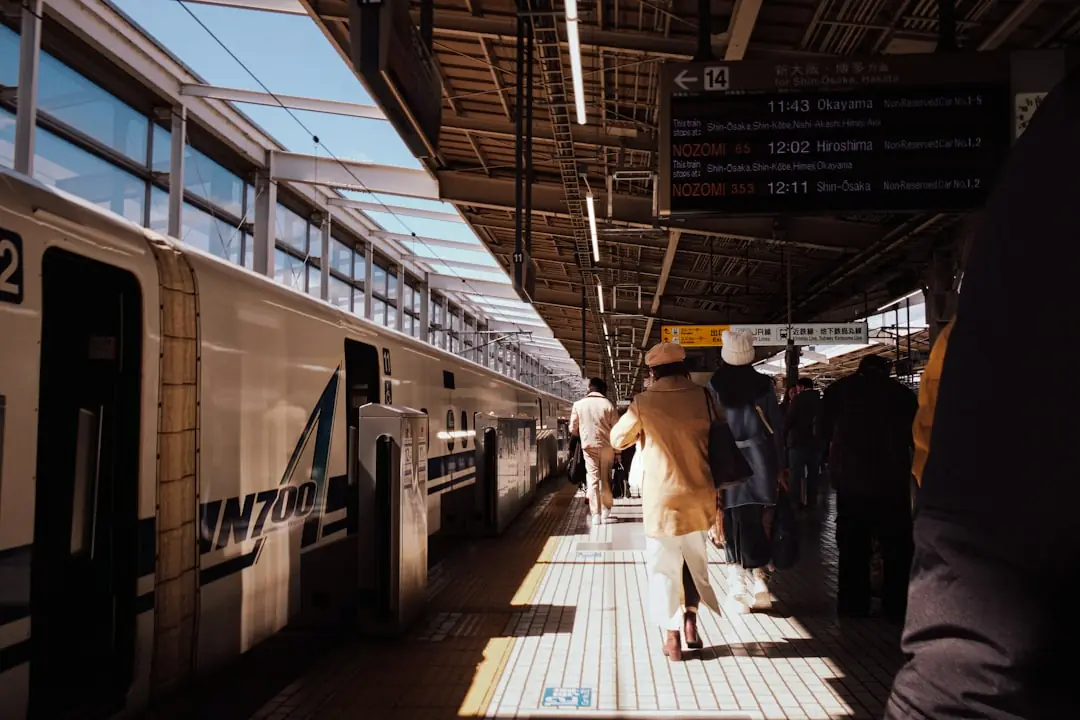
Until October 2023, the JR Pass was a no-brainer. The 7-day cost ¥29,650 (~AU$310) and it paid for itself with one Tokyo-Kyoto round trip. Then JR raised the price by about 70% overnight, and the math changed completely. Old blog posts saying “just buy the pass” are now actively misleading.
The right question in 2026 is no longer “should I get the pass?” — it’s “do my actual routes cost more than ¥50,000 in individual tickets?” Below is the math, with current Shinkansen fares for the routes most travellers actually take.
Current JR Pass prices
Official ordinary-class prices, valid until the agent increase on 1 October 2026:
| Pass | Ordinary (now / official site) | Agents from 1 Oct 2026 | Approx (USD / AUD) |
|---|---|---|---|
| 7-day | ¥50,000 | ¥53,000 | ~US$340 / AU$520 |
| 14-day | ¥80,000 | ¥84,000 | ~US$545 / AU$830 |
| 21-day | ¥100,000 | ¥105,000 | ~US$680 / AU$1,040 |
Green Car (first class) versions are ¥70,000 / ¥110,000 / ¥140,000 (the 7-day rises to ¥74,000 at agents from 1 October). Skip unless you’re tall or travelling during peak holidays — ordinary cars are already excellent. Children 6-11 pay half price.
You can buy and activate up to 90 days from purchase, so locking in the current agent price before October is possible even if your trip is later in the year. After 1 October, the official online reservation site is expected to hold the old price for a limited window, so it’s worth a quick price-check against the agents.
Check JR Pass on Klook (7, 14 or 21 days) →
The Shinkansen fares you’re comparing against
Before working out whether the pass is worth it, you need the individual ticket prices. These are one-way ordinary reserved-seat fares as of May 2026:
| Route | Hikari (included with pass) | Nozomi (faster, surcharge) | Time |
|---|---|---|---|
| Tokyo ↔ Kyoto | ¥14,170 | +¥4,960 surcharge | ~2h 40m / 2h 15m |
| Tokyo ↔ Osaka (Shin-Osaka) | ¥14,720 | +¥4,180 surcharge | ~3h / 2h 30m |
| Kyoto ↔ Osaka | ¥580 (local train) | — | ~15 min |
| Tokyo ↔ Hiroshima | ¥19,440 | +¥4,960 surcharge | ~4h 30m / 4h |
| Tokyo ↔ Kanazawa | ¥14,380 (Kagayaki/Hakutaka) | N/A on this route | ~2h 30m |
| Kanazawa ↔ Kyoto | ¥7,380 (Thunderbird) | — | ~2h 15m |
| Hiroshima ↔ Fukuoka (Hakata) | ¥9,830 (Sakura) | +~¥4,000 (Mizuho) | ~1h 10m |
You can pre-book individual Shinkansen tickets on Klook with English support, which is easier than navigating SmartEX if you don’t have a Japanese phone number:
5 worked examples for the routes most travellers actually take
Here’s what the math actually looks like for the most common itineraries. Every example uses the Hikari fare (included with the pass) — add Nozomi surcharges if you want the faster trains.
Example 1: The classic golden route
Tokyo → Kyoto → Osaka → Tokyo (7 days, with 4-5 nights spread between cities)
- Tokyo → Kyoto: ¥14,170
- Kyoto → Osaka (local): ¥580
- Osaka → Tokyo: ¥14,720
- Total: ¥29,470
Verdict: Skip the pass. You save ~¥20,500 (~US$140) on individual tickets. This is the #1 trip the JR Pass no longer suits.
Example 2: Tokyo + Kyoto with a Mt Fuji day trip
Tokyo → Kyoto → Tokyo + side trips on local JR lines
- Tokyo → Kyoto: ¥14,170
- Kyoto → Tokyo: ¥14,170
- Local JR rides in Tokyo (~¥3,000 over 5 days)
- Total: ~¥31,500
Verdict: Skip the pass. Use Suica/Pasmo for local Tokyo travel and book the Shinkansen separately.
Example 3: Adding Hiroshima to the classic route
Tokyo → Kyoto → Hiroshima → Osaka → Tokyo (7 days, faster pace)
- Tokyo → Kyoto: ¥14,170
- Kyoto → Hiroshima: ¥11,620
- Hiroshima → Osaka: ¥10,800
- Osaka → Tokyo: ¥14,720
- Total: ¥51,310
Verdict: Pass wins at today’s ¥50,000 price, just barely (~¥1,310 plus free local JR lines like the Yamanote and Osaka Loop, often another ¥3,000-5,000 of value). Note: at the agent price from 1 October (¥53,000), this one flips — you’d be better booking point-to-point.
Example 4: The “make the pass earn it” loop
Tokyo → Kanazawa → Kyoto → Hiroshima → Tokyo (7 days, rail-heavy)
- Tokyo → Kanazawa: ¥14,380
- Kanazawa → Kyoto: ¥7,380
- Kyoto → Hiroshima: ¥11,620
- Hiroshima → Tokyo: ¥19,440
- Total: ¥52,820
Verdict: Pass wins clearly. Save ¥2,820 plus all local JR access. This is the route the pass is now built for.
Example 5: Tokyo to Fukuoka and back via Hiroshima
Tokyo → Hiroshima → Fukuoka → Kyoto → Tokyo (7 days)
- Tokyo → Hiroshima: ¥19,440
- Hiroshima → Fukuoka: ¥9,830
- Fukuoka → Kyoto: ¥16,360
- Kyoto → Tokyo: ¥14,170
- Total: ¥59,800
Verdict: Pass wins comfortably. Save ¥9,800+ plus local JR access. If you want both Western Japan and Kyushu in a week, the pass is the right call.
The simple rule: If your 7-day itinerary doesn’t include Hiroshima or somewhere further (Kanazawa, Fukuoka, Sendai, Aomori), the pass almost certainly isn’t worth it. Buy individual tickets and pocket the savings. And from 1 October, the higher ¥53,000 agent price pushes the borderline cases (like Example 3) firmly into “skip” territory.
Whichever way your math landed, here’s how to book it cheaply
✓ Pass wins (Hiroshima or beyond)
Lock in the agent price before it rises on 1 October, or compare the official site.
Price the JR Pass on Klook →✓ Skip the pass (most trips)
Book point-to-point Shinkansen in English and pocket the difference.
Book single tickets on Klook →The Nozomi surcharge — and why it matters
Until October 2023, the JR Pass couldn’t be used on Nozomi or Mizuho — the fastest Shinkansen services. That’s the catch most old guides still describe.
Since October 2023, pass holders can use Nozomi/Mizuho — but with a surcharge per leg. Roughly:
- Tokyo → Kyoto/Osaka: ¥4,180–4,960
- Tokyo → Hiroshima: ¥4,960
- Osaka → Hiroshima (Mizuho): ¥3,000–4,000
The time saved is meaningful. Tokyo → Osaka on Hikari is ~3 hours; on Nozomi it’s ~2h 30m. Across multiple legs that adds up to half a day. If you’re on a tight 7-day schedule and using the pass mostly for the convenience of not pre-booking, paying the Nozomi surcharge defeats half the value proposition — you’re now paying ¥50,000 plus ¥10,000–20,000 in surcharges.
Practical advice: If you’re going to want Nozomi for every leg, you might as well buy individual Nozomi tickets and skip the pass. The pass works best when you’re happy taking Hikari (only 20-30 minutes slower) and using the saved fare cost as the value.
Regional passes — the option most travellers miss
Here’s the thing most “is the JR Pass worth it” articles skip: JR’s regional passes weren’t price-hiked in 2023. They’re still excellent value for region-specific trips.
JR West Kansai Wide Area Pass — 5 days, ~¥12,000
Covers Kyoto, Osaka, Kobe, Himeji, Hiroshima, Okayama. If your trip is Kansai-focused with a Hiroshima day trip, this beats the whole-Japan pass dramatically. Roughly half the price for everything you’ll actually use.
JR East Tohoku Pass — 5 days, ~¥30,000
Covers Tokyo + the entire northeast (Sendai, Aomori, Akita, Nikko). Cheaper than the whole-Japan pass if your trip stays north of Tokyo.
The combo strategy
For Tokyo + Kansai trips, buy a JR West Kansai Wide Area Pass (~¥12,000) + individual Tokyo↔Kyoto Shinkansen return (~¥28,000) = ~¥40,000 total. Beats the ¥50,000 whole-Japan pass by ¥10,000 and gives you the same network access.
Where to buy (and what to avoid)
Two legitimate options for the whole-Japan JR Pass:
- Official site (japanrailpass.net) — Buy directly from JR Group. Pay in yen. Exchange voucher at any major JR station within 90 days. The newer QR-based digital pass option lets you reserve seats in advance via JR-CENTRAL’s online system, which is genuinely useful. It’s also holding the pre-October prices for a limited window, so from 1 October it can be the cheapest place to buy if you’re comfortable paying in yen.
- Authorised resellers (Klook, JTB, HIS, KKday) — Pay in AUD or USD, get an exchange voucher emailed, redeem at JR station on arrival. Slightly more expensive due to currency margin, and their prices rise on 1 October — but easier if you don’t want to pay an international card fee, and the same price as the official site right now. Klook’s AU site handles the AUD pricing cleanly.
One important note on eligibility: You must be entering Japan on a Temporary Visitor stamp (the standard 90-day tourist permission). Long-term residents, working-visa holders, and people using a Japanese passport aren’t eligible. JR staff check the stamp when you exchange the voucher.
Your full Japan transport setup
Even if you buy a JR Pass, it doesn’t cover everything. Most travellers want a combination:
The complete kit
- JR Pass — if the math above works for your route. Otherwise individual Klook Shinkansen tickets.
- Suica/Pasmo IC card — for Tokyo metro, buses, vending machines, lockers. Add via Apple Wallet on iPhone (no physical card needed).
- eSIM — for maps and rail apps from the moment you land. Saily’s Japan plans start around US$4.
- A physical backup card — keep a second provider separate from your main card. Check the card network, fees and withdrawal limits; a different provider does not always mean a different card network.
- Travel money: Ubank is our recommendation for eligible Australian readers. We recommend Wise for international readers where its card is available. Check local fees and keep a physical backup card plus cash.
Ubank $30 signup bonus: eligible new customers must join by 24 October 2026 and enter AFWLLL7 on the About you screen. Make five eligible card purchases that settle within the first 30 days. Both participants must be 18+; customers who closed all their Ubank Spend and Save accounts in the preceding 12 months are excluded. Allow up to 45 days after meeting the requirements for payment. Full offer terms.
Quick note on cash: many small restaurants, shrines, ryokan and ticket machines still need yen. Start with a Seven Bank ATM in 7-Eleven, check the on-screen fee and choose JPY rather than home-currency conversion. Our recommendation is Ubank for eligible Australians and Wise for international readers where available. Ubank charges no fee of its own for overseas purchases or ATM withdrawals; Wise conversion and withdrawal fees depend on where your card was issued. Local ATM fees and card limits can apply. For the full breakdown, see the Japan ATM guide.
If you’re still planning the route, see the 10-day Tokyo-Kyoto-Osaka itinerary for the classic route, or cheap Japan domestic flights for the long-haul alternatives (Fukuoka, Sapporo, Okinawa).
Do the math, then build the kit
If your route adds up to more than ¥50,000 in Shinkansen tickets, the pass wins — lock in the agent price before October or check the official site. If not, book point-to-point and pocket the difference. For travel money, our pick is Ubank for eligible Australians, or Wise for international readers where its card is available. Check conversion costs, ATM fees and local eligibility before applying.
Buy JR Pass on Klook → International readers: Explore Wise → Australians: Ubank · $30 offer · AFWLLL7
FAQ
Is the 7-day JR Pass worth it for Tokyo, Kyoto and Osaka?
No. That classic loop costs ~¥29,500 in individual tickets — well below the ¥50,000 pass. You’d save ~¥20,000 (~US$140) buying point-to-point.
Can I use Nozomi with the JR Pass?
Yes since October 2023, but with a per-segment surcharge (~¥4,180–4,960 between Tokyo and Kansai). Without the surcharge, you’re limited to Hikari and Kodama — 20-30 minutes slower on the Tokyo-Osaka run.
When does the pass actually pay off?
Roughly when your 7-day route includes Tokyo + something past Kyoto/Osaka (Hiroshima, Kanazawa, Fukuoka, Sendai). A pure round trip between Tokyo and Hiroshima alone — ~¥38,880 — doesn’t quite make it; add a third or fourth Shinkansen leg in the same week and you’re ahead. From 1 October, the higher ¥53,000 agent price nudges that break-even point a little further out.
Will the October 2026 price increase affect me?
Only if you buy through an overseas agent (Klook, JTB, a travel agency) on or after 1 October 2026 — those prices rise about 5-6%. The official JAPAN RAIL PASS online reservation site is holding the current prices for a limited window, so buying online direct can sidestep the increase. Before October the prices are the same either way, so an agent is fine if you want AUD pricing and English support.
Is the 14-day pass ever worth it?
Rarely for first-time Japan trips. ¥80,000 means you need to cover that much in Shinkansen fares within 14 consecutive days. Most travellers spend longer blocks in each city on longer trips, which dilutes the per-day rail use. If you’re crossing the country multiple times in 14 days (Tokyo-Hokkaido-Tokyo-Kyushu-Tokyo), then yes. Otherwise probably not.
What’s the JR Pass alternative for a Kansai-only trip?
The JR West Kansai Wide Area Pass — ~¥12,000 for 5 days, covers Kyoto, Osaka, Kobe, Himeji, Hiroshima, Okayama. Less than a quarter of the whole-Japan pass for the routes you’d actually use.
Should I buy Green Car?
Usually no. Ordinary Shinkansen seats already have more legroom than international premium economy. Green Car (~40% more) makes sense if you’re 190cm+, travelling in peak season when ordinary cars fill up, or you really value the quieter cabin.
What if my plans change?
The pass is non-refundable once activated and partially refundable (minus 10% admin fee) before activation if you have the unused exchange voucher. Within the 90-day activation window, you can change your start date until you redeem it. Klook offers similar refund terms on unused vouchers.
Can I use the pass on the airport express?
Yes — Narita Express, Haruka (KIX-Kyoto/Osaka), and most JR airport limited expresses are included. That’s worth ¥3,070 + ¥3,440 for a Narita Express round trip alone.
Good to know: The October 2026 agent price increase was announced by JR Group on 9 April 2026 (effective 1 October 2026, overseas sales agents only). Individual JR East fares also rose ~7.1% in March 2026, so JR-East-operated routes (Kanazawa, Tohoku, Narita Express) are worth a quick re-check. Always confirm current prices and rules at the time of purchase, as rail products do change.
Keep reading
Disclosure: Some links are affiliate links — if you buy through them, Backpacking Is Life may earn a small commission at no extra cost to you. The math above is the math regardless of which link you click. Prices can change; always check current pricing at checkout.