
How to Get to Jeju Island 2026: Seoul, Busan, Flights and Ferries
For most travellers, Jeju is a flight destination – a quick one-hour hop from Seoul or Busan. The real choice is which mainland airport to use, what to do when you land, and whether a ferry is actually worth the extra logistics.
Fly to Jeju unless you specifically want a ferry journey. From Seoul, the normal answer is Gimpo Airport to Jeju Airport. From Busan, it is Gimhae Airport to Jeju Airport. Both are roughly one-hour flights that run all day and often cost less than a ferry cabin. There is no longer a direct passenger ferry from Busan to Jeju – if you want a sea crossing, it sails from Wando, Mokpo or Nokdong instead.
Best way to get to Jeju: quick comparison
Coming from Seoul
Gimpo is the domestic airport for Seoul-Jeju flights, and it’s one of the busiest air routes in the world, so departures run from early morning to late evening. Incheon can work for some international connections, but it is usually not the simplest city-to-Jeju move.
Coming from Busan
Busan’s airport is Gimhae. The flight is about an hour, with 300-400 departures a week across Jeju Air, Air Busan, Jin Air, Korean Air and Asiana. There’s no longer a direct Busan-Jeju ferry, so flying is the clean answer.
Thinking about a ferry
These southwestern ports are where the Jeju ferries actually run. Wando is the fastest crossing (about 2h40m); Nokdong is the cheapest. They’re rarely the cleanest answer from Seoul or Busan, though.
| Option | Best for | What to know |
|---|---|---|
| Seoul to Jeju flight | Most Seoul travellers | Use Gimpo Airport for the simplest domestic route – about a 1-hour flight, running all day. |
| Busan to Jeju flight | Travellers already in Busan | Use Gimhae Airport. Roughly 1 hour, very frequent, and there’s no direct Busan ferry to fall back on. |
| Incheon to Jeju flight | Some international connections | Only choose this if the connection genuinely works better than transferring to Gimpo. |
| Mainland ferry to Jeju | People who want the ferry experience | Sails from Wando, Mokpo, Yeosu or Nokdong – not Busan. Check live sailings first. |
| Train/bus to ferry to Jeju | Slow-travel itineraries | Usually too much hassle if your real goal is simply reaching Jeju. |
Which route should you choose?
Choose the cleanest route for where you already are. Jeju is worth the island time, not a heroic transfer day.
Best overall from Seoul
Use this if you are already in Seoul. It is the route with the least friction and the most natural domestic-airport setup.
Best overall from Busan
Use this if Busan is already in your route. With no direct Busan ferry running, the flight is much cleaner than trekking to a ferry port.
Best Korea route shape
This often keeps the mainland logical: train down to Busan, fly to Jeju, then fly back to Seoul or onward from Jeju.
Best if you hate flying
Make the ferry part of the trip, not a hidden shortcut. Confirm live routes, sailing times and port transfers before building the itinerary around it.
Best when you land
Jeju is spread out. Decide whether you are renting a car before booking accommodation, because it changes where you should stay.
Think twice
Once you add station transfers, port transfers, luggage and lost time, the cheaper-looking route can become the worse travel day.

Jeju route options in plain English
The flight is usually the easy part. The planning trap is mixing Seoul, Busan, ferries, island transport and accommodation without deciding which route type you are actually using.
Seoul route
Best for most people starting in Seoul. Avoid defaulting to Incheon unless the flight timing genuinely works better.
Busan route
Best if Busan is already part of your Korea itinerary. The one-hour flight is the simple island hop.
Ferry route
A ferry can be scenic, but it adds port choice, timetable risk and extra ground transport – and it doesn’t sail from Busan.
Jeju arrival
This is where most bad Jeju plans go wrong. Sort the island transport before choosing a remote base.
How to get from Seoul to Jeju
From Seoul, start with Gimpo Airport. Gimpo is the domestic-airport answer for most city-to-Jeju trips, and Gimpo-Jeju is one of the busiest flight routes on the planet, so seats are plentiful and departures run all day. The flight itself is only about an hour. Incheon is the big international airport, but it is not automatically the easiest airport once you are already staying in Seoul.
For the mainland part of your route, pair this with the Seoul things to do guide, South Korea transport guide and 2-week South Korea itinerary.

How to get from Busan to Jeju
From Busan, fly from Gimhae Airport. If Busan is already in your route, the simplest move is Busan city to Gimhae, then Gimhae to Jeju – about a one-hour flight with 300-400 departures a week across Jeju Air, Air Busan, Jin Air, Korean Air and Asiana. Importantly, the old direct Busan-Jeju passenger ferry has been suspended, so flying isn’t just the easiest option, it’s effectively the only direct one.
If Busan is part of your mainland route, use the Busan things to do guide and Seoul to Busan transport guide to avoid awkward backtracking.
Should you take a ferry to Jeju?
Take the ferry if the ferry is part of the travel experience. Do not take it because you assume it is automatically cheaper or simpler. And know the key fact up front: there is no direct passenger ferry from Busan to Jeju any more – the routes that still run leave from the southwestern ports. Wando is the fastest crossing at roughly 2h40m, and Nokdong (Goheung) is usually the cheapest at around US$24.
| Ferry situation | Who it suits | Reality check |
|---|---|---|
| Wando to Jeju | Fastest sea crossing | About 2h40m and the most popular tourist route. Compare live sailings on DirectFerries South Korea. |
| Mokpo / Nokdong / Yeosu | Ferry-focused routes | Mokpo runs a car ferry; Nokdong is the cheapest crossing (~US$24). Check the timetable before you move anything else. |
| Busan traveller | Fly instead | There’s no direct Busan-Jeju ferry any more, so fly from Gimhae – it’s about an hour. |
| With a vehicle | Special case | Car ferries run from ports like Wando and Mokpo. Check operator rules, port timings and insurance before relying on it. |
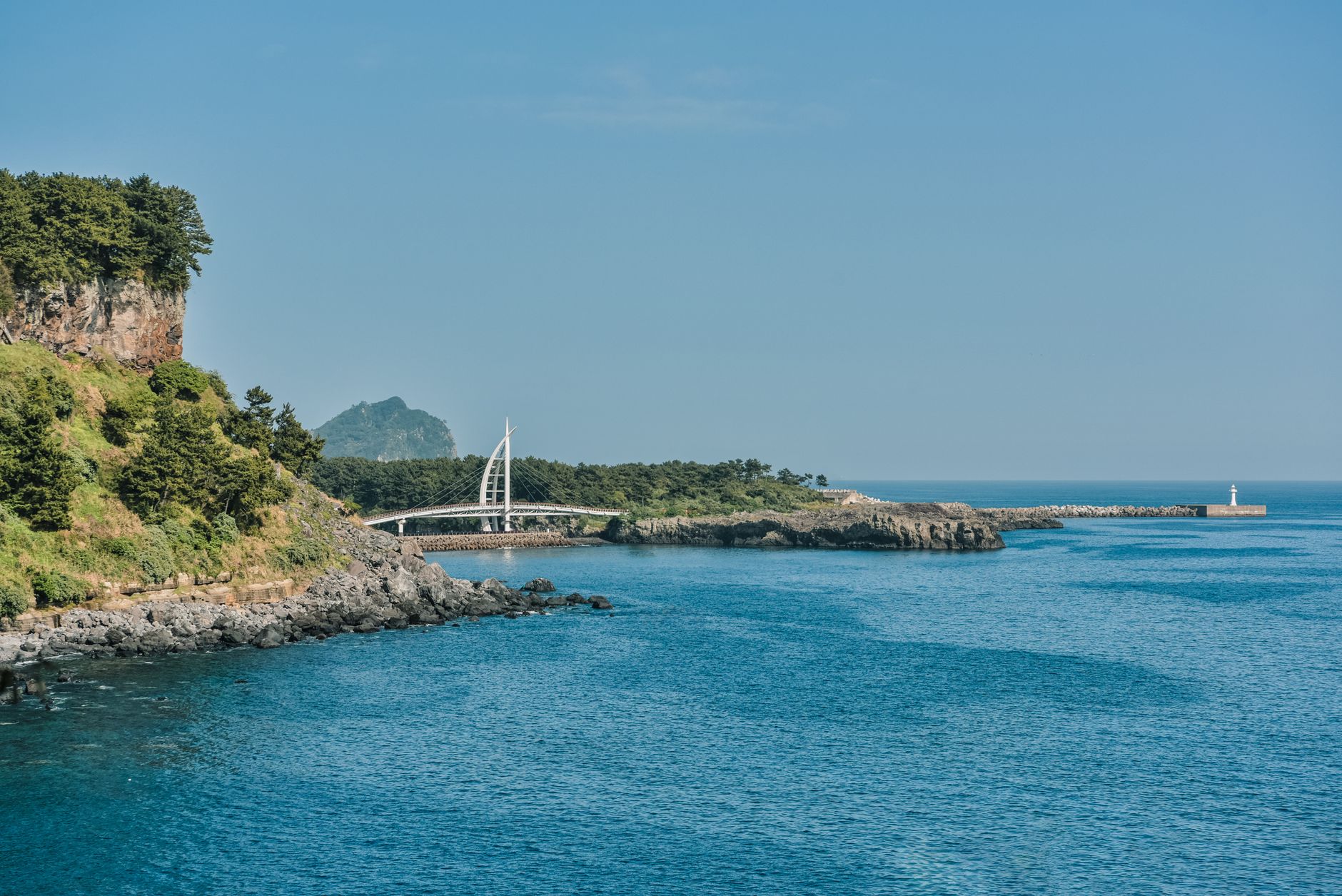
What to do when you land in Jeju
The island transport matters more than the mainland flight. Jeju sights are spread out, so your arrival plan should match your accommodation and the places you actually want to see. From the airport, a taxi is about ₩7,000 (10 minutes) to Jeju City or ₩40,000-60,000 (about 50 minutes) south to Seogwipo, and the big rental firms – Lotte, SK, AJ – run free shuttles to their pickup lots.
The official Jeju Airport car rental page and Lotte Jeju Auto House page are useful for understanding airport rental desks and shuttle logistics. If you are still route-planning, start with the things to do in Jeju guide.

Planning to drive around Jeju?
Check your licence and permit requirements first. Then compare rental availability for your flight arrival and return times, including the deposit and pickup shuttle.
Compare Jeju cars on DiscoverCarsWhat to book before you go
Book the pieces that remove arrival stress. You do not need to pre-book every meal or tiny activity, but flights, the first base, data and car/tour logistics are worth sorting early.
Flights and hotels
Use this for the Seoul/Busan to Jeju flight search and accommodation comparison. Book by route first, then price.
Compare Jeju FlightsJeju car rental
If you can legally drive in Korea and have the right licence/IDP setup, a car makes Jeju far easier.
Compare Jeju Rental CarsJeju accommodation
Choose Jeju City for simple arrival logistics or Seogwipo for a more scenic island base.
Search Jeju StaysBudget stays
Useful for solo travellers and backpackers who want hostels or cheaper guesthouse-style options.
Compare Jeju HostelsMobile data
Install your eSIM before the flight so maps, Kakao/booking apps and messages work when you land.
Get South Korea eSIM DataInsurance and money
SafetyWing can suit longer backpacker-style trips; Wise is useful as a backup travel-money option.
Get SafetyWing CoverOpen Wise for Travel MoneyFor flight timing, use the official airport pages as the final timetable check before you travel.
Where to stay after arriving in Jeju
For one or two nights, Jeju City is the practical answer. It keeps airport, food, buses, tours and car pickup/drop-off simple. For a more scenic first Jeju stay, Seogwipo is usually better, especially if you are renting a car.
Read the full where to stay in Jeju guide before locking in a base, because Jeju City, Seogwipo, Jungmun, Hamdeok, Aewol and Seongsan all suit different trip styles.
Easy ways to fit Jeju into your Korea trip
Do not treat Jeju like a casual afternoon side trip. It works best when you give it a few nights and decide the island transport early.
Simple Seoul + Jeju trip
Seoul, Busan and Jeju route
No-car Jeju trip
Ferry-focused trip
Mistakes to avoid
- Booking Incheon by accident: if you are in Seoul already, check Gimpo first for Jeju flights.
- Hunting for a Busan ferry: the direct Busan-Jeju passenger ferry is suspended – fly from Gimhae, or sail from Wando/Mokpo/Nokdong instead.
- Ignoring luggage rules: cheap domestic flights can become less cheap once baggage is added.
- Landing without a Jeju transport plan: rental car, bus base, taxi plan or tour pickup should be decided before arrival.
- Choosing accommodation before transport: Jeju is too spread out for a random base to work well.
- Rushing the island: Jeju deserves several nights if you want more than a quick airport-and-coast taste.
FAQs
What is the best way to get to Jeju Island?
For most travellers, the best way to get to Jeju Island is to fly. From Seoul, use Gimpo Airport where possible. From Busan, use Gimhae Airport. Both are roughly one-hour flights that run all day.
Which Seoul airport should I use for Jeju?
Gimpo Airport is normally the easiest Seoul airport for domestic flights to Jeju. Incheon can work for some international connections, but it is usually less convenient if you are already staying in Seoul.
Can you fly from Busan to Jeju?
Yes. Busan to Jeju flights depart from Gimhae Airport and take about an hour, with 300-400 flights a week across airlines like Jeju Air, Air Busan, Jin Air, Korean Air and Asiana. Check the live schedule before locking in accommodation or onward plans.
Is there a ferry from Busan to Jeju?
No – the direct Busan-Jeju passenger ferry has been suspended, so there is currently no direct boat between the two. Most travellers should fly from Gimhae. If you specifically want a sea crossing, the ferries that still run leave from southwestern ports such as Wando (fastest, ~2h40m), Mokpo or Nokdong (cheapest).
Do you need a car in Jeju?
You do not strictly need one, but Jeju is much easier with a car if you can meet the licence and insurance rules. Read the Jeju car rental guide before booking a remote base.
How early should you arrive for a Jeju domestic flight?
Do not cut it fine. Domestic flights are shorter and simpler than international flights, but baggage cutoffs, queues and airline rules still matter. Check your airline and leave enough buffer, especially during weekends and holidays.
Final advice
Fly to Jeju, then plan Jeju like an island road trip. From Seoul, use Gimpo. From Busan, use Gimhae. Only build around ferries when the ferry itself is part of the trip – and remember they sail from Wando, Mokpo or Nokdong, not Busan.
If I were planning a first South Korea route, I would do Seoul properly, take the train or flight to Busan if it fits, then fly to Jeju for at least a few nights instead of treating it as a rushed add-on.
Check Jeju ferry routes
Flights are still the easiest Jeju answer for most travellers, and there’s no direct Busan-Jeju boat any more. If you specifically want the ferry, these are the southwestern ports it actually sails from – compare the sailing first, because weather, departure port and total travel time matter.
Book Jeju like a flight-plus-island plan
Fly to Jeju first, then solve the island transport. Compare flights, sort the car or base, and get data working before you land.
Compare Jeju Flights Compare Jeju Rental Cars Get South Korea eSIM DataDisclosure: This guide contains affiliate links. Plans, prices and provider terms can change, so treat the checkout page as the final price before buying.