
Updated September 2026
Best Travel Card for Japan for Australians 2026: Ubank, Wise, Cash and Suica
Japan is much easier for card payments than it was a few years ago, but it’s still one of the quickest places to leak money if you bring the wrong setup. You’ll tap happily at konbini and chain stores, then hit a cash-only ramen shop, shrine counter, rural bus, or coin locker an hour later.
After multiple trips through Tokyo, Osaka, Kyoto, Hiroshima, Takayama, Hakone and smaller towns, that two-card setup is still the one I trust most because it handles both ordinary card spending and the very normal moments where Japan still wants cash.
Ubank first. Wise for international money.
For international travel, we recommend Ubank for eligible Australian residents and Wise for international readers where its card is available. Check current conversion costs, withdrawal allowances and local ATM charges, and carry a separate backup card.
The provider comparison also covers Up’s Australian account features for existing customers. Keep access to local cash and a second card from a separate provider stored elsewhere.
Eligible $30 Ubank signup offer: join by 24 October 2026 inclusive, enter AFWLLL7 in the About you signup step, and make five eligible card purchases that settle in your first 30 days. Both participants must be 18 or over. Returning-customer restrictions apply, including the 12-month exclusion. Payment can take up to 45 days after qualification. We may receive a referral reward. Full Ubank offer terms.
We may earn a commission or referral reward through these links. Check the account terms and fees before opening an account.
What matters in practice: Japan rewards a two-card setup more than a perfect one-card setup. One reliable main card for spending and cash withdrawals, one backup from a different provider, and one transit card for trains and convenience-store top-ups is the lowest-friction way to handle the country.
If you’re leaving soon: start with Ubank, add Wise for international money and a backup, withdraw your first yen at a 7-Eleven ATM, and set up Suica or ICOCA before you start bouncing between airports, trains, and cash-only stops.
Disclosure: This post includes affiliate links for products I actually use or would reasonably recommend in this setup. If you sign up through them, Backpacking Is Life may earn a small commission at no extra cost to you. Editorial updates are made for accuracy first, not to force more links into the page. Card terms, fees and bonuses change — always confirm current details with the provider before relying on them.
What’s in this guide
Ubank: our first Australian account for Japan
Ubank’s Spend account and Visa debit card let an Australian traveller keep home banking and travel spending together. Ubank charges no international card-payment fee or overseas ATM-withdrawal fee. Visa converts a foreign-currency transaction into AUD; an ATM owner can still add its own charge.
That makes it useful for a trip involving both merchant payments and cash withdrawals. It does not mean every transaction is free or that every ATM will accept your card. Review the machine’s fee screen, withdraw within your account limits and keep a second card separate.
Where Wise adds value
Ubank is an AUD account, so it does not replace a multi-currency wallet or an international-transfer service. Compare Wise when you want to hold a currency, send money abroad or receive supported overseas payments. Its Australian physical card costs A$10; ATM withdrawals are free from Wise up to A$400 per month, then 2.69% on the amount above that allowance. Conversion fees and ATM-owner charges are separate.
Up account comparison
Up is an Australian AUD account with budgeting tools and Mastercard spending. The comparison below explains its features for existing customers; our travel recommendation is Ubank for eligible Australians and Wise for international readers where available.
Ubank Spend account · Ubank fees and limits · Wise Australian card pricing
Recommended card setup for Japan
Up: offer and account conditions
Up: ordinary Savers earn 5.35% p.a. Grow when untouched, up to the combined $250,000 individual Grow cap, or 2.00% p.a. Flow when accessed. First make five qualifying debit-card purchases in the calendar month; otherwise ordinary Savers earn 0.00%. The 2Up Grow cap is separate. Essentials earns 2.00% Flow without the purchase requirement until 28 February 2027. Up rates and conditions.
Up travel: no Up international transaction or ATM-withdrawal fee; ATM operators can charge separately. The card uses Mastercard’s exchange rate. Daily withdrawal limits still apply: the standard ATM cash-out limit is $1,000, subject to approved variations. Up currently advises allowing 15–20 business days for a physical card. Up travel information.
Deposit protection: eligible Up deposits share Bendigo and Adelaide Bank’s $250,000-per-person FCS limit; Ubank deposits share NAB’s limit. These are limits per person per institution, not per account. Rates are variable. Account eligibility and identity checks apply.
Cash vs card in Japan: the 2026 reality
The old lazy advice was that Japan was basically cash-only. That’s no longer true. The opposite lazy advice — that you can now treat it like Singapore or London — is also wrong.
In the biggest cities you can pay by card a lot of the time. Convenience stores, hotels, chain restaurants, department stores, many taxis and ticket machines are usually fine. But cash still comes back quickly once you lean into smaller restaurants, shrine areas, local buses, older machines, or smaller towns.
- Card is usually fine: konbini, chain food, hotels, major tourist sites, department stores, many city taxis.
- Cash still matters: smaller ramen shops, temple or shrine fees, local markets, some rural stays, some coin lockers, and older ticket machines.
- My rule: leave the city with more cash than you think you need, then top up again before heading into mountain towns or transport-heavy days.
Japan rewards the traveller who treats cash as normal rather than as an emergency fallback.
Best travel cards for Japan: full comparison
Exact product pricing moves, so I care more about how each card behaves in Japan than pretending every number on the internet will stay fixed. This is the version that actually matters on the ground.
| Feature | Ubank | Wise | Up Bank | YouTrip | Revolut | Big 4 bank card |
|---|---|---|---|---|---|---|
| Main strength | First Australian account for everyday banking and overseas spending | Pre-convert JPY and carry a second provider | Secondary Australian account for readers who prefer its budgeting tools | Solid alternative multi-currency card | Works, but not my first pick for Japan | Avoid if you can |
| Exchange-rate approach | Visa conversion from AUD; compare the rate at the transaction time | Mid-market rate with visible conversion fee | Mastercard rate with no added Up markup | Multi-currency setup | Can have plan limits and timing quirks | Bank rate plus markup |
| Cash withdrawals in Japan | No Ubank overseas ATM fee; operator charges and account limits apply | A$400 per month free from Wise, then 2.69% on the excess; conversion and ATM-owner fees are separate | Up Bank: features and limitations | Fine within its current limits | Not strong on the free tier | Usually expensive |
| Who should use it | First Australian account for everyday banking and overseas spending | Travellers who want control over FX timing | Secondary Australian account for readers who prefer its budgeting tools | People who already use YouTrip | People who already have Revolut set up | Nobody by choice |
Up Bank: features and limitations
- No Up international purchase fees: Up’s travel page says overseas purchases are fee-free from Up’s side.
- Up ATM fees: existing customers should check Up’s current withdrawal limit and the local operator’s charge; Up does not add an international ATM-withdrawal fee of its own.
- Simple mental model: you don’t need to babysit multiple currencies just to eat ramen, top up transport, and get through a two-week trip cleanly.
The downsides are manageable. You can’t pre-hold JPY in the app, it’s only for Australian residents, and you should still carry a second card. That’s exactly why I pair it with Wise instead of pretending one product needs to do everything.
If you already bank with Up, the dedicated Can Up Bank be used in Japan? guide goes deeper on cash, card terminals, and what to expect on the ground.
Wise: multi-currency option
Wise is still one of the best travel money products available. It just isn’t my default number-one pick for Japan anymore.
- Best for pre-converting JPY: if you like locking in a rate before the trip, Wise gives you the cleanest way to do it.
- Transparent pricing: Wise shows its conversion fee clearly instead of hiding the cost inside a worse exchange rate.
- Excellent backup provider: if one card gets blocked, one network acts strangely, or you need a second issuer in your wallet, Wise earns its place fast.
Wise’s ATM allowance and excess fees depend on where the card was issued. For eligible Australians, Ubank is our starting point for travel spending and withdrawals; for international readers, compare Wise’s local pricing. Local ATM charges and card limits still apply.
One detail worth knowing before you fly: Wise updated its ATM fee structure on 1 May 2026, and the free allowance now depends on the country your card was issued in. For Australian-issued Wise cards, that currently means free withdrawals up to 400 AUD per month, with a 2.69% fee on anything above that. Check your own limit in the Wise app before you travel, and either way withdraw fewer, larger amounts rather than lots of small ones.
Suggested setup: Ubank for eligible Australians, Wise for international readers where available, a separate physical backup, and an IC card for everyday transport. Keep some yen for cash-only stops.
Suica and IC cards: essential for getting around
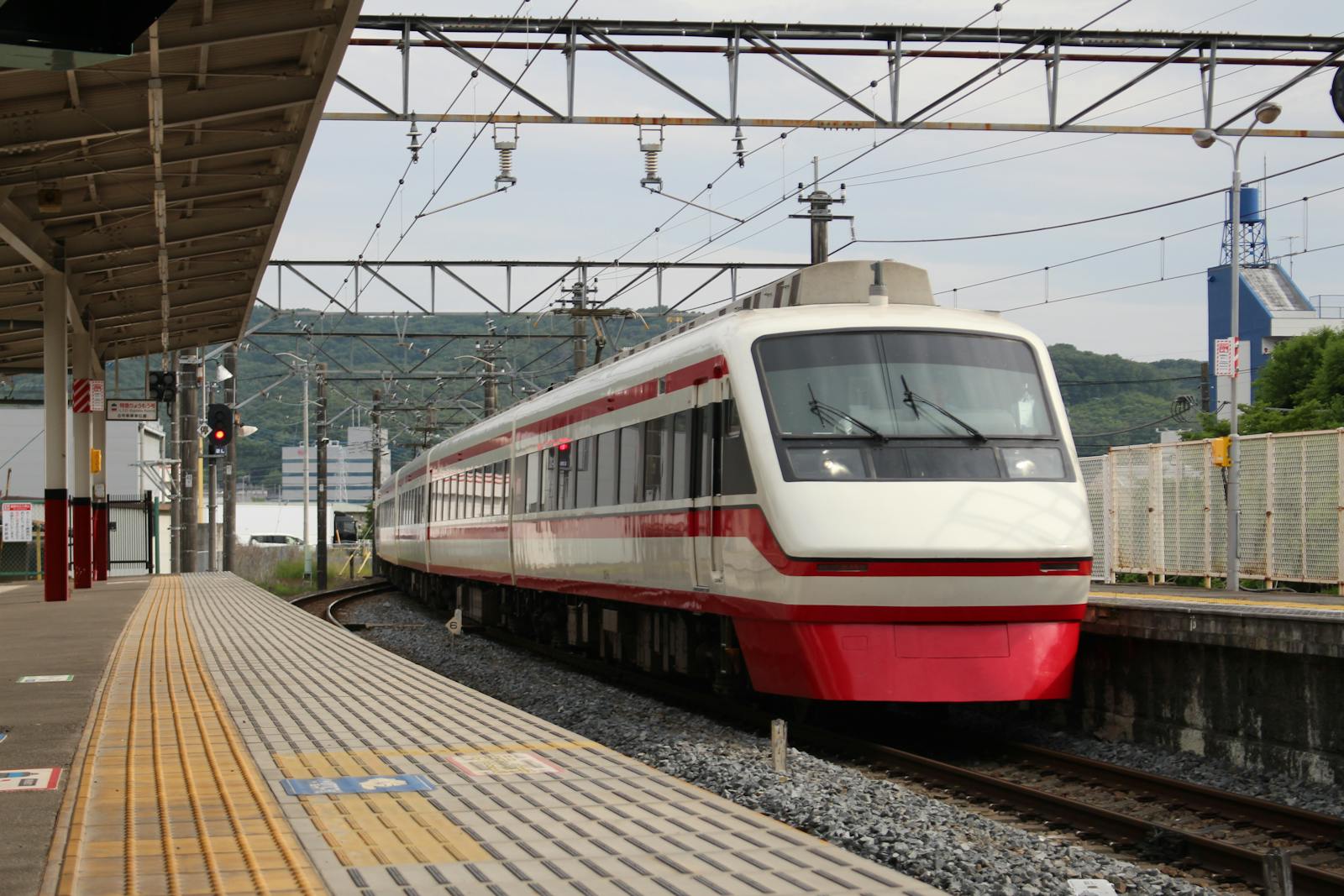
Suica isn’t your main bank card, but it’s still one of the most useful pieces of your Japan money setup. Think of it as the card that handles all the small, annoying, constant payments that would otherwise clutter your wallet.
- Best use cases: trains, metros, many buses, vending machines, convenience stores, some taxis, and small station purchases.
- Why it matters: tapping in and out of stations is much faster than buying one-off fares, and using an IC card for small spends keeps your actual travel debit card focused on the transactions that matter.
- For payments: Ubank for eligible Australians or Wise for international readers, with Suica or another compatible IC card for transit and small purchases.
Apple Support Australia now explicitly says you can use Suica, PASMO, ICOCA and TOICA in Wallet on eligible devices in Japan, with Express Mode for quick gate taps and no need for mobile data at the moment you ride. If your device support looks uncertain, use a physical IC card instead of trying to debug mobile-wallet compatibility on arrival. For the full walkthrough, see our Suica vs PASMO vs ICOCA guide.
ATMs in Japan: where to find them and what to expect
Japan has plenty of ATMs, but not all of them are worth your time. If you want the deep-dive fee breakdown, read my full Japan ATM withdrawal guide. For this page, here’s the short version.
Best ATMs for international cards
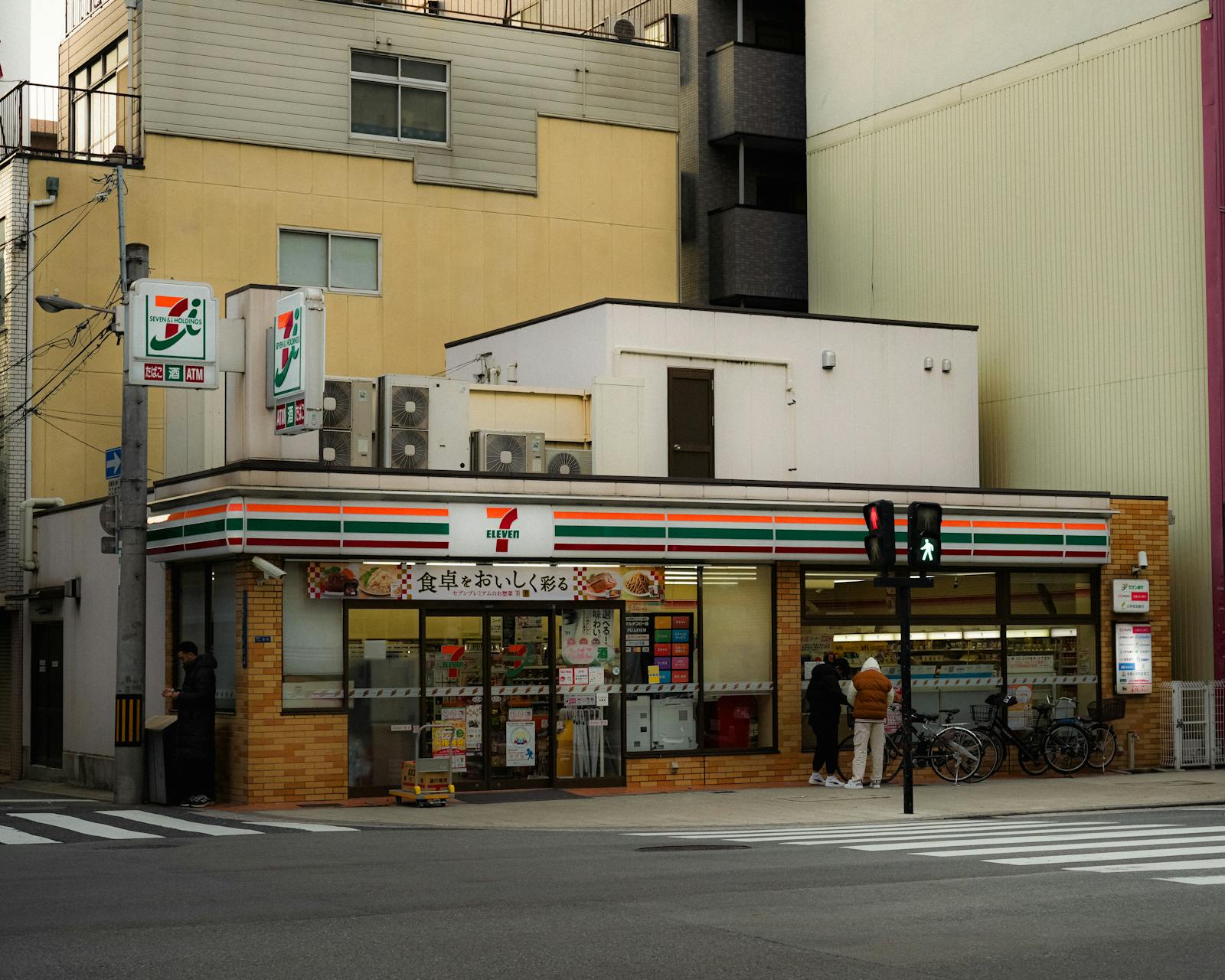
- Seven Bank at 7-Eleven: the first machines I look for. Seven Bank’s foreign-card page clearly lists the major international card networks, and in practice these are the most dependable English-friendly ATMs for travellers.
- Japan Post: the best rural fallback when a 7-Eleven isn’t nearby.
- Lawson and AEON: useful backups, but not the machines I build the whole trip around.
ATM rules that save you money
- Withdraw larger amounts less often: fewer withdrawals means fewer chances to get clipped by operator fees.
- Choose JPY, not AUD: if a machine offers to convert for you, decline it and stay in yen.
- Read the screen before confirming: your card might be fee-light while the ATM still adds its own operator fee.
- Don’t panic if one bank ATM fails: move on to Seven Bank or Japan Post before you assume your card is broken.
Other Japan money essentials
JR Pass: no longer an automatic yes
JR Pass can still be worth it for some rail-heavy itineraries, but it’s no longer a default recommendation for every Tokyo, Kyoto and Osaka trip. Price the long-distance trains you actually plan to take. If the pass wins, book it. If not, skip it and use IC cards for local transport. If you’re building a classic first trip, match the maths against my 10-day Japan itinerary and the newer cheap Japan domestic flights guide before assuming rail is automatically best.
Japan eSIM: worth sorting before you fly
Install your eSIM before you land. That matters more than people expect because the moment you arrive you need maps, station directions, translations, card-app access and ATM backup options. Saily’s Japan eSIM is the quick default, and my full best eSIM for Japan guide compares the stronger alternatives in more detail.
Travel insurance: don’t wing this
Japan has excellent healthcare, but it’s not a destination where I want to freestyle without insurance. I use SafetyWing for travel cover because it fits the way I travel, but the bigger point is simple: get your insurance sorted before you fly. If you want the full reasoning, see our guide to the best travel insurance for backpackers.
Public Wi-Fi and banking apps
If I’m logging into a bank app on public shared-accommodation, station or cafe Wi-Fi, I use NordVPN. That’s not unique to Japan, but Japan is a place where you often bounce between accommodation, stations and convenience-store stops all day, so secure access matters.
My recommended setup: step by step
Before your trip
- Main Australian account: Ubank for everyday banking and overseas card spending.
- Order or prepare your Wise card as your backup and pre-convert option.
- Install your eSIM before you fly.
- Decide how you’ll handle IC cards so you’re not solving that tired at the airport.
- Only buy a JR Pass after pricing your actual route.
- Sort your travel insurance before departure.
When you arrive
- Turn on your eSIM data.
- Withdraw your first block of cash from a 7-Eleven ATM and read the on-screen fee before confirming.
- Load your IC card so local transport is friction-free.
- Use Ubank for eligible Australians or Wise for international readers where card payment is accepted; choose JPY rather than merchant AUD conversion.
- Use cash when the place clearly prefers it.
- Top up cash before moving into smaller towns or long transport days.
Not travelling from Australia?
Ubank and Up are Australian accounts. If you live elsewhere, Wise is the simplest card for Japan: it converts at the mid-market rate, can hold yen, and works at Seven Bank (7-Eleven), Japan Post and Lawson ATMs, which all have English menus.
If Wise isn’t available where you live
Wise covers most major countries, but not everywhere. If you can’t open a Wise account at home, look for the closest local equivalent. Whatever card you use needs to:
- Charge no foreign transaction fees on overseas purchases
- Allow ATM withdrawals abroad without inflated bank-side fees
- Use the real mid-market exchange rate, or close to it
- Have a working app with instant card freeze
Japan isn’t hard on foreign cards — 7-Eleven ATMs accept almost every international Visa and Mastercard. The trip just punishes a bad setup, where every transaction quietly bleeds 2–3% in hidden conversion charges.
Frequently asked questions
Can I use my Australian debit card in Japan?
Yes, many Australian bank cards work in Japan, but foreign transaction fees, conversion and ATM charges vary. Our recommendation is Ubank for eligible Australians and Wise for international readers where available. Compare all fees and carry a physical backup.
How much cash should I carry in Japan?
I like carrying roughly ¥20,000 to ¥30,000, especially once I’m outside the biggest cities. You can often get by with less in central Tokyo or Osaka, but I don’t like letting my trip depend on the next working ATM. If you want the fuller cash-withdrawal logic, read the dedicated Japan ATM withdrawal guide.
Is Wise or Up Bank better for Japan?
Up is an Australian account with budgeting tools and Mastercard spending. Wise adds international transfers and foreign-currency balances, with conversion costs and an ATM allowance. Revolut is another multi-currency option with free-plan limits. Our first Australian account recommendation is Ubank; choose additional providers for the features you need.
Do I need a Suica card for Japan?
For most trips, yes. Suica or another major IC card makes local transport and small purchases much faster. If mobile-wallet support looks messy on your device, just use a physical IC card and move on.
Which ATMs work with international cards in Japan?
Seven Bank ATMs inside 7-Eleven stores are the first machines I look for. Japan Post is the best rural fallback. Lawson and AEON are useful extras, but Seven Bank and Japan Post are the dependable core options.
Do I need a JR Pass?
Not automatically. JR Pass can still make sense for some rail-heavy routes, but you should compare the pass against the individual trains you actually plan to take rather than assuming it’s always a win.
Should I exchange cash before going to Japan?
Usually no. I’d normally withdraw yen in Japan from a fee-light card at a dependable ATM rather than rely on exchange counters. The exception is if you personally prefer landing with a small emergency cash buffer.
Is Japan expensive for backpackers?
Japan is pricier than Southeast Asia, but it’s still manageable for backpackers if you keep transport and payment friction under control. A rough everyday budget often lands around ¥8,000 to ¥15,000 depending on accommodation, food choices, and how often you take expensive long-distance transport.
Australia-specific money setup
For the Australia-only version of this setup, compare MoneyHackHQ’s Japan travel card picks and the broader Australian travel-card comparison.
Related Backpacking Is Life guides
Helpful next reads for planning the same trip, money setup, or travel tech.