
Japan ATM Withdrawal Guide: Fees, Limits, Cash Tips and Best Cards
Japan is easy to travel with the right money setup, but it’s still a country where cash matters. This guide shows you where foreign cards work, which ATMs to use first, how to avoid bad exchange-rate choices, and the simple two-card setup that stops Japan quietly draining money in fees. Sort the card before you fly and the rest is easy.
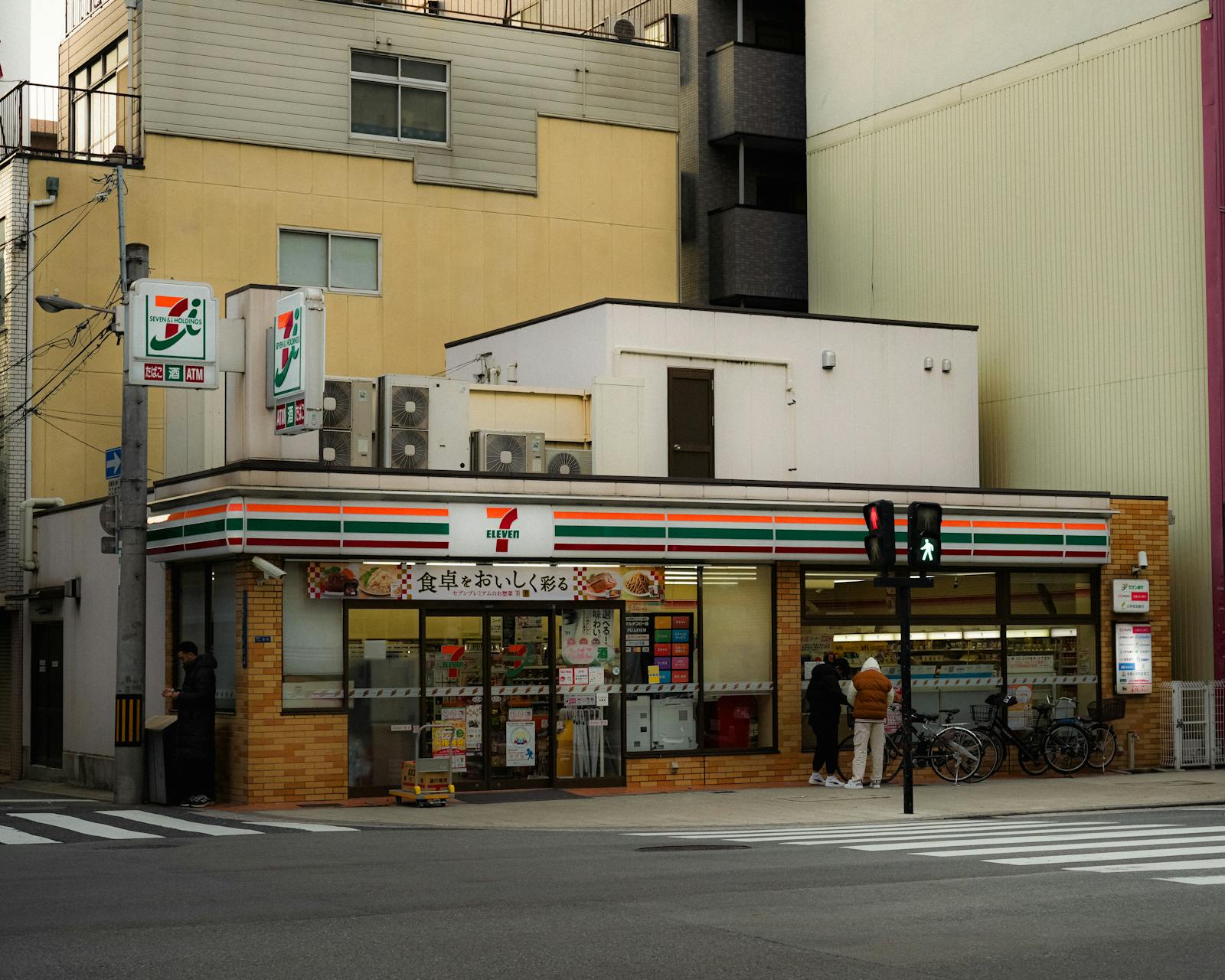
Quick answer: use Seven Bank at 7-Eleven as your default ATM, choose JPY if the machine asks about currency conversion, and carry a low-fee card like Wise so a normal bank card’s fees never touch your trip. If you bank in Australia, Up Bank is the standout pick — no fees on overseas spending or ATM withdrawals, plus an invitation of up to $21 signup bonus. Install your Saily Japan eSIM before you fly so you can find ATMs, train routes and accommodation the moment you land.
Japan is not “cash only” anymore. You can tap cards in convenience stores, use IC cards like Suica or ICOCA on trains, and pay by card in many hotels, chains and department stores. But cash still solves problems every day, especially at smaller restaurants, temples, shrines, local buses, rural stops, guesthouses and old-school ticket counters.
The good news is that getting yen from an ATM is straightforward once you know where to go. The expensive mistakes are simple too: using a card with foreign transaction fees, choosing home-currency conversion at the ATM, withdrawing tiny amounts too often, or assuming any random Japanese bank ATM will accept your overseas card.
Before you read on — the one decision that actually costs money: the ATM you pick barely matters. The card you use does. A typical bank card adds around a 3% foreign transaction fee plus its own overseas ATM charge, and often a poor exchange rate on top. On a two-week trip where you spend and withdraw, say, AU$2,500, that 3% alone is roughly AU$75 quietly lost — before a single ATM fee. A low-fee travel card like Wise — or Up Bank if you bank in Australia — cuts that close to zero. It’s the single biggest money decision of the trip, and it takes five minutes to fix.
Do you still need cash in Japan?

Yes. For a first trip, the safest assumption is that you’ll use card and digital payments often, but cash will still save the day in enough places that you shouldn’t travel without it.
Cards are usually fine at hotels, larger shops, convenience stores, many train stations, major attractions, chain restaurants and department stores. Cash becomes more important at smaller ramen shops, local izakayas, temples, shrines, older restaurants, rural accommodation, markets, local buses, coin lockers and smaller towns.
For Tokyo, Kyoto, Osaka and Hiroshima, I’d still carry at least 10,000–20,000 yen. If you’re going into the countryside, staying in a ryokan, hiking the Nakasendo or Kumano Kodo, visiting smaller islands, or moving through towns where convenience stores are less frequent, withdraw more before leaving the city.
Can you just tap your phone and skip cash?
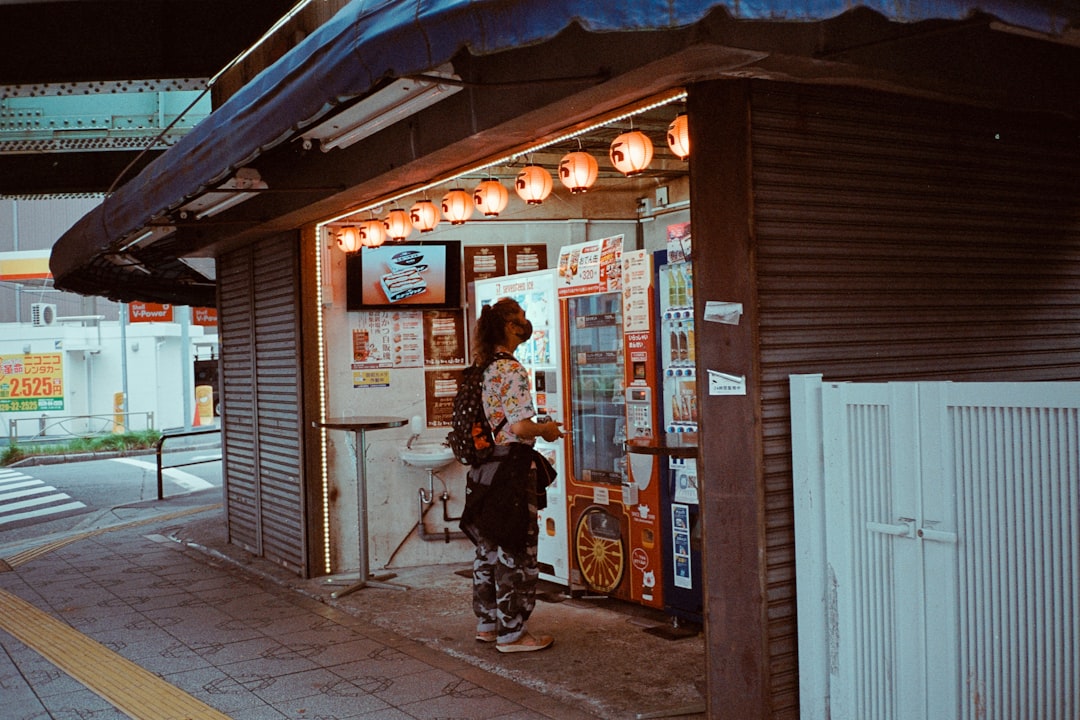
This is the question more travellers ask every year, and the honest answer for 2026 is: mostly yes in the big cities, but not entirely. If you stay in central Tokyo, Kyoto and Osaka, eat at chains and shop in larger stores, you can get a long way on card and phone alone. Outside that bubble, the cash-only long tail is still real.
The single most useful trick is to add a Suica or PASMO IC card to Apple Pay (or to supported Android wallets), then top it up from your card. That covers most trains, subways, buses, convenience stores, vending machines and a surprising number of small shops with a single tap, and it means you’re not feeding coins into ticket machines. Contactless Visa and Mastercard acceptance is also growing fast at chains and stations. Top it up from a low-fee card like Wise and even your tap-to-pay spending avoids the usual FX markup.
Where tap-to-pay still fails you: small family restaurants, ramen counters with a ticket machine, temples and shrines, local markets, older guesthouses, some rural buses, and cash-only entry fees. So treat your phone as the default for everyday spending, but keep a cash buffer for the places that quietly refuse cards. The setup in this guide is designed for exactly that — spend on card or phone where you can, and have yen ready where you cannot.
Best ATMs in Japan for foreign cards
The most important thing to know is that many domestic Japanese bank ATMs are not designed for overseas cards. You want machines that clearly support international cards and show the relevant Visa, Mastercard, PLUS, Cirrus, JCB or Discover logos.
1. Seven Bank ATMs at 7-Eleven
Seven Bank is the easiest default for most travellers. The network is huge, 7-Eleven stores are everywhere on the main tourist route, menus are available in English, and Seven Bank officially lists overseas cards as usable at its ATMs. Seven Bank also states that the withdrawal limit for overseas cards is 100,000 yen per withdrawal, with a lower 30,000 yen limit for magnetic-stripe transactions.
7-Elevens are easy to find, and Seven Bank has an English ATM locator if you ever get stuck. Fees for cards issued overseas vary by card brand, so don’t assume every withdrawal is free. Check the fee shown on the ATM screen before confirming, then focus on avoiding extra fees from your own bank or card issuer — which is exactly what a low-fee travel card is for.
2. Japan Post Bank ATMs
Japan Post Bank is the best backup to know, especially outside the biggest city centres. Japan Post says cards issued overseas with marks including Visa, PLUS, Mastercard, Maestro, Cirrus, JCB, China UnionPay and Discover can withdraw cash at Japan Post Bank ATMs.
The key limits are different from Seven Bank. Japan Post lists a 50,000 yen single-transaction withdrawal limit, and says a 220 yen ATM usage fee may apply for some cards issued abroad. Hours vary by ATM type and location, so Japan Post is useful, but not always as frictionless as 7-Eleven.
3. AEON Bank ATMs
AEON Bank is a useful extra option at malls, airports, Ministop stores, some convenience-store locations and major train stations. AEON says more than 6,500 ATMs nationwide can be used to withdraw Japanese yen with cards issued by overseas banks or credit-card companies.
I’d treat AEON as a good backup rather than the first ATM you hunt for. It’s handy when you’re already in an AEON mall or near one of its supported locations, but Seven Bank is usually simpler to find on normal travel days.
4. Lawson and other convenience-store ATMs
Lawson Bank and other convenience-store ATMs can also work with foreign cards, but the experience can vary more by card, machine and location. They’re worth trying if Seven Bank isn’t nearby, but I wouldn’t build my arrival-day cash plan around them.
5. Airport ATMs
Narita, Haneda and Kansai all have international-card ATM options. Withdrawing a small amount on arrival is sensible if you’re heading straight to a train, bus, local guesthouse or food stop. You don’t need to exchange a huge amount at airport money changers if your card setup is good.
| ATM network | Best use | Withdrawal limit | Operator fee | Traveller note |
|---|---|---|---|---|
| Seven Bank | Default first choice | 100,000 yen per withdrawal (30,000 yen for magnetic-stripe) | Often free, varies by card network (Mastercard often free; Visa sometimes ~110–220 yen). Check the screen. | Usually easiest at 7-Eleven, 24/7. |
| Japan Post Bank | Rural and small-town backup | 50,000 yen per transaction | 220 yen may apply for some overseas cards | Good coverage, but hours vary by ATM and location. |
| AEON Bank | Malls, airports, Ministop, stations | 50,000 yen per transaction (6,500+ ATMs nationwide) | Around 75 yen per withdrawal | Useful backup when nearby; often the cheapest operator fee. |
| Lawson Bank | Convenience-store backup | 50,000 yen per transaction | Around 110 yen flat per withdrawal | Worth trying, but Seven Bank is easier to rely on. |
Japan ATM fees: what you’re actually paying

There are usually three possible costs when you withdraw cash in Japan:
- The Japanese ATM operator fee. This is the fee shown by the machine, if one applies. In practice it’s small: roughly 75 yen at AEON, 110 yen at Lawson, 220 yen at Japan Post, and often free at Seven Bank depending on your card network.
- Your card issuer’s ATM or overseas withdrawal fee. This comes from your bank, not Japan.
- The exchange-rate cost. This is where bad cards quietly hurt you through foreign transaction fees, poor rates or dynamic currency conversion.
The ATM fee itself is rarely the real problem. A 110 or 220 yen machine fee is annoying, but it’s small compared with a card that charges 3% foreign transaction fees, adds a poor exchange-rate margin, and then charges its own overseas ATM fee on top. Fix the card and you remove two of the three costs entirely.
The rule that saves the most money: if the ATM asks whether to charge you in yen or your home currency, choose Japanese yen. Let your own card do the conversion. Home-currency conversion at the ATM is usually where the bad exchange rate sneaks in. (Note that JCB, Discover, UnionPay, American Express and Diners Club cards aren’t offered this currency choice at Seven Bank anyway, so this mainly matters for Visa and Mastercard.)
The cleanest fix is a card that simply doesn’t charge foreign transaction fees in the first place. Wise is the best all-round option for any traveller; if you bank in Australia, Up Bank is even simpler — no foreign-transaction fee and no Up fee on overseas withdrawals, with no monthly fee-free cap to track. The full setup is in the next section.
Best card setup for Japan
Wise is the cleanest default card for most travellers visiting Japan, wherever you’re from. It’s used by millions of travellers, runs on the real mid-market exchange rate with a small transparent conversion fee shown up front, works well for everyday travel spending, and is useful far beyond Japan.
Order physical cards well before departure and check each provider’s delivery estimate. Up currently advises 15–20 business days; contact its in-app support if you travel sooner. A digital wallet does not replace a physical card at every ATM.
The important detail is the ATM allowance, and it changed recently. From 1 May 2026, Wise updated its ATM structure: the exact free allowance now depends on the country your card was issued in, so check your own limit in the Wise app before you fly. As an example, Wise cards issued in Australia now get free withdrawals up to 400 AUD per month, with a 2.69% fee on anything above that. Either way, the smart move is the same everywhere — withdraw fewer, larger amounts rather than taking out small bits of cash every day.
No single card is perfect everywhere, so the real answer is to carry two low-fee cards from different providers. For most international travellers that means Wise plus Revolut as a second card on a different network. If you bank in Australia, Up Bank is arguably the best everyday card of the lot — no foreign-transaction fee, the Mastercard rate with no markup, no Up fee on overseas ATM withdrawals, no monthly fee-free cap to track, and an invitation of up to $21 signup bonus. The quick comparison below shows where each one fits.
| Card | FX rate & fees | ATM allowance | Best for |
|---|---|---|---|
| Wise | Mid-market rate with a small, transparent conversion fee. Hold and spend yen directly. | Free monthly allowance that varies by card-issuing country (changed 1 May 2026) — check yours in-app. | Everyone. The default travel-money card and your primary spend card in Japan. |
| Revolut | Strong rates on the free Standard plan within a monthly fee-free conversion limit; small fee above it and a weekend FX markup. | A monthly free ATM allowance (amount and number vary by region and plan), then a percentage fee. | A second global card from a different network, plus multi-currency holding. |
| Up Bank (AU only) | No foreign transaction fee. Mastercard’s rate with no markup. | No Up fee on overseas ATM withdrawals and no monthly fee-free cap (the local ATM operator may still charge its own). | Australians — arguably the best everyday card for overseas spending and cash. up to $21 signup bonus. |
Want the full breakdown? See our dedicated Wise vs Revolut vs Up comparison for travel.
Simple Japan money setup
- Main card (everyone): Wise for low-cost currency conversion, holding yen, and everyday travel spending.
- Australians: Up Bank is the standout everyday card overseas — no foreign-transaction fee, no Up fee on ATM withdrawals, no monthly fee-free cap, and an invitation of up to $21 signup bonus when you join through the link.
- Backup card: a second low-fee card on a different network (such as Revolut) so you’re covered if one is ever declined.
- Cash buffer: withdraw enough yen for several days at a time, especially before rural travel.
Up: offer and account conditions
Up: ordinary Savers earn 5.35% p.a. Grow when untouched, up to the combined $250,000 individual Grow cap, or 2.00% p.a. Flow when accessed. First make five qualifying debit-card purchases in the calendar month; otherwise ordinary Savers earn 0.00%. The 2Up Grow cap is separate. Essentials earns 2.00% Flow without the purchase requirement until 28 February 2027. Up rates and conditions.
Up travel: no Up international transaction or ATM-withdrawal fee; ATM operators can charge separately. The card uses Mastercard’s exchange rate. Daily withdrawal limits still apply: the standard ATM cash-out limit is $1,000, subject to approved variations. Up currently advises allowing 15–20 business days for a physical card. Up travel information.
Up invitation: The SCONS referral offer is up to $21, subject to the amount shown when you join. Complete signup and identity verification within the invitation’s terms; amounts and availability can change. Read the referral conditions before relying on a bonus.
Deposit protection: eligible Up deposits share Bendigo and Adelaide Bank’s $250,000-per-person FCS limit; Ubank deposits share NAB’s limit. These are limits per person per institution, not per account. Rates are variable. Account eligibility and identity checks apply.
Free to set up · no foreign transaction fees · order now so the card arrives before you fly.
How to withdraw cash in Japan without getting stung
- Find a foreign-card ATM. Start with Seven Bank at 7-Eleven, Japan Post, or AEON.
- Select English. Do this before inserting your card if the screen gives you the option.
- Choose withdrawal. Select savings or current/checking if the ATM asks for account type.
- Enter the amount in yen. Remember that smaller shops may not love huge notes, so break a 10,000 yen note at a convenience store if needed.
- Review the ATM fee. If it looks unreasonable, cancel and try another network.
- Choose JPY if offered a currency choice. Never let the ATM convert into your home currency.
- Take your card, receipt and cash. Japanese ATMs can retract items if you leave them too long.
Set this up before you fly
A good Japan money setup is not just the card. You also want data working before you reach the ATM, because the first hour after landing is when you need maps, train routes, booking details and translation most.
Install your eSIM before departure
Saily’s Japan eSIM is the easiest add-on to pair with this ATM setup. Install it before you fly, then activate it when you land so you can find the nearest Seven Bank ATM, check train routes and pull up your accommodation details without hunting for airport Wi-Fi. It takes two minutes to set up and means you walk off the plane already connected.
How much cash should you withdraw?
For most city trips, I’d withdraw enough for several days rather than visiting an ATM constantly. A practical starting point is:
- Short city stay: 10,000–20,000 yen as a walking-around buffer.
- One week in Japan: 30,000–50,000 yen if you’ll use card and IC card often.
- Rural route or temple-heavy itinerary: withdraw more before leaving the city.
- Budget accommodation and budget travel: carry enough for laundry, local buses, small restaurants and cash-only sights.
Don’t overdo it. Japan is safe, but there’s no need to carry your whole trip budget in cash. The sweet spot is enough yen to avoid stress without turning your wallet into your entire savings account. Withdrawing larger amounts less often also keeps you inside your card’s free ATM allowance.
JR Pass, IC cards and cash

Cash is only one part of the Japan money system. For local transport, you’ll probably use Suica, PASMO or ICOCA. For intercity travel, you may be deciding whether a Japan Rail Pass is worth it.
The JR Pass is no longer an automatic yes. It works best for genuinely train-heavy routes. If you’re mostly staying around Tokyo, Kyoto and Osaka with only one or two big rail days, price individual rail fares first. If your route includes several long-distance Shinkansen trips in a short window, the pass can still make sense. For the full breakdown with real fares and worked examples, see our guide on whether the JR Pass is worth it.
Common Japan ATM mistakes
- Using a normal bank card with foreign transaction fees. This is usually more expensive than the Japanese ATM fee — a low-fee travel card removes it.
- Choosing your home currency at the ATM. Choose yen and let your card handle conversion.
- Withdrawing tiny amounts repeatedly. This burns through free ATM allowances and creates more fee events.
- Assuming every ATM accepts foreign cards. Use international-card networks rather than random domestic ATMs.
- Leaving the card order too late. Physical travel cards take days to arrive — order before you fly.
- Landing without mobile data. Install your Japan eSIM before the flight.
- Relying only on one card. Carry a backup from a different bank or network.
Japan ATM FAQ
Can I use my Visa or Mastercard at any ATM in Japan?
No. Many domestic ATMs don’t support overseas cards. Start with Seven Bank, Japan Post Bank, AEON Bank or clearly marked international ATMs.
What is the Seven Bank withdrawal limit for foreign cards?
Seven Bank states that the overseas-card withdrawal limit is 100,000 yen per withdrawal. Magnetic-stripe card transactions are limited to 30,000 yen.
What is the Japan Post ATM withdrawal limit?
Japan Post Bank lists a single transaction withdrawal limit of 50,000 yen for overseas cards.
What’s the best travel card for Japan?
For most travellers, Wise is the best all-round travel card for Japan: the mid-market rate, low transparent fees, and it works as both your main spend card and for ATM withdrawals. Carry a second low-fee card such as Revolut as a backup on a different network, and if you bank in Australia, Up Bank makes a strong fee-free third card. Order whichever you choose before you fly so the physical card arrives in time.
Can I travel Japan with just tap-to-pay and skip cash?
In the big cities you can get a long way on card, phone and a Suica or PASMO IC card added to your wallet. But cash-only spots are still common at small restaurants, temples, markets and rural stops, so carry a yen buffer as backup.
Should I exchange cash before arriving in Japan?
You usually don’t need to exchange much before arrival. Bring a little emergency cash if it makes you feel better, but a low-fee card plus a Seven Bank ATM on arrival is normally cleaner than using airport exchange counters.
Is Wise good for Japan?
Yes. Wise is one of the easiest global travel-card options for Japan because it uses transparent conversion pricing and the mid-market exchange rate. Just remember the ATM allowance changed on 1 May 2026 and now varies by issuing country, so check yours in-app and withdraw sensibly rather than constantly.
Is Revolut good for Japan?
Yes, it makes a strong second card alongside Wise. The free Revolut Standard plan gives good rates within a monthly fee-free conversion limit and a monthly free ATM allowance, with small fees above those limits and a weekend FX markup. Carrying both means you always have a backup on a different network.
Is Up Bank good for Japan?
For Australians, it’s arguably the best everyday card overseas. Up Bank charges no foreign-transaction fee (Mastercard’s rate with no markup) and no Up fee on overseas ATM withdrawals — with no monthly fee-free cap to track, unlike some travel cards. The local ATM operator may still charge its own fee, which it discloses before you withdraw. It pairs well with Wise if you want a second card on a different network, and there’s currently an invitation of up to $21 signup bonus.
The bottom line
Japan ATM withdrawals are easy once you stop treating every machine and every card as equal. Use Seven Bank first, keep Japan Post and AEON in your backup list, choose yen at the ATM, carry enough cash for small businesses and rural days, and bring a card that doesn’t punish you with hidden currency costs.
For most travellers, the clean setup is simple: Wise for money — plus Up Bank if you bank in Australia — Saily for data, and enough yen in your wallet that a cash-only ramen shop or temple ticket counter doesn’t derail the day. Sort the cards as soon as you’ve booked — that’s the one job that’s annoying to do last-minute.
Disclosure: Some links in this guide are affiliate links — if you sign up through them, Backpacking Is Life may earn a small commission at no extra cost to you. ATM fees, card terms, withdrawal limits and bonuses can change, so confirm the final details with the ATM operator and your card provider before relying on them.
Japan trip setup links
The five-minute checklist that saves the most money and hassle — sorted before you fly:
Useful official references
- Seven Bank: overseas cards usable at ATMs
- Japan Post Bank: International ATM Service
- AEON Bank: ATM information for overseas cards
- JNTO: currency and money information for Japan
- Wise: ATM withdrawal structure and fees (from 1 May 2026)
Related Backpacking Is Life guides
Helpful next reads for planning the same trip, money setup, or travel tech.