
Travel insurance – 2026
Best Travel Insurance for South Africa 2026: Medical Cover, SafetyWing, Safari, Car Rental and Safety Risks
South Africa insurance needs to cover more than basic medical bills: safari logistics, the rental-car excess trap, theft, road trips, malaria zones, remote areas, private hospitals and emergency evacuation all matter.
For South Africa, prioritise emergency medical, evacuation, theft/luggage cover and honest activity wording — then treat rental-car cover and malaria as separate planning tasks. SafetyWing suits flexible, medical-first travellers from 5 days, but trips with expensive safaris, self-drive road trips or high-value camera gear deserve a careful comparison against a comprehensive policy.
South Africa is one of those destinations where travel insurance feels less like a formality and more like sensible trip infrastructure.
Cape Town, the Garden Route, Kruger and safari lodges can be amazing, but the insurance questions are real: private medical care, road accidents, theft, evacuation, malaria zones, missed connections and expensive prepaid bookings. A few of them are specific to South Africa and worth understanding before you book.

Insurance is not an entry requirement for South Africa. Many nationalities — including UK, EU, US, Canadian and Australian passport holders — can still enter visa-free for up to 90 days. South Africa is rolling out an Electronic Travel Authorisation (ETA) in phases; as of mid-2026 it applies to a limited set of visa-required nationalities entering via the main airports, but the system is expanding. Check the current rules for your passport before you travel, and make sure your passport has enough validity and blank pages.
What travel insurance needs to cover in South Africa
- Medical care and evacuation: private hospitals want payment or a guarantee up front, and emergency services can be slower outside major cities.
- Safari and wildlife logistics: check guided-activity wording, evacuation and trip interruption for remote lodges.
- Theft and baggage: phones, cameras and luggage need realistic item-limit checks and a police report to claim.
- Rental cars: high excess, gravel-road damage and cross-border rules sit outside your travel policy.
- Malaria zones: Kruger, the Lowveld and far-northern KwaZulu-Natal carry seasonal malaria risk.
- Safety incidents: police case numbers and documentation matter for claims.
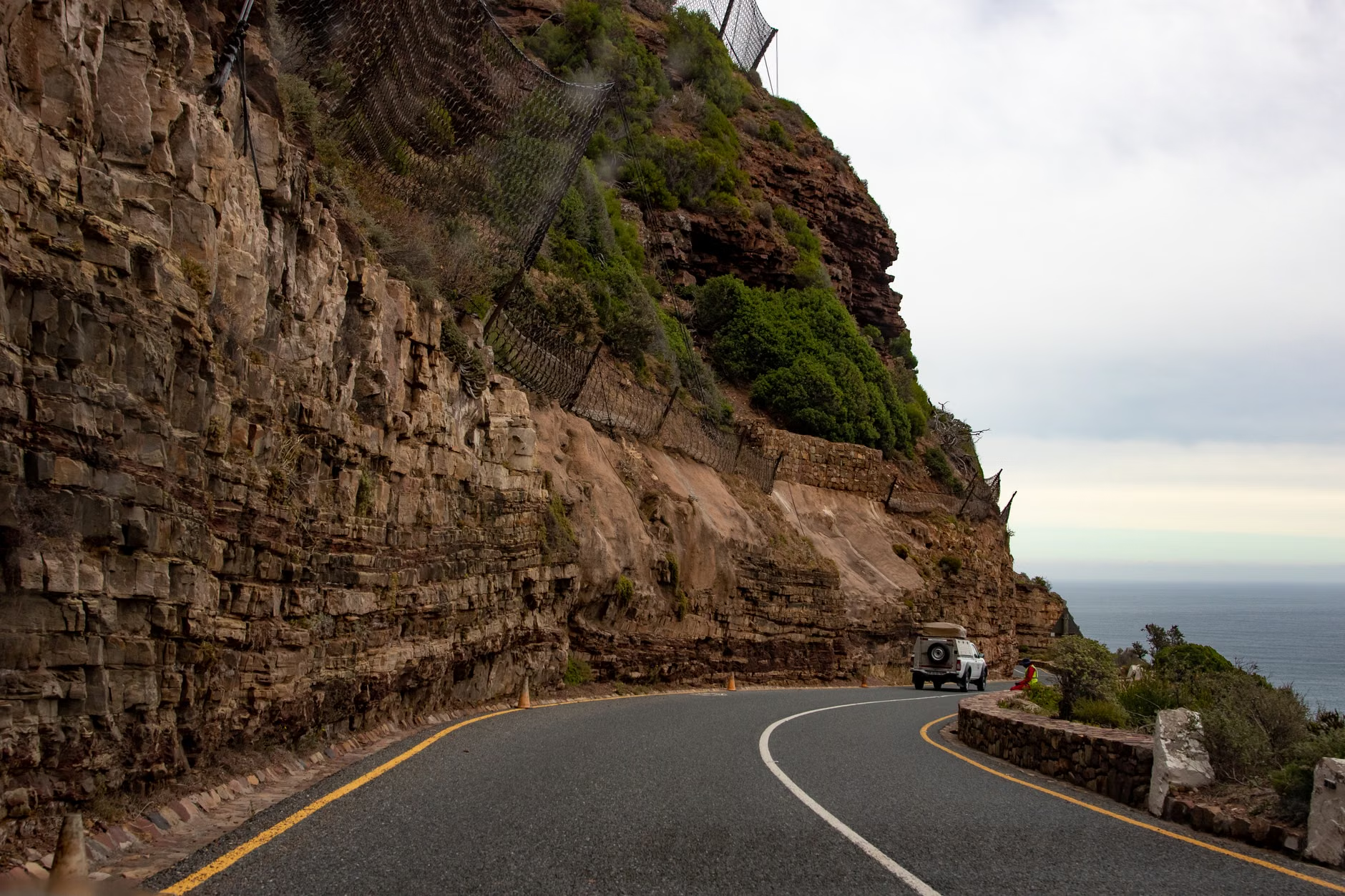
The rental-car reality: excess, gravel roads and cross-border
Unlike some countries, South Africa doesn’t force an unwaivable government liability charge on you. Basic collision and theft cover is usually built into the rental rate — but it is a waiver, not full insurance, and it comes with a high excess and a long list of exclusions. That is where self-drive travellers get caught.
| What to check | Why it bites |
|---|---|
| The excess | Even with basic cover you can be liable for the first R20,000–R30,000+ (roughly US$1,100–1,700) of damage or theft. A Super CDW add-on reduces it toward zero. |
| Gravel & single-vehicle damage | Base waivers frequently exclude damage on unpaved roads, rollovers and hitting an animal — common on the way to Kruger and rural lodges. |
| Tyres, glass & undercarriage | Very often excluded from standard cover, yet they’re the most common damage from potholes and stones. Add a tyre & windscreen waiver. |
| Named drivers only | If an unlisted person is driving during an incident, cover can be voided entirely. |
| Cross-border trips | Into Lesotho, eSwatini, Botswana, Namibia, Mozambique or Zimbabwe you need a Cross-Border Letter of Authority arranged in advance, and the excess often doubles. |
One more trap: a credit card’s rental benefit often excludes South Africa, works as reimbursement (you still pay the excess upfront), and usually isn’t accepted by the rental company in place of their own waiver. Get any excess figure and exclusion in writing before you sign. For the full breakdown, see our guide to renting a car in South Africa.
Crime, theft and what claims actually require
South Africa has a high crime rate, and government travel advisories flag robbery, theft and carjacking as genuine risks, particularly in cities and at night. For insurance, that has two practical consequences.
First, if something is stolen you will almost always need a police report with a SAPS case number, usually obtained within 24 hours, plus receipts or proof of ownership, before an insurer will pay a theft claim. Second, most policies contain a “reasonable care” clause — leaving a bag on a car seat, a phone on a café table, or luggage unattended can be enough to have a claim declined. Keep valuables out of sight, don’t leave anything visible in a parked car, and for driving, keep doors locked and windows up, and avoid unfamiliar areas after dark.
Nationwide emergencies: 10111 (police), 10177 (ambulance), or 112 from any mobile. Private medical response — often faster than public EMS — includes Netcare 911 and ER24. Store your insurer’s 24-hour assistance line offline too.
Malaria and remote medical: why evacuation is the priority
Care in Cape Town, Johannesburg and other cities is generally very good, with well-regarded private hospital groups. But two things surprise visitors. Private hospitals typically want payment or a guarantee of payment up front from foreign patients, and outside the cities — on long road trips or at remote reserves — public emergency services can be slow, which is exactly why medical evacuation and 24-hour assistance are the benefits to prioritise.
Malaria is the other South Africa-specific health point. The low-risk areas most travellers visit are fine, but the Kruger area, the Lowveld and far-northern KwaZulu-Natal carry seasonal malaria risk. Speak to a travel clinic about prophylaxis and precautions before you go, follow that advice, and make sure your policy covers you for illness treatment. Confirm your cover includes emergency medical, evacuation and repatriation, not just hospital treatment.
Where SafetyWing fits
SafetyWing is strongest when you want flexible, medical-first cover that works for a short trip from 5 days as well as longer open-ended travel, and you can buy it while already abroad. It currently lists Nomad Insurance Essential from US$62.72 per 4 weeks for ages 18-39, roughly US$2.24/day rolling (a little cheaper if you prepay a longer policy). Always check the live quote for your exact age, destination and dates.
For a South Africa trip: surfing is covered as standard, and motorbike or scooter accidents are covered provided you wear a helmet and hold a valid licence. The Essential plan is emergency-focused, so it does not cover pre-existing conditions, maternity or cancer treatment — and higher-adrenaline activities like shark-cage diving, the Bloukrans bungee or paragliding should be checked against the live wording, since some need the adventure add-on or a broader policy. It’s also worth weighing trip-cost and gear protection if you have expensive prepaid safaris or camera equipment.
| Decision point | What to know |
|---|---|
| SafetyWing fit | Good for flexible, medical-first cover if your main concern is emergency treatment and ongoing travel, from 5 days. |
| Safari warning | Expensive lodges and internal flights may need stronger cancellation/interruption benefits than a medical-first policy. |
| Theft and gear | Check item limits for cameras, laptops and phones, and remember theft claims need a police case number. |
| Evacuation | Remote parks and long road trips make evacuation and assistance wording important. |
Check your quote before you fly
Put in your exact dates, destinations and age, then read the policy wording for your activities.
When I would choose another policy
I would compare a comprehensive travel policy if your South Africa trip includes expensive safari lodges, prepaid tours, internal flights, valuable camera gear or a self-drive road trip. SafetyWing is useful medical-first cover, but trip-cost and gear protection often matter more on a high-budget itinerary — and none of it replaces the rental-car waiver you buy at the counter.
Policy comparison points
| Thing to compare | Why it matters |
|---|---|
| Emergency medical | Private hospitals want payment or a guarantee before treating you. |
| Medical evacuation | Important for remote parks, lodges and long road trips. |
| Theft/baggage | Check item limits and the police-report requirement. |
| Trip cancellation | Matters for expensive safari lodges, internal flights and prepaid tours. |
| Rental car excess | Separate from travel medical cover; check the excess and exclusions too. |
Activities and exclusions
This is where travellers get caught. A policy can cover emergency medical treatment in general and still exclude the exact thing you were doing. Scooters, rental cars, hiking, surfing, diving, shark-cage diving, bungee, paragliding, organised sport, alcohol-related incidents, unpaid work and adventure activities can all have specific wording.
Do not rely on what other travellers say is normal in South Africa. Search the policy wording for the activity you actually plan to do. If the wording is vague, ask the insurer before buying or choose a policy with clearer cover.
Why medical cover comes first
Lost luggage is annoying. A serious medical event is the problem that can overwhelm your trip and your bank account. Start with emergency medical, hospital, evacuation and assistance benefits before caring about the smaller extras.
For South Africa, think through how you would handle a late-night clinic visit, a private hospital that wants a guarantee of payment, a road accident on a rural highway, a wildlife or adventure injury on safari, or an evacuation from a remote lodge. Save the insurer’s emergency contact details offline and share your policy number with someone you trust.
How to make claims less painful
- Contact the insurer early for serious medical events or anything that may need approval or a payment guarantee.
- For theft, get a SAPS police report and case number within 24 hours, and keep receipts and proof of ownership.
- Keep itemised invoices, medical notes, receipts and transport-disruption proof.
- Photograph damaged gear before repairing or replacing it.
- Do not throw away boarding passes, booking confirmations or payment receipts until the trip is over.
- Write a short timeline while the details are fresh.
What travel insurance usually will not fix
- Changing your mind: cancellation benefits usually need a covered reason.
- Rental-car excess and exclusions: the hire-car waiver is a separate purchase from your travel policy.
- Careless loss: unattended or clearly visible belongings can void a theft claim.
- Illegal riding or driving: licence and helmet rules matter, and intoxication voids cover.
- Known events: buying after a storm, strike, illness or warning appears may not help.
- Pre-existing conditions: these need careful wording and sometimes extra assessment.
Who SafetyWing suits best
SafetyWing is strongest for travellers who want flexible cover, care most about medical protection, and may not have a perfect round-trip holiday structure. Backpackers, remote workers, long-term travellers and people visiting multiple countries often like that simplicity, plus the ability to buy it after leaving home.
For a short South Africa trip it can still make sense, because cover can be quoted for trips from 5 days. Just do not treat that as a reason to skip comparison. If you have expensive prepaid bookings or specialist activities, check whether a comprehensive holiday policy fits better.
When to buy travel insurance
Buy earlier if cancellation cover matters. If you wait until just before departure, you may still get medical cover for the trip, but you have spent weeks carrying cancellation risk yourself. For expensive holidays, buy soon after locking in flights, hotels or tours.
Which policy type by trip style?
Short holiday
Compare medical, cancellation, baggage and activity cover. If flights and lodges are prepaid, trip-cost benefits matter more.
Backpacking trip
Prioritise flexible medical cover, emergency assistance, extensions and multi-country rules. SafetyWing often fits this style well.
Self-drive safari
Check rental excess, gravel and cross-border rules, plus evacuation. The car waiver is separate from your travel policy.
Documents to save offline
- Policy certificate and policy wording.
- Emergency assistance line, plus 10111 (police) and 10177 (ambulance).
- Passport photo page and entry-stamp/ETA details.
- Flight, lodge and tour invoices.
- Medical prescriptions, malaria advice and relevant health notes.
- Receipts for expensive gear you may need to claim.
What about credit card travel insurance?
Credit card travel insurance can be useful, but do not assume it applies automatically. Many cards require you to pay for flights or a minimum trip cost with the card, activate cover, meet age/residency rules, and follow strict trip-length limits. In South Africa specifically, a card’s rental benefit often excludes the country, works as reimbursement, and isn’t accepted by the rental company in place of their own waiver.
Read the booklet before relying on it. Check medical limits, excess, pre-existing conditions, activity rules and whether travelling companions are covered.
My final insurance rule
Buy enough cover that a bad day stays a bad day rather than becoming a financial disaster. For many backpackers and flexible travellers, SafetyWing is a practical medical-first option, especially now that short trips from 5 days are possible. For expensive safaris, self-drive road trips or valuable gear, compare broader comprehensive policies — and budget separately for the rental-car waiver and its excess if you plan to drive.
Before you buy: checklist
- Confirm medical evacuation and 24-hour assistance are clearly included, not just hospital treatment.
- Check your activities by name — shark-cage diving, bungee, paragliding, hiking, surfing, diving — and whether an add-on is needed.
- Budget separately for the rental-car excess, tyre/glass cover and any cross-border letter if you’re driving.
- Check baggage item limits and remember theft claims need a SAPS case number.
- Get travel-clinic advice on malaria if visiting Kruger, the Lowveld or northern KwaZulu-Natal.
- Save emergency numbers, policy documents and claim instructions offline.
FAQ
Do I need travel insurance for South Africa?
It is not required to enter, but it is important. Private hospitals expect payment or a guarantee up front, emergency services can be slow outside cities, and theft, safari bookings and road trips all carry risk.
Do I need a visa or ETA for South Africa?
Many nationalities — UK, EU, US, Canadian, Australian — can still enter visa-free for up to 90 days. South Africa is rolling out an ETA in phases, currently for a limited set of visa-required nationalities, so check the latest rules for your passport before travelling.
Should South Africa insurance include evacuation?
Yes. Emergency services can be slow outside major cities and air evacuation may be the only option in remote medical emergencies, so evacuation and 24-hour assistance are priorities.
Does travel insurance cover rental-car damage in South Africa?
Not usually in the way travellers need. Rental cover is a waiver with a high excess (often R20,000–R30,000+), and base cover commonly excludes tyres, glass, undercarriage and gravel-road or single-vehicle damage. Check the excess and add-ons separately.
What documents do I need for theft claims?
Usually a police report with a SAPS case number obtained within 24 hours, plus receipts and proof of ownership. Most policies also require you to have taken reasonable care of your belongings.
Ready to compare cover?
Start with medical and evacuation cover, then compare the activity, theft and cancellation wording for your exact trip.
Sources checked
Insurance wording, entry rules and rental-car terms change. I checked these while preparing this guide, but you should still confirm live policy terms and current government advice before buying.
Disclosure: This guide contains affiliate links. Insurance is personal; always read the live policy wording and exclusions before buying.