
Travel insurance – 2026
Best Travel Insurance for Costa Rica 2026: Medical Cover, SafetyWing, Surf, Ziplining, Rental Cars and Jungle Trips
Costa Rica insurance is mostly about medical cover, adventure activities, the mandatory rental-car liability trap, surf injuries, rainforest roads, remote beaches and evacuation wording.
Travel insurance is no longer required to enter Costa Rica, but it is still very worth having. Prioritise emergency medical, evacuation and honest activity wording, then understand that rental-car liability is a separate, mandatory cost you cannot avoid. SafetyWing suits flexible, medical-first backpackers and digital nomads from 5 days; adventure-heavy trips should confirm the exact activity rules before buying.
Costa Rica is easy to romanticise: rainforest, wildlife, surf, volcanoes and beach towns. The insurance side is less romantic but very practical.
The big question is what you will actually do. A hostel-and-beach route has different risks from a trip full of ziplining, canyoning, scuba, surfing, 4WD rental roads and remote lodges. Two things also catch first-timers out: the belief that insurance is still required to enter, and the way rental-car insurance really works here. Both are covered below.

Is travel insurance required to enter Costa Rica?
Short answer: no, not any more. Costa Rica briefly made travel insurance a condition of entry during the pandemic, but that requirement — along with the Health Pass and all other COVID-era rules — was removed on 1 April 2022. A lot of older articles still say it is mandatory, which is where the confusion comes from.
To enter today you generally need a valid passport and proof of onward or return travel. Many nationalities (including US, UK, Canadian, EU and Australian passport holders) are visa-exempt and can be granted a stay of up to 180 days at the immigration officer’s discretion. Insurance is not checked at the border.
Both the US State Department and the Government of Canada explicitly recommend comprehensive travel insurance with medical evacuation for Costa Rica. “Not required” is not the same as “not needed” — the reasons to carry it are medical and financial, not bureaucratic.
What travel insurance needs to cover in Costa Rica
- Emergency medical: private hospitals expect payment or proof of insurance before treating you.
- Medical evacuation: remote beaches, jungle lodges and areas like the Osa Peninsula make evacuation cover important.
- Adventure activities: ziplining, whitewater rafting, canyoning, surfing and diving can carry special wording — and real injury risk.
- Rental cars (indirectly): travel insurance does not replace Costa Rica’s mandatory rental-car liability — more on that below.
- Road conditions: unpaved roads, rain, river crossings and long transfers cause accidents and delays.
- Weather disruption: storms and the green-season rains can close roads and upend plans.
The rental-car insurance trap (read this before you book)
This is the single most misunderstood cost in Costa Rica, and it has nothing to do with your travel policy. By law, every rental car must carry mandatory third-party liability insurance — you will see it called TPL, SLI or PLI — and you cannot decline it. It covers injury and damage you cause to other people, not your own hire car.
Here is the part that stings: your credit card and your travel insurance do not cover this mandatory liability. Premium cards may cover the optional Collision Damage Waiver (the “I scratched the car” protection), but never the legally required liability. So the cheap daily rate you see on a comparison site is almost never what you pay.
| Charge | What it is | Can you skip it? |
|---|---|---|
| TPL / SLI (liability) | Mandatory by law. Covers damage/injury to others. Roughly US$13–25/day depending on vehicle. | No — never waivable, and not covered by cards or travel insurance. |
| CDW / LDW (collision) | Covers damage or theft of the hire car itself, usually with a deductible. | Optional — can be declined with written proof of credit-card cover, but expect a US$1,000–3,000 deposit hold. |
| “Zero liability” / full cover | Reduces the deductible on the above toward zero. | Optional — a comfort purchase, not a legal requirement. |
Because of this, a car advertised at around US$12–15/day can land closer to US$35–50/day once the mandatory insurance is added — the insurance often costs as much as the car. Reputable agencies quote it all-in; online travel agencies frequently hide it behind an asterisk. When you compare quotes, ask one question: does this price include the mandatory liability insurance, and if not, what will it be?
A few mistakes cancel all of your rental cover on the spot, leaving you liable for the full value of the car: driving through rivers or flooded crossings (even when your GPS suggests it), driving on the beach, driving under the influence, and letting an unregistered driver take the wheel. Report any incident to the agency immediately, or you can lose cover too.
For the full breakdown of agencies, deposits and how to use credit-card CDW properly, see our guide to renting a car in Costa Rica.
Adventure activities: the part that actually gets people hurt
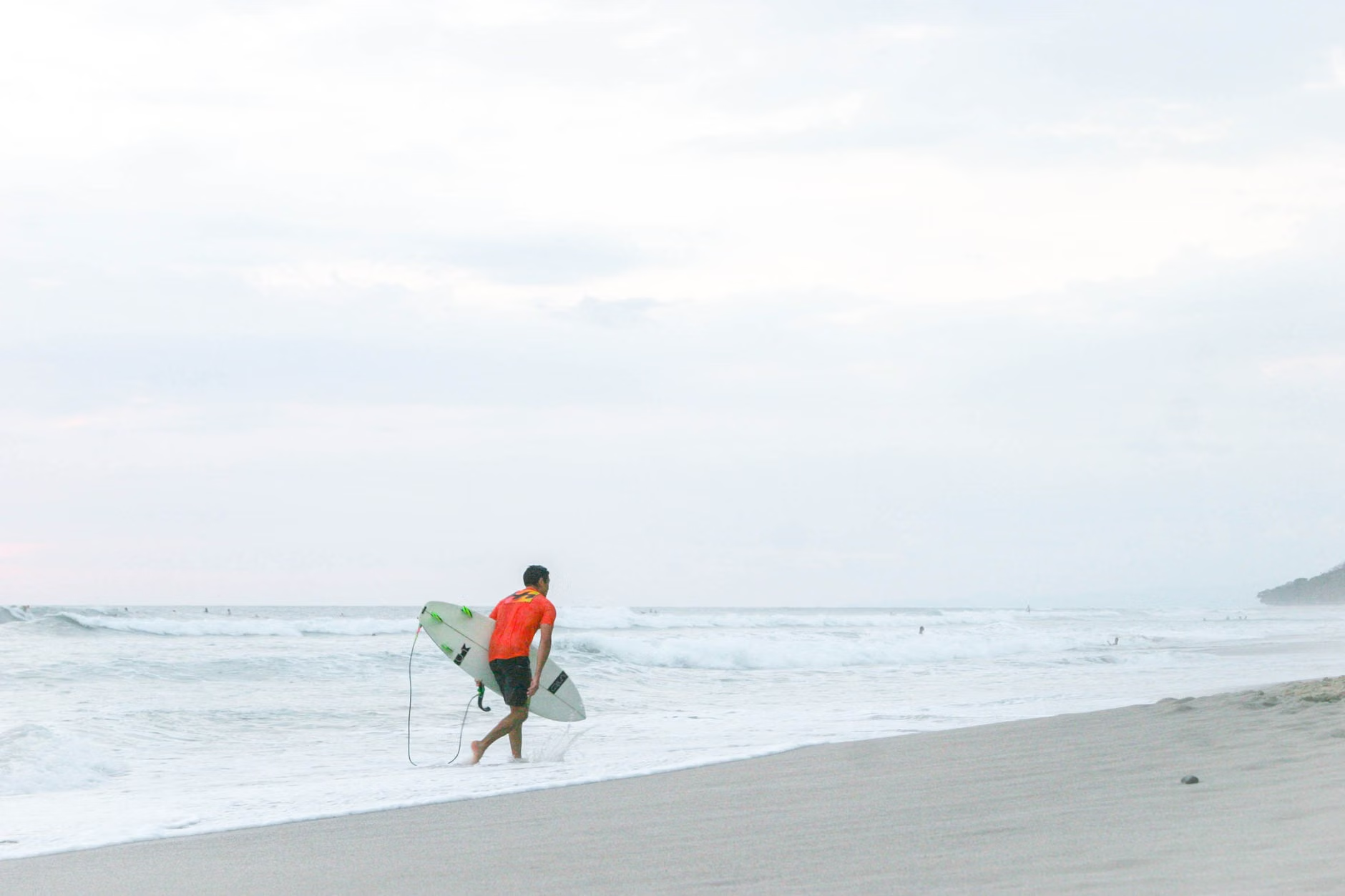
Costa Rica is built for adrenaline — ziplining, whitewater rafting, canyoning, surfing, scuba, volcano hikes. It is also a place where visitors are genuinely injured, and occasionally killed, doing exactly these activities. That makes two things matter: choosing reputable, certified operators, and making sure your policy actually covers the activity.
A policy can cover emergency medical treatment in general and still exclude the specific thing you were doing. Surfing is often covered as standard; higher-risk activities such as ziplining, rafting, canyoning and deeper scuba frequently sit in a grey zone and may need an adventure add-on or a more comprehensive policy. Do not rely on what other travellers say is “normal” here — search the policy wording for the activity by name, and if it is vague, ask the insurer before you buy.
Costa Rica’s Ministry of Health maintains a list of approved adventure-sports operators, and the emergency number nationwide is 911. Book tours through certified operators, never do adventure sports solo, and tell someone your plan for the day.
Medical realities: why evacuation cover matters here
Care in San José is generally good, with well-regarded private hospitals. But two things surprise visitors. First, private hospitals typically want payment or proof of insurance up front and do not accept foreign health insurance directly. Second, outside the capital — on the Caribbean coast, the Nicoya and Osa peninsulas, or remote lodges reached by boat or small plane — services thin out fast and ambulances may lack advanced equipment.
That combination is exactly why medical evacuation is the benefit to prioritise for Costa Rica. Getting from a remote beach to a proper hospital, or home, is where costs run into the thousands. Confirm evacuation and 24-hour emergency assistance are clearly in your policy, not just hospital treatment.
Where SafetyWing fits
SafetyWing is strongest when you want flexible, medical-first cover that works for a short trip from 5 days as well as longer open-ended travel, and — usefully — you can buy it while already abroad. It currently lists Nomad Insurance Essential from US$62.72 per 4 weeks for ages 18-39, roughly US$2.24/day rolling (a little cheaper if you prepay a longer policy). Always check the live quote for your exact age, destination and dates.
A few specifics for a Costa Rica trip: surfing is covered as standard, and motorbike or scooter accidents are covered provided you wear a helmet and hold a valid licence. The Essential plan is emergency-focused, so it does not cover pre-existing conditions, maternity or cancer treatment — and higher-risk adventure activities should be checked against the live wording, since some need the adventure add-on or a broader policy.
| Decision point | What to know |
|---|---|
| SafetyWing fit | Good for flexible, medical-first trips from 5 days — backpackers, remote workers and multi-country travellers, and buying once already on the road. |
| Activity warning | Surfing is standard; check ziplining, rafting, canyoning and diving before relying on it, as some need the adventure add-on. |
| Evacuation | Remote rainforest and beach areas make medical evacuation wording especially important. |
| Rental car gap | Mandatory TPL liability, deposits and car damage are separate from any travel policy. |
Check your quote before you fly
Put in your exact dates, destinations and age, then read the policy wording for your activities.
When I would choose another policy
I would compare a comprehensive travel policy if your Costa Rica trip includes expensive lodges, prepaid tours, a lot of high-risk adventure activities, valuable electronics or strong cancellation needs. SafetyWing is a solid medical-first base, but the exact activity wording — and how much prepaid trip cost you need to protect — decides whether it is the right fit.
Policy comparison points
| Thing to compare | Why it matters |
|---|---|
| Emergency medical | Private hospitals want payment or proof of insurance before treating you. |
| Evacuation/repatriation | Critical for remote beaches, jungle lodges and serious incidents. |
| Adventure activities | Costa Rica is activity-heavy; check every planned activity by name. |
| Trip disruption | Rain, road closures and missed transfers can affect plans. |
| Baggage/electronics | Check limits for cameras, laptops and phones if travelling long-term. |
Why medical cover comes first
Lost luggage is annoying. A serious medical event is the problem that can overwhelm your trip and your bank account. Start with emergency medical, hospital, evacuation and assistance benefits before caring about the smaller extras.
For Costa Rica, think through how you would handle a late-night clinic visit, a hospital admission that wants payment up front, a road accident on a rough highway, a surfing or ziplining injury, or an evacuation from a remote lodge. Save the insurer’s emergency contact details offline and share your policy number with someone you trust.
How to make claims less painful
- Contact the insurer early for serious medical events or anything that may need approval or direct billing.
- Keep itemised invoices, medical notes, receipts, police reports and transport-disruption proof.
- Photograph damaged gear before repairing or replacing it.
- Do not throw away boarding passes, booking confirmations or payment receipts until the trip is over.
- Write a short timeline while the details are fresh.
What travel insurance usually will not fix
- Changing your mind: cancellation benefits usually need a covered reason.
- Rental-car liability: the mandatory TPL is never covered by a travel policy.
- Illegal riding or driving: licence and helmet rules matter, and intoxication voids cover.
- Known events: buying after a storm, strike, illness or warning appears may not help.
- Unattended belongings: leaving gear exposed can void a claim.
- Pre-existing conditions: these need careful wording and sometimes extra assessment.
Who SafetyWing suits best
SafetyWing is strongest for travellers who want flexible cover, care most about medical protection, and may not have a perfect round-trip holiday structure. Backpackers, remote workers, long-term travellers and people visiting multiple countries often like that simplicity, plus the ability to buy it after leaving home.
For a short Costa Rica trip it can still make sense, because cover can be quoted for trips from 5 days. Just do not treat that as a reason to skip comparison. If you have expensive prepaid bookings or specialist activities, check whether a comprehensive holiday policy fits better.
When to buy travel insurance
Buy earlier if cancellation cover matters. If you wait until just before departure, you may still get medical cover for the trip, but you have spent weeks carrying cancellation risk yourself. For expensive holidays, buy soon after locking in flights, hotels or tours.
Which policy type by trip style?
Short holiday
Compare medical, cancellation, baggage and activity cover. If flights and lodges are prepaid, trip-cost benefits matter more.
Backpacking trip
Prioritise flexible medical cover, emergency assistance, extensions and multi-country rules. SafetyWing often fits this style well.
Adventure trip
Check the exact activity wording first. Ziplining, rafting, canyoning, diving and surfing can change the policy choice.
Documents to save offline
- Policy certificate and policy wording.
- Emergency assistance phone number and email (and local emergency number 911).
- Passport photo page and entry-stamp screenshot.
- Flight, lodge and tour invoices.
- Medical prescriptions and relevant health notes.
- Receipts for expensive gear you may need to claim.
What about credit card travel insurance?
Credit card travel insurance can be useful, but do not assume it applies automatically. Many cards require you to pay for flights or a minimum trip cost with the card, activate cover, meet age/residency rules, and follow strict trip-length limits. In Costa Rica specifically, a card’s rental benefit usually acts as a Collision Damage Waiver only — it will not cover the mandatory liability.
Read the booklet before relying on it. Check medical limits, excess, pre-existing conditions, activity rules and whether travelling companions are covered.
My final insurance rule
Buy enough cover that a bad day stays a bad day rather than becoming a financial disaster. For many backpackers and flexible travellers, SafetyWing is a practical medical-first option, especially now that short trips from 5 days are possible. For adventure-heavy itineraries or expensive prepaid trips, compare broader comprehensive policies — and budget separately for the mandatory rental-car liability if you plan to drive.
Before you buy: checklist
- Remember insurance is no longer required to enter, but medical and evacuation cover are still worth having.
- Confirm medical evacuation and 24-hour assistance are clearly included, not just hospital treatment.
- Check your activities by name — ziplining, rafting, canyoning, surfing, diving — and whether an adventure add-on is needed.
- Budget separately for mandatory rental-car liability (TPL/SLI) if you are driving.
- Check pre-existing condition wording if that matters to you.
- Save emergency numbers, policy documents and claim instructions offline.
FAQ
Is travel insurance required to enter Costa Rica?
No. The mandatory entry requirement was removed on 1 April 2022 along with all COVID-era rules. It is no longer checked at the border, but it is still strongly recommended — especially cover that includes medical evacuation.
Do I need travel insurance for Costa Rica?
It is not legally required, but it is worth having. Private hospitals expect payment or proof of insurance up front, remote areas make evacuation important, and adventure activities carry real injury risk.
Is SafetyWing good for Costa Rica?
It can be, especially for medical-first flexible travel from 5 days. Surfing is covered as standard, but check ziplining, rafting and canyoning before relying on it, as some need the adventure add-on.
Does insurance cover ziplining or rafting in Costa Rica?
Only if the policy wording includes those activities under the conditions you will use. Higher-risk activities often need an adventure add-on or a comprehensive policy — check by name before buying.
Does travel insurance replace Costa Rica rental car insurance?
No. Costa Rica requires mandatory third-party liability (TPL/SLI) on every rental by law, and you cannot decline it. Cards and travel policies do not cover it, so budget for it separately at the counter.
Ready to compare cover?
Start with medical and evacuation cover, then compare the activity and cancellation wording for your exact trip.
Sources checked
Insurance wording, entry rules and rental-car terms change. I checked these while preparing this guide, but you should still confirm live policy terms and current government advice before buying.
Disclosure: This guide contains affiliate links. Insurance is personal; always read the live policy wording and exclusions before buying.