
Europe Itinerary
If you have one month for Europe, the best route is not “as many capitals as possible”. It is a route with clean transport links, enough time in each stop to enjoy it, and a finish that still feels like summer rather than a recovery period from train exhaustion.
This version is built for Australians doing the classic first big Europe trip. It keeps the route logical, balances major cities with a proper summer finish, and focuses on the parts that actually matter: budget, route order, transport, money, eSIMs, and what to book before you leave home.
I have built this guide around the exact tools, transport links, and booking platforms that make the biggest practical difference. Every recommendation here is something I would use myself or have already tested.
At a glance: the clean 1-month route
Week 1: London (3–4 nights) → Paris (3–4 nights)
Week 2: Amsterdam (2 nights) → Berlin (3 nights) → Prague (2–3 nights)
Week 3: Vienna (2–3 nights) → Budapest (3–4 nights)
Week 4: Adriatic coast finish — Albania or Croatia (5–7 nights)
This route works because it starts with the easiest long-haul arrivals, moves east through strong train corridors, and ends with a proper summer coast section instead of more city fatigue. You move in one direction the whole time — no backtracking, no wasted airport days.
Every city-to-city connection on this route can be booked through Omio, and most are under five hours by train or bus.
Mostly overland transport
One month without stupid backtracking
West → East → Coast
Sort these before you fly
The biggest Europe mistakes usually happen before the trip starts: bad banking setup, overpriced roaming, transport booked too late, or a route that asks too much of your energy. Get these six things locked in before you board the plane and the entire month runs smoother.
Travel money
Use the right travel card before you leave. A bad card will cost you 2–3% on every transaction in fees and exchange rate margins, which adds up across a whole month of spending. The full comparison for Australian travellers is here: Best Travel Card for Europe. If you do not already have a travel card sorted, Up Bank is worth looking at — zero international transaction fees and instant notifications when you tap abroad.
Transport
For trains and buses between the big cities, Omio is the easiest way to compare routes without opening five different national rail sites. It pulls in trains, buses, and even short flights into one search. Book your Eurostar, Thalys, and FlixBus legs through there. For activities and attraction tickets in each city, Klook often has better prices than booking at the gate — especially for skip-the-line tickets in Paris and London.
Phone data
Get your data sorted before landing. Saily’s Europe eSIM is much cleaner than paying roaming fees from Australia. An eSIM installs directly onto your phone before you leave — no SIM swaps, no hunting for phone shops on arrival. Saily is from the same team behind NordVPN, so the app quality is solid. Most Europe eSIMs cover the entire EU plus the UK, so one plan works across every stop on this route.
Insurance
Long summer trips are exactly where SafetyWing stops being optional and starts being basic trip admin. Unlike traditional Australian travel insurance which locks you into fixed dates, SafetyWing runs on a month-to-month subscription — you can start it when you leave and cancel when you land back in Perth. It covers medical, trip interruption, and lost luggage across all the countries on this route.
VPN
If you want to stream Australian content, access internet banking without triggering security lockouts, or use public Wi-Fi in hostels without worrying, NordVPN is worth setting up before you go. I have found it especially useful for accessing geo-restricted streaming when hostel common room TV nights are otherwise limited to local channels. It also protects your connection on cafe and airport Wi-Fi, which matters when you are logging into bank apps.
Accommodation
For hostels, Hostelworld is still the strongest search for social hostels with real reviews. For private rooms, apartments, or if you are travelling as a pair, Trip.com has a wide range with free cancellation options and often surfaces deals that do not appear on other platforms. In peak summer, book London, Amsterdam, and Paris accommodation at least four to six weeks in advance — prices climb fast once inventory thins out.
Entry admin Australians need to know in 2026
If you are starting in London, there are two separate admin buckets: the UK and the Schengen Area. They are not the same system, and getting confused between them is an easy mistake to avoid.
- UK Electronic Travel Authorisation (ETA): Australians travelling to the UK need an ETA before flying. It costs £10, is linked to your passport, valid for two years, and you apply online. Check the current rules and apply on GOV.UK before booking anything. Apply at least a week before travel — most are approved within three working days, but leave yourself a buffer.
- Schengen 90-in-180 rule: Australians can visit the Schengen Area visa-free for up to 90 days in any 180-day period. A one-month trip is well within this. Your days in London do not count — the clock starts when you cross into France.
- EES (Entry/Exit System): The EU is currently rolling out its Entry/Exit System, which will require fingerprint and photo registration for non-EU travellers at Schengen borders. As of March 2026, it is being phased in — you may encounter EES terminals at Eurostar check-in or airport border crossings. It adds a few minutes to the process, not a major hassle, but check the current status before you fly.
- ETIAS: The EU’s ETIAS pre-travel authorisation (similar to the US ESTA) is expected to launch later in 2026. Check whether it is live before your departure — if it is, you will need to apply and pay a small fee online before entering the Schengen Area. Do not rely on old blog posts for this. Check the official EU travel portal link above.
None of this is difficult — it is just admin that needs to be done before you leave, not at the airport.
Getting there: flights from Australia
Middle East airspace closures are significantly affecting Australia-to-Europe flights right now. Since late February 2026, the escalation of the Iran conflict has closed airspace across Iran, Iraq, Qatar, Bahrain, Kuwait, and parts of the UAE. This has had major knock-on effects for Australian travellers:
Qantas Perth–London nonstop (QF9): Suspended since 4 March. The service is currently rerouted via Singapore (operating as QF209), adding around three hours to the journey. Qantas has extended this routing through at least mid-to-late April 2026 with no confirmed return date for the nonstop.
Qatar Airways: Operating at roughly 20% of normal capacity on a limited schedule out of Doha. Qatari airspace remains partially closed. Not currently a reliable transit option from Australia.
Emirates: Recovered to approximately 70–80% capacity, but multiple European carriers (Lufthansa Group, British Airways, Air France) have suspended Dubai connections through May. Emirates’ own schedule remains reduced and subject to change.
Etihad: Operating at around 50% capacity out of Abu Dhabi.
What this means for your booking: If you are planning a Euro summer trip in the coming months, avoid relying on Gulf hub connections (Doha, Dubai, Abu Dhabi) until the situation stabilises. The safest routing options from Perth right now are via Singapore (Singapore Airlines, Qantas via SIN), Kuala Lumpur (Malaysia Airlines), or other Asian hubs. Check airline status pages before booking and consider flexible fare options where available. This situation is evolving — check for updates closer to your departure.
In normal conditions, Perth has some of the best long-haul options in Australia for reaching Europe. The Qantas direct Perth–Heathrow service (QF9) is the cleanest option when operating — around 17.5 hours nonstop. Return flights in peak summer typically sit between AUD $1,500 and $2,500 depending on how early you book and which airline. Booking six months ahead for a June–August departure tends to get the best prices.
With Gulf carriers currently disrupted, the most reliable one-stop options from Perth are through Singapore (Singapore Airlines) and Kuala Lumpur (Malaysia Airlines). Both add around four to five hours to the total journey and are generally several hundred dollars cheaper than the Qantas direct fare. For the European legs of the trip, use Omio to compare trains, buses, and intra-Europe flights.
Week 1: start strong in London and Paris
Days 1 to 3 — London
London (3 nights)
London is a clean landing city for Australians — English-speaking, easy to navigate from day one, and the Tube gets you anywhere fast. It is expensive, but the best stuff is free and the city rewards knowing where to go rather than spending blindly.
Where to stay: Book hostels on Hostelworld in Zone 1 or Zone 2 — Kings Cross (central to everything), Shoreditch (nightlife, street food), or Kensington (near the free museums). Prioritise hostels with free breakfast — it makes a real difference when a coffee and toast elsewhere costs £5+.
Day 1 — South Bank and Westminster: Walk the South Bank from the Tate Modern (free) along the Thames past the Globe Theatre to Borough Market for lunch — one of the best food markets in Europe. Try the grilled cheese at Kappacasein or a venison burger from Roast. Cross Westminster Bridge for Big Ben, the Houses of Parliament, and Westminster Abbey (exterior is free; book interior tickets on Klook if you want to go inside). Walk through St James’s Park to Buckingham Palace. The Changing of the Guard is free — check the schedule online, it does not happen every day.
Day 2 — Museums and markets: Start at the British Museum (free — the Rosetta Stone, Egyptian mummies, and Parthenon Marbles alone are worth two hours). Walk to Covent Garden for street performers, then through Soho to the National Gallery on Trafalgar Square (also free). In the evening, head to Brick Lane in Shoreditch for some of London’s best cheap eats — curry houses, salt beef bagels from Beigel Bake (open 24 hours, bagels under £3), and street art everywhere. Book Sky Garden (free, but timed tickets required) for sunset views over the city from the top of the Walkie Talkie building — it books out weeks ahead, so do this before you leave Australia.
Day 3 — Tower of London and East London: If you are going to pay for one thing in London, the Tower of London is worth it — the Crown Jewels, 900 years of history, and the Yeoman Warder tours are genuinely excellent. Book on Klook in advance for skip-the-line entry. Walk across Tower Bridge (free) and through Bermondsey to the Maltby Street Market (weekends, smaller and better than Borough). If you have energy, Camden Market in the afternoon is worth the Tube ride — chaotic, loud, and full of cheap street food from every cuisine imaginable.
Budget food: Supermarket meal deals are your best friend in London — Tesco, Sainsbury’s, and Boots all do a sandwich + drink + snack combo for £3.50–5. For a proper sit-down meal, Franco Manca does sourdough pizza for £7–10. Dishoom (Shoreditch or Kings Cross) is worth the queue for Indian breakfast or lunch. Avoid eating near Leicester Square, Piccadilly Circus, or directly outside any major tourist attraction — the prices double for the same quality.
Getting around: Use contactless (your travel card works) or an Oyster card on the Tube. The daily cap means you never overpay — once you have tapped enough journeys to hit the cap, every ride after that is free for the rest of the day. Walking between Zone 1 attractions is often faster than the Tube for short distances — British Museum to Covent Garden is seven minutes on foot.
London → Paris by Eurostar
The Eurostar from London St Pancras to Paris Gare du Nord takes just over two hours and is one of the best travel experiences in Europe. Book early — summer fares start from around £44 one way when booked in advance, but can climb above £200 if left until the last week. Eurostar uses dynamic pricing like airlines, so the cheapest seats go first. Book through Omio to compare options. Tuesdays and Wednesdays are the cheapest days to travel. Arrive 45 minutes early for check-in — there is passport control and security, similar to an airport but faster.
Days 4 to 7 — Paris
Paris (3–4 nights)
Paris deserves enough time to enjoy it, not just photograph it. Three or four nights gives you space to see the major landmarks, eat properly, and walk neighbourhoods that most tourists skip entirely.
Where to stay: The Marais (3rd/4th arrondissement) is the best base — walkable to most attractions, excellent food, and the liveliest neighbourhood in the city. Montmartre (18th) is cheaper and charming but further from the main sights. Book on Hostelworld — Generator Paris and St Christopher’s Canal are both well-reviewed social hostels.
Day 1 — Montmartre and Sacré-Cœur: Start at the top of the city. Climb (or take the funicular) to Sacré-Cœur for the best free panoramic view in Paris. Walk through the cobblestone streets of Montmartre — Place du Tertre for artists, the Moulin Rouge façade (just the outside), and the vineyard on Rue des Saules. Work your way down to the Canal Saint-Martin for an afternoon coffee along the water — this is where Parisians actually hang out, not the Champs-Élysées. In the evening, grab a crêpe from a street vendor in the Latin Quarter (€4–6) and walk along the Seine as the lights come on.
Day 2 — Museum day: Book timed-entry tickets for the Louvre on Klook — summer queues without pre-booked tickets can be well over an hour. You do not need a full day here: two to three hours covering the Mona Lisa, Venus de Milo, Winged Victory, and the French painting galleries is plenty. Walk through the Tuileries Garden to the Musée de l’Orangerie (Monet’s massive Water Lilies murals — much smaller and more intimate than the Louvre). Cross to the Musée d’Orsay if you like Impressionism — it is the better museum experience of the two for most people. First Sunday of the month: both are free.
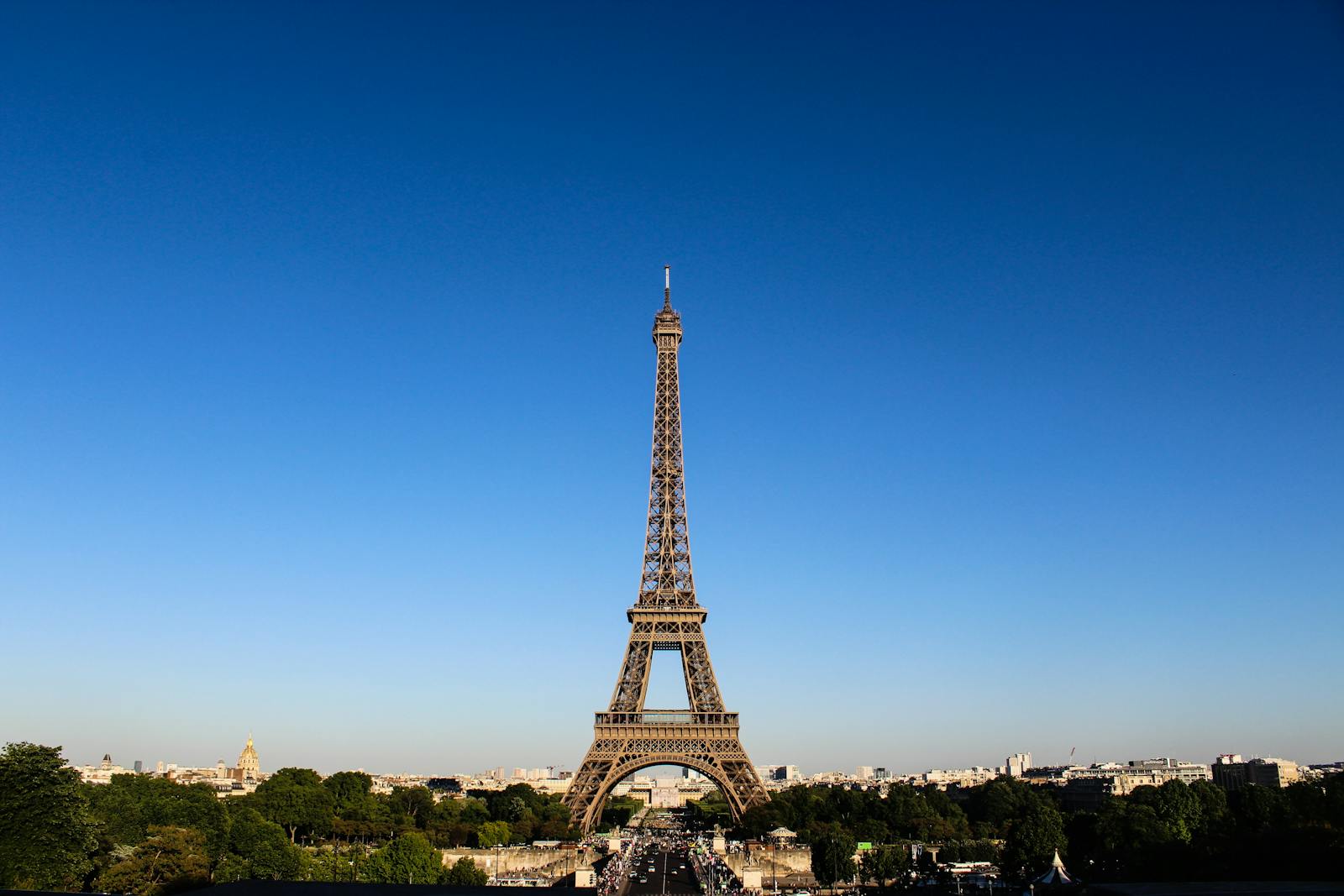
Day 3 — Eiffel Tower and the Marais: Walk to Trocadéro for the best Eiffel Tower photo — you do not need to go up it to appreciate it, and the queues in summer are brutal. If you do want to go up, book tickets on Klook weeks in advance. Spend the afternoon in the Marais — the best neighbourhood for walking in Paris. Rue des Rosiers for falafel (L’As du Fallafel is the famous one, Chez Marianne is quieter and just as good), the Place des Vosges (oldest planned square in Paris, free to walk through), vintage shops, and independent bookstores. In the evening, buy a bottle of wine and cheese from a fromagerie (€10–15 total) and sit on the banks of the Seine near Île Saint-Louis. This is one of the best free evenings you can have in any city in Europe.
Optional day 4 — Versailles or rest: If you have four nights, use the extra day for either a day trip to Versailles (RER C train, around 40 minutes — book palace tickets on Klook) or simply slow down. Walk through the Jardin du Luxembourg, browse the bookstalls along the Seine (bouquinistes), or explore the Père Lachaise Cemetery (free — Jim Morrison, Oscar Wilde, Chopin). Paris rewards slow days as much as busy ones.
Budget food: Boulangeries for breakfast — croissant + coffee for under €4 at almost any local bakery. Avoid any café directly on a major boulevard. Supermarkets (Monoprix, Franprix) for picnic supplies — baguette, cheese, charcuterie, and fruit for under €8 makes a better lunch than most tourist-trap restaurants. Prix fixe lunch menus at local bistros run €12–16 for two courses and are excellent value.
Getting around: The Metro is the fastest way. Buy a Navigo Easy card and load single tickets (€2.15 each) or a carnet-equivalent bundle. Walking is often better for short distances — the city is more compact than it looks on the map.
Week 2: use the best central rail corridor
Amsterdam, Berlin, and Prague make sense together because the transport links are strong and the vibe changes enough between stops to keep the trip feeling fresh. This is the section where Omio earns its keep — you can search and compare trains, FlixBus, and budget flights across all three legs in one place.
Days 8 to 9 — Amsterdam
Amsterdam (2 nights)
Amsterdam works best as a shorter stop because accommodation in peak season is brutal — hostel dorms regularly hit €50–70 per night in July and August. Two nights is enough to see the essentials and soak in the canal atmosphere without your budget taking a beating.
Where to stay: The Jordaan and De Pijp neighbourhoods are the best balance of location and atmosphere. Book on Hostelworld early — ClinkNOORD (across the river, free ferry to Central Station) and The Flying Pig Downtown are both well-positioned social hostels.
Day 1 — Canals and museums: Rent a bike (€10–12 per day) — Amsterdam is flat, compact, and designed for cycling, not walking. Ride through the Jordaan neighbourhood (the prettiest canal streets in the city), stop at Vondelpark for a coffee break, then lock up the bike and visit the Van Gogh Museum. Book tickets on Klook in advance — it sells out, especially in summer. The Rijksmuseum is next door if you want to see the Rembrandt and Vermeer collections (also book ahead). Walk through the Albert Cuyp Market in De Pijp for stroopwafels, Dutch cheese, and Surinamese roti rolls.
Day 2 — Anne Frank House and walking: The Anne Frank House requires online booking well ahead — do this weeks before you arrive, morning slots sell out fastest. After the visit, walk through the Nine Streets (Negen Straatjes) — independent boutiques, vintage shops, and good cafés. The Begijnhof is a hidden medieval courtyard that most tourists miss — free to enter and beautifully quiet. In the afternoon, explore the NDSM Wharf across the river (free ferry from Central Station) — a former shipyard turned creative hub with street art, breweries, and waterfront bars. For dinner, try an Indonesian rijsttafel (shared rice table with many dishes) — it is the signature Amsterdam eating experience and runs around €18–25.
Budget food: Albert Heijn supermarket is your best friend for cheap meals. Cheese shops sell portions for €3–5. Febo (automated wall vending machines) is a uniquely Dutch fast-food experience — croquettes for under €3. FEBO is not fine dining, but it is a cultural experience.
Days 10 to 12 — Berlin
Berlin (3 nights)
Berlin is where the trip shifts gear. It is one of the best-value major capitals in Western Europe — hostel dorms around €20–30, excellent street food for €3–5, and most of the best experiences cost little or nothing. The city rewards you for exploring neighbourhoods, not just ticking off landmarks.
Where to stay: Kreuzberg or Friedrichshain for nightlife and street food. Mitte for museums and central sightseeing. Book on Hostelworld — Circus Hostel (Mitte) and PLUS Berlin (Friedrichshain, has a pool and sauna) are both excellent.
Day 1 — History walk: Start at the Reichstag (book the free dome visit weeks in advance online — the rooftop views are stunning). Walk through the Brandenburg Gate to the Holocaust Memorial (free — walk through the concrete blocks at dusk for the most powerful experience). Continue to Checkpoint Charlie (the museum is optional but the outdoor exhibition is free), then along the remnants of the Berlin Wall at Topography of Terror (free museum and outdoor exhibition documenting the SS and Gestapo). End at the East Side Gallery — the longest remaining stretch of the Berlin Wall, covered in murals, running along the Spree River. This entire walk takes four to five hours and costs nothing.
Day 2 — Museum Island and neighbourhoods: Museum Island is a UNESCO-listed cluster of five museums on an island in the Spree. The Pergamon Museum (ancient Babylonian and Greek architecture) and Neues Museum (Egyptian collection, bust of Nefertiti) are the standouts. Book combination tickets on Klook. In the afternoon, walk through Kreuzberg — the most multicultural neighbourhood in Berlin. Oranienstraße for bars and record shops, Görlitzer Park for people-watching, and the Turkish Market along the Maybachufer canal (Tuesdays and Fridays) for the cheapest and best street food in the city. Get a döner kebab for €4–5 — Berlin’s döner is famously good and one of the best cheap meals in Europe.
Day 3 — Tiergarten, flea markets, and nightlife: Walk or cycle through the Tiergarten (Berlin’s equivalent of Central Park) to the flea market at Mauerpark (Sundays — massive, with live karaoke in the amphitheatre). If it is not a Sunday, the RAW Gelände area in Friedrichshain is worth exploring — a former railway repair yard turned into clubs, bars, a climbing wall, and a skateboard park. Berlin’s nightlife is legendary, but you do not need to spend big — most bars have beers for €3–4 and many clubs have free entry on weeknights. Berghain is the famous one but the queue can be hours with no guarantee of entry; try Tresor or Sisyphos for a more accessible experience.
Budget food: Döner kebab (€4–5), currywurst at Curry 36 (€3–4), falafel wraps in Kreuzberg (€4), and Vietnamese pho in the Dong Xuan Center. Berlin is one of the few European capitals where you can eat out well for under €8 per meal.
Berlin to Prague is roughly four and a half hours by direct train or around four hours on FlixBus. Compare both on Omio — FlixBus is usually cheaper (from €15), while trains are more comfortable and quicker.
Days 13 to 15 — Prague
Prague (2–3 nights)
Prague is one of the easiest “feels like Europe” cities for a first big trip, and it is where your daily costs drop noticeably. A hostel dorm runs around €15–22, a proper sit-down meal is €8–12, and a pint of Czech beer costs €1.50–2.50. The city is compact enough to walk everywhere.
Where to stay: Prague 1 (Old Town) is the most central but most expensive. Prague 2 (Vinohrady) is cheaper, safer, and has better local restaurants. Prague 3 (Žižkov) is the cheapest and most “local” — full of pubs where a beer costs €1.50. Book on Hostelworld.
Day 1 — Old Town and Charles Bridge: Walk Charles Bridge at 7am before the crowds arrive — it is genuinely beautiful when it is quiet, and a tourist-choked nightmare after 10am. Explore the Old Town Square and watch the Astronomical Clock strike the hour (it is brief and not as impressive as you expect, but it is free and you are there anyway). Walk through the Jewish Quarter (Josefov) — the exterior architecture is stunning even without paying for museum entry. The free walking tours in Prague are among the best in Europe — tip-based, no upfront cost, and the guides are excellent. In the evening, find a traditional Czech pub (pivnice) for beer and svíčková (beef in cream sauce) for under €10.
Day 2 — Castle and Malá Strana: Walk up to Prague Castle (the grounds are free to enter — you only pay if you want to go inside specific buildings). St. Vitus Cathedral is inside the castle complex and is stunning from the outside. Walk down through the gardens into Malá Strana (the Lesser Town), which has quieter streets, baroque architecture, and good cafés away from the tourist centre. Continue to Petřín Hill — climb the lookout tower (mini Eiffel Tower) for a panoramic view of the whole city for around €5. The Lennon Wall is nearby and free. In the evening, head to Letná Park — the beer garden overlooking the Vltava River is one of the best spots in Prague for a €2 beer with a view.
Optional day 3 — Kutná Hora or Vinohrady: If you have a third day, either take a day trip to Kutná Hora (one hour by train, bookable on Omio) to see the Sedlec Ossuary (the “bone church”) and the stunning Gothic cathedral, or spend the day exploring Vinohrady — the neighbourhood Praguers actually live in. Náměstí Míru square, the Riegrovy Sady beer garden (another great view), and walking through the residential streets gives you a very different feel to the tourist centre.
Budget food: Look for places serving a denní menu (daily lunch menu) — a soup and main course for €4–6. Lokál (multiple locations) serves excellent traditional Czech food at local prices in a tourist city. Trdelník (the chimney cake sold everywhere) is actually a tourist invention, not Czech — skip it and spend the money on a real meal. For a proper Czech pub experience, try U Sudu (underground labyrinth of rooms) or Hospůdka U Bansethů in Žižkov.
Week 3: Vienna and Budapest
Days 16 to 18 — Vienna
Vienna (2–3 nights)
Vienna works as a reset city — after the pace of Berlin and Prague, its orderly streets, coffee houses, and grand architecture provide a welcome gear change. It is more polished and quieter than the cities before it, which is exactly what you need at this point in the trip.
Where to stay: The areas around Naschmarkt (6th district) or Neubau (7th district) are the sweet spot — central, well-connected by U-Bahn, and with good local restaurants. Book on Hostelworld — Wombat’s City Hostel and myMOJOvie are both well-reviewed. A 72-hour transport ticket is the best value if staying two to three nights.
Day 1 — Ringstraße and coffee houses: Walk the Ringstraße (the grand boulevard encircling the old city) to see the State Opera House, Parliament, Rathaus (City Hall), Burgtheater, and the Hofburg Palace — all from the outside, all free. Duck into the Hofburg grounds and walk through the Heldenplatz. The Albertina Museum has a strong modern art collection if you want one paid museum. In the afternoon, sit in a traditional Viennese coffee house — this is not a luxury, it is the culture. Café Central (historic, touristy but beautiful) or Café Sperl (more local, less crowded). Order a Melange (Viennese cappuccino) and a slice of Sachertorte or Apfelstrudel. This will cost around €8–10 and is part of the experience, not a splurge.
Day 2 — Schönbrunn and Naschmarkt: Take the U-Bahn to Schönbrunn Palace — the Habsburg summer residence. The gardens and grounds are free and enormous, worth a couple of hours walking through even without entering the palace. If you want the interior, book a ticket on Klook — the “Imperial Tour” (22 rooms) is enough; the longer “Grand Tour” adds time but not proportional value. In the afternoon, head to the Naschmarkt — Vienna’s best food market. Walk the full length (it stretches for about a kilometre), try olives, cheese, falafel, and Austrian wine at the stalls. On Saturdays, the flea market at the far end of the Naschmarkt is one of the best in Central Europe. In the evening, the MuseumsQuartier courtyard is free to hang out in — locals sit on the colourful outdoor furniture with drinks from nearby bars.
Optional day 3 — Belvedere or day trip: The Belvedere Palace houses Klimt’s The Kiss and is worth the entry fee if you care about art. The Upper Belvedere gardens have one of the best views in Vienna and are free. Alternatively, take a day trip to Bratislava — only one hour by train (bookable on Omio, from €10), and cheap enough that lunch, a walk through the compact old town, and a beer on the Danube embankment makes for an easy half-day addition. If you are after classical music, check for standing-room tickets at the State Opera — they are sold on the day for around €4–10 and give you the full experience at a fraction of the seated price.
Budget food: Bitzinger Würstelstand near the State Opera is an institution — sausages for €4–5 that locals eat in formal clothes after the opera. Schnitzel from a traditional Beisl (tavern) costs around €10–14. The Naschmarkt stalls are good for cheap lunch. Billa and Spar supermarkets for self-catering.
Vienna → Budapest
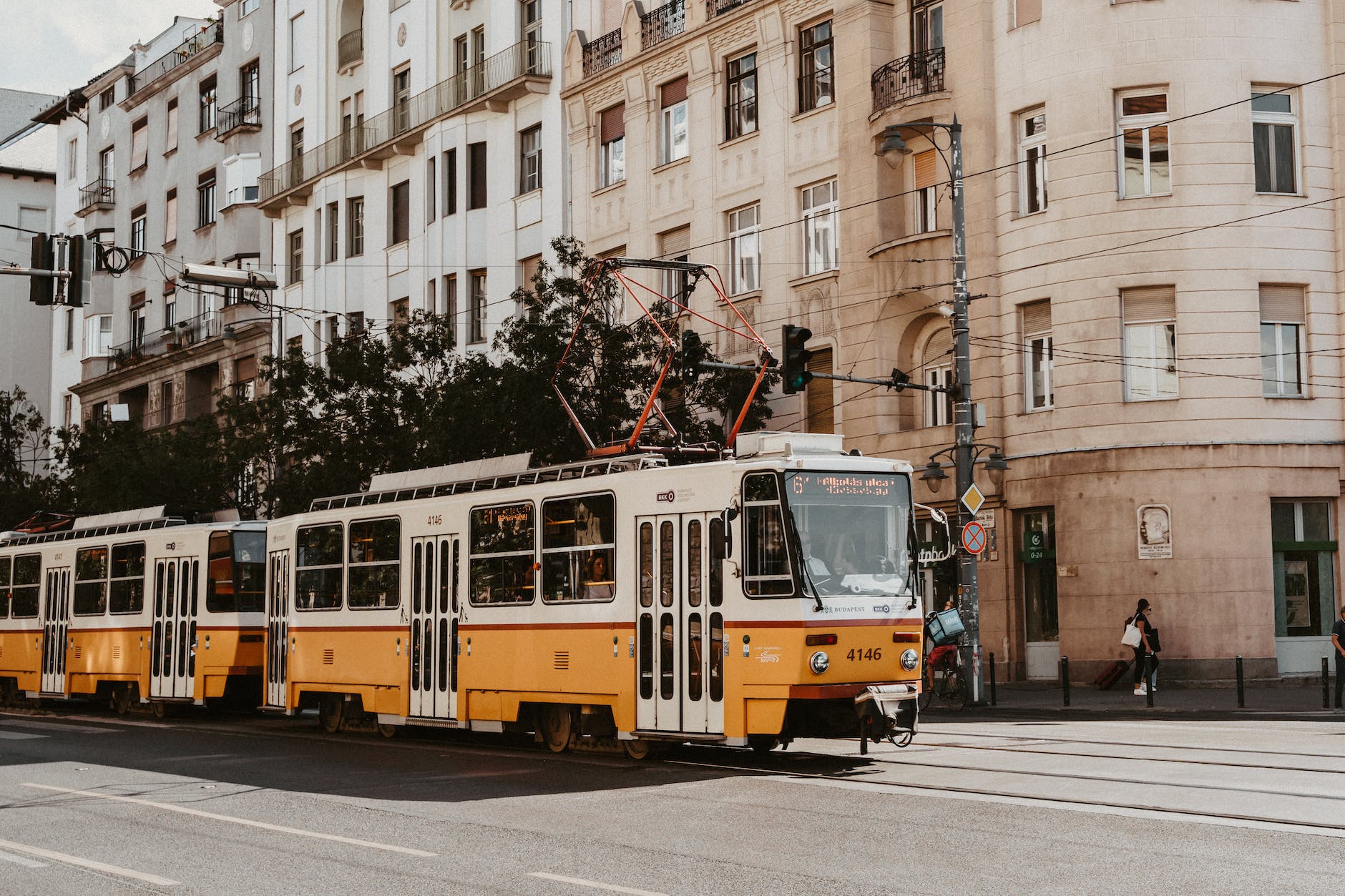
The train between Vienna and Budapest is one of the best legs on the entire route — around 2.5 hours, direct, with views of the Hungarian countryside. Book on Omio — fares are usually €15–30 when booked a few weeks in advance.
Days 19 to 22 — Budapest
Budapest (3–4 nights)
Budapest is the energetic payoff of the trip. It is one of the best-value capitals on this route — a hostel dorm is around €12–20, meals are €6–10, a beer is €2–3, and the city has more character per square metre than almost anywhere else you have been. The city is split by the Danube: Buda (hilly, historic, quieter) on the west bank, and Pest (flat, lively, where most of the action is) on the east.
Where to stay: The Jewish Quarter (District VII, Pest side) is the best base — walking distance to ruin bars, restaurants, and the Danube embankment. Carpe Noctem Vitae is consistently rated one of the best party hostels in Europe. Maverick Hostel is a good mid-ground if you want social but not chaotic. Book on Hostelworld.
Day 1 — Buda side: Cross the Chain Bridge to the Buda side and walk up to the Castle District. Fisherman’s Bastion has the most photographed view in Budapest — the view is free (the upper terrace charges a small fee in summer, but the lower terrace is free and the view is essentially the same). Walk through the Matthias Church courtyard, explore the medieval streets of the Castle District, and continue up to Gellért Hill — the Citadella at the top has the best 360-degree panorama of the city and the Danube, and it is completely free. Walk back down and cross the Liberty Bridge at sunset — arguably the best sunset walk in Central Europe.
Day 2 — Thermal baths and the Danube: A soak in the Széchenyi Thermal Baths is non-negotiable — it is one of the largest bath complexes in Europe, set in a neo-baroque palace in City Park. Book on Klook for guaranteed entry (around €25–30). Go in the morning to avoid peak crowds. Bring your own towel to save on rental fees. After the baths, walk along the Pest embankment to the Shoes on the Danube Bank — a quiet, powerful memorial to Holocaust victims (free). Continue to the Hungarian Parliament Building — book an interior tour on Klook if you want to go inside, or simply admire it from the riverside.
Day 3 — Jewish Quarter and ruin bars: Explore the Jewish Quarter on foot — the Dohány Street Synagogue (the largest in Europe) is worth the entry fee. The neighbourhood around it is where you will find the ruin bars — Szimpla Kert is the most famous (a derelict building turned into a multi-room bar filled with mismatched furniture, plants, and art), but Instant-Fogas, Anker’t, and Élesztő are all worth exploring and less crowded. On Sunday mornings, Szimpla hosts a farmers’ market with local Hungarian produce, cheeses, and baked goods — much better than visiting it as just a bar. For lunch, the Central Market Hall (Nagy Vásárcsarnok) is the biggest covered market in Budapest — buy paprika, sausages, and Hungarian crafts downstairs, and eat lángos (fried dough with sour cream and cheese) at the food stalls upstairs for around €3.
Day 4 — Margaret Island and slow day: By this point in the trip you need a rest day. Margaret Island sits in the middle of the Danube and is entirely car-free — rent a golf cart or bike, swim in the outdoor pool complex (Palatinus Strand, around €8), or just lie on the grass and do nothing. This is the best wind-down day on the entire route. In the evening, a sunset Danube river cruise (book on Klook) is one of the highlights of the trip — the Parliament, Chain Bridge, and Buda Castle lit up at night from the water is stunning. Cruises with a drink included run around €15–20.
Budget food: Street Foodie Court (Kazinczy utca) in the Jewish Quarter for pulled pork, burgers, and Hungarian stews for €5–7. Karavan Street Food (next to Szimpla Kert) has a row of food trucks. For proper Hungarian food at local prices, Frici Papa Kifőzdéje serves traditional canteen-style meals for €4–6. Langos and chimney cake from street vendors cost €2–4. Budapest is one of the few capitals where you can eat and drink well on €15–20 per day.
Week 4: finish on the coast
Ending with another major city often makes the whole month feel heavier than it needs to. A coast finish gives you a different pace and stops the trip from ending in pure museum-and-metro mode. From Budapest, you can reach either Albania or Croatia by a short budget flight — compare on Omio or check Wizz Air and Ryanair direct.
Days 23 to 30
Option A: Albanian Riviera
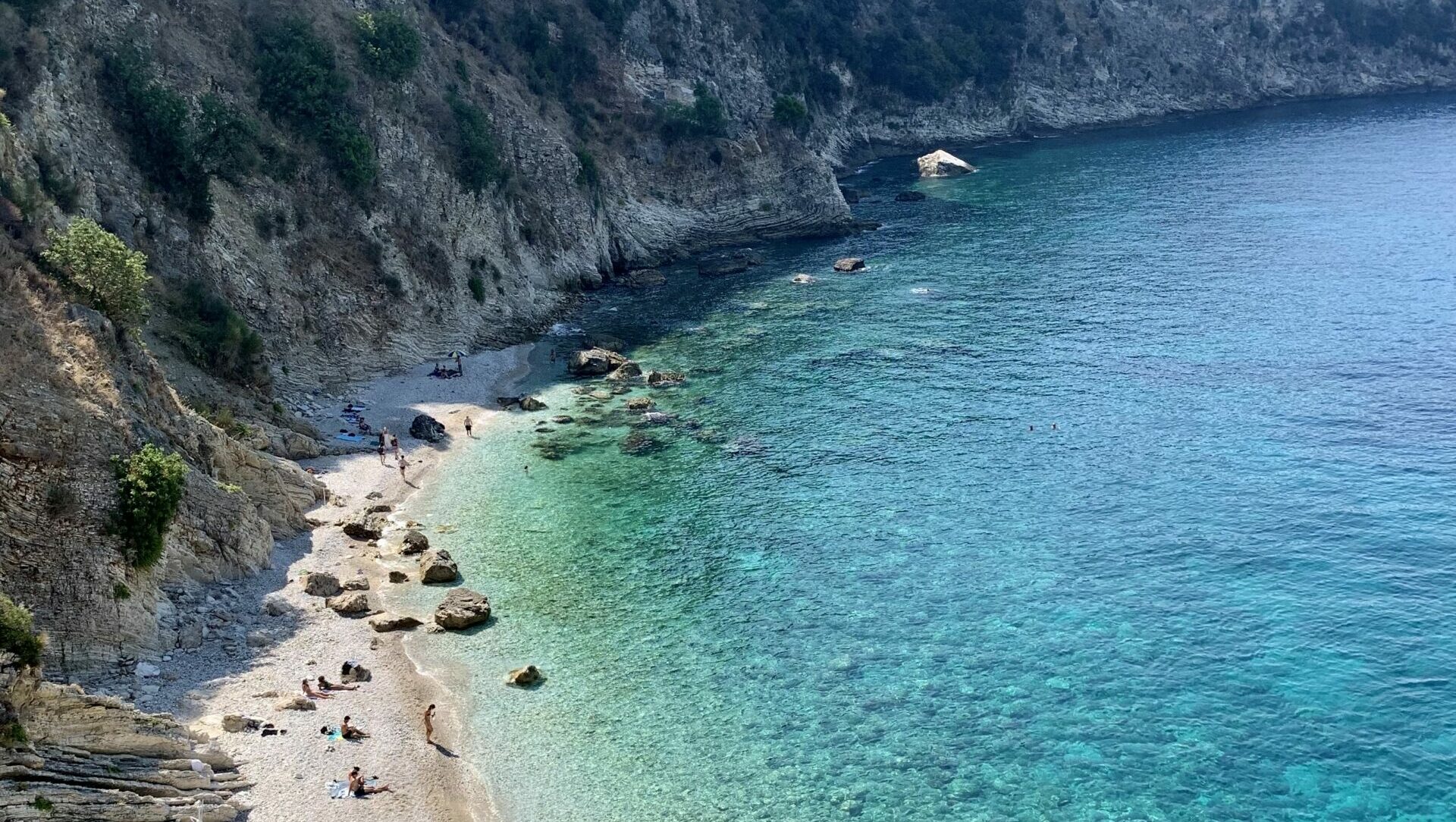
Albania is the better-value finish. Daily costs drop significantly — think €20–40 per day for accommodation, food, and transport. The Albanian Riviera has genuinely beautiful beaches, clear water, and a fraction of the crowds and prices you will find on the Croatian coast.
Where to go: Fly into Tirana, then bus south to the coast. Sarandë is the most accessible coastal town (easy bus connection, good range of accommodation on Trip.com). Use it as a base for day trips to Ksamil (three small islands with crystal-clear water, 20 minutes south by bus — the closest thing to the Greek islands at a quarter of the price) and the ancient ruins of Butrint (UNESCO World Heritage Site, around €10 entry). Himarë is further north along the coast and quieter — better if you want to sit on a beach and read for a few days without much structure. The bus along the coast between Sarandë and Himarë follows one of the most scenic roads in the Balkans.
What to eat: Fresh seafood meals for €5–8 are standard — grilled fish, calamari, and Greek-influenced salads. Byrek (savoury pastry filled with cheese or spinach) from street bakeries costs under €1 and is the best quick breakfast. Tavë kosi (lamb baked in yoghurt) is the national dish and costs around €5–7 at a local restaurant. Coffee culture is strong — an espresso costs €0.50–1.
Practical: Albania is not in the EU — your EU eSIM may not cover it. Check your plan, or grab a separate Albania eSIM from Saily. Albania uses the lek, not the euro — your travel card should handle the conversion without fees. ATMs are available in all coastal towns but carry some cash for smaller establishments. Accommodation is guesthouses and small hotels rather than chains — book on Trip.com and look for places with sea views for €15–25 per night.
Option B: Croatia (Split and Dubrovnik)
Croatia is the easier mainstream finish. It is more expensive than Albania but has better transport links and more infrastructure.
Where to go: Fly into Split rather than Dubrovnik if you want more variety. Split is cheaper, less overrun with cruise ship tourists, and Diocletian’s Palace (a 1,700-year-old Roman palace that is now the city centre — people literally live inside it) is one of the most unique attractions on this entire route. Walk the Riva waterfront promenade, climb Marjan Hill for views over the Adriatic, and eat at the Pazar market (green market) where you can get grilled ćevapi and salad for €6–8. From Split, take a ferry to Hvar (90 minutes) for a day or overnight — lavender fields, vineyards, and the best swimming on the Croatian coast. Book ferry tickets on Omio or direct with Jadrolinija.
Dubrovnik is stunning but budget it as the most expensive stop on the Adriatic section — €60–100 per day. The Old Town walls walk (€35, book on Klook) is worth the money — it takes 90 minutes to walk the full circuit and the views are breathtaking. Swim at Banje Beach (just outside the Old Town walls), kayak around the city walls (bookable on Klook), and take the cable car up Mount Srđ for sunset views over the whole city and coastline. Lokrum Island is a 15-minute ferry from the Old Town — a car-free island with a botanical garden, a monastery ruin, and rocky swimming spots. For food, walk 10 minutes outside the Old Town walls — the prices drop by 40% immediately. Croatia joined the eurozone in 2023, so your EU eSIM and euro-denominated travel card work without complications.
- Choose Albania if value matters and you want more time by the water without crowds.
- Choose Croatia if you want an easier, more well-trodden finish with better transport links home.
- Either way — do not overstuff the last week. The whole point is to let the trip breathe after three weeks of cities.
Transport between every stop
Every leg on this route can be booked through Omio. Here is what each connection looks like:
| Route | Best option | Duration | Approx. cost |
|---|---|---|---|
| London → Paris | Eurostar train | 2h 16m | €50–150 |
| Paris → Amsterdam | Eurostar / Thalys train | 3h 20m | €35–90 |
| Amsterdam → Berlin | ICE train or FlixBus | 6h (train) / 7h (bus) | €25–60 |
| Berlin → Prague | Direct train or FlixBus | 4h 15m / 4h 30m | €15–40 |
| Prague → Vienna | RegioJet or ÖBB train | 4h | €15–35 |
| Vienna → Budapest | ÖBB / MAV train | 2h 30m | €15–30 |
| Budapest → Adriatic | Budget flight (Wizz Air) | 1h 30m | €30–80 |
What this actually costs
A realistic one-month Europe trip for Australians in peak summer is not a cheap trip. The real lever is not “how do I do Europe cheaply?” so much as “where do I spend properly and where do I stop wasting money?” Here is a realistic breakdown based on current 2026 prices.
€80–130
per day (London, Paris, Amsterdam)
€45–80
per day (Berlin, Prague, Vienna)
€25–55
per day (Budapest, Albania, Croatia)
Realistic 30-day total (AUD)
Including return flights from Perth (AUD $1,500–2,500), accommodation, food, transport between cities, activities, insurance, and daily spending — a realistic total is AUD $6,000–9,500 for the full month. The lower end assumes hostel dorms, self-catering, and disciplined spending. The higher end assumes private rooms in some cities, regular eating out, and more paid activities.
The biggest savings levers are:
- Flights: Book the Australia–Europe return early. A AUD $500 difference between booking three months out versus six months out is common in peak summer.
- Accommodation: This is where most budgets get blown up, especially in London, Amsterdam, and Paris. Hostel dorms in these cities can run €40–70 per night in peak season. Hostelworld is the best way to compare and book early.
- Transport: City-to-city bookings on Omio are usually manageable if you sort the obvious ones in advance.
- Banking and data: Easy savings if you set up the right travel card and eSIM before leaving. Poor banking setup alone can cost you AUD $300–500 in fees and bad exchange rates over a month.
- Activities: Pre-booking on Klook versus paying at the gate often saves 10–20% and avoids queues that waste your limited time.
Daily cost breakdown by city
These are realistic daily budgets for a backpacker who sleeps in hostel dorms, eats a mix of self-catered and restaurant meals, uses public transport, and does a couple of paid activities. Prices reflect 2026 peak summer conditions.
| City | Dorm bed | Meal out | Beer | Total / day |
|---|---|---|---|---|
| London | £20–35 | £10–18 | £5–7 | £65–95 |
| Paris | €30–50 | €12–20 | €6–8 | €60–90 |
| Amsterdam | €35–55 | €12–18 | €5–7 | €55–80 |
| Berlin | €18–30 | €8–14 | €3–4 | €35–55 |
| Prague | €15–22 | €8–12 | €1.50–2.50 | €30–50 |
| Vienna | €22–35 | €10–16 | €4–5 | €40–65 |
| Budapest | €12–20 | €6–10 | €2–3 | €25–45 |
| Albania (coast) | €10–18 | €5–8 | €1.50–2 | €20–40 |
| Croatia (coast) | €22–40 | €10–18 | €3–5 | €45–80 |
Money setup for Australians in Europe
Getting your banking setup wrong is one of the most expensive mistakes Australians make in Europe. A standard Australian bank card can charge 2–3% foreign transaction fees plus a terrible exchange rate. Over a full month of spending, that adds up to hundreds of dollars lost to fees.
The full breakdown of the best cards for Australian travellers is in my Best Travel Card for Europe comparison. If you want the short version: Up Bank is one of the cleanest options to take to Europe — zero international transaction fees on every purchase, fee-free ATM withdrawals overseas, and you get the Mastercard exchange rate with no margin added on top. It is a free account, takes five minutes to open on your phone, and the app gives you instant push notifications every time you tap so you always know exactly what you are spending in AUD. If you are only going to sort one thing before this trip, sort your card.
Whichever card you go with, carry at least two from different providers — one as your primary daily spender, one as a backup in case of loss or card issues. Always pay in the local currency (EUR, GBP, CZK, HUF) and decline dynamic currency conversion when merchants offer to charge you in AUD — it always costs more.
You will also want some cash for smaller purchases in the eastern leg of the route. Prague, Budapest, and especially Albania still have merchants that prefer cash. Withdraw from ATMs in-country rather than exchanging at the airport — and avoid any ATM that offers to convert to AUD for you.
Use NordVPN when accessing your banking apps on public Wi-Fi. Hostel and cafe networks are unsecured, and logging into bank apps over open networks without a VPN is an avoidable risk.
Phone, data, and staying connected
Australian mobile roaming in Europe is expensive — Telstra, Optus, and Vodafone all charge between $5–10 per day for international roaming packs, which over a month adds up to $150–300 for often mediocre data allowances.
An eSIM is the best solution. Saily offers Europe-wide plans that cover the EU plus the UK, install directly to your phone before departure, and run alongside your existing Australian SIM (so you still receive important calls and texts on your Aussie number). Most plans run around $15–25 for a month of data, which is a fraction of roaming costs.
Important: not all eSIM plans cover non-EU countries. If you are finishing in Albania, check your eSIM coverage map before buying. You may need to pick up a second regional eSIM or a local SIM for the Adriatic section. Croatia (now in the EU) is covered by standard Europe eSIMs, but Albania, Montenegro, and Bosnia are not always included.
For security on hostel Wi-Fi and accessing Australian content abroad (banking apps, streaming), NordVPN is worth having installed before you leave. It takes thirty seconds to set up and gives you peace of mind every time you connect to a shared network.
What to pack (and what not to)
For a one-month summer trip across this route, a 40–50L backpack is the sweet spot. Anything bigger and you will hate yourself on every train platform and hostel staircase. Anything smaller and you are doing laundry every second day.
The essentials that people forget or undervalue: a good padlock for hostel lockers, a universal power adapter (UK uses Type G, mainland Europe uses Type C/F — bring one of each or a universal), a microfibre towel, a reusable water bottle, and comfortable walking shoes that you have already broken in before the trip.
For the Adriatic finish, pack a lightweight swimsuit and a quick-dry towel. These take up almost no space but make the last week significantly better. Pack layers rather than bulky items — European summer evenings can be cool, especially in London, Amsterdam, and Vienna.
When to book what
Timing your bookings properly can save you hundreds. Here is the order that matters:
6+ months before departure
- Return flights from Australia. This is where the biggest savings are. AUD $500+ difference between early and late booking is common in peak summer.
- Set up your travel card and make a small test transaction to ensure it works internationally.
4–6 weeks before departure
- Eurostar and key train bookings on Omio. Eurostar summer fares get expensive fast.
- Accommodation in London, Amsterdam, and Paris on Hostelworld or Trip.com. These cities sell out good hostels early.
- Timed-entry tickets for the Louvre, Anne Frank House, and Van Gogh Museum on Klook.
- Start your SafetyWing insurance subscription.
1–2 weeks before departure
- Install your Saily eSIM (install now, activate when you land).
- Set up NordVPN on your phone and laptop.
- Book remaining train and bus legs for week 2–4 on Omio.
- Book accommodation in Berlin, Prague, Vienna, and Budapest. These cities are less competitive on availability but still worth locking in.
- Book Klook activities for week 2–4: Berlin Museum Island, Prague walking tours, Széchenyi Baths in Budapest, boat tours in Croatia.
Ready to start booking? Get your transport between every city sorted in one search.
FAQ
Is one month enough for Europe?
Yes, if you accept that one month is for a strong route, not for “seeing Europe”. Pick a route that flows well and let a few places go. This route covers seven to nine cities in 30 days, which works out to roughly three nights per stop — enough to settle in without rushing, but not so long that you run out of things to do.
Should I use trains or flights in Europe?
Use trains where the route is short and central (anything under five hours). Fly only when the overland option is clumsy or wastes a full day — Budapest to the Adriatic coast is a good example where a short budget flight makes more sense than an eight-hour bus. Compare everything on Omio before deciding.
Is a Eurail Pass worth it for this route?
Probably not for a one-month trip with this itinerary. A Eurail Pass starts around €300 for four travel days in a month. The point-to-point tickets for this route, booked in advance, usually come in under that total — and many of the best options (FlixBus, RegioJet, budget flights) are not covered by Eurail anyway. A pass makes more sense for rapid multi-country trips with ten or more train legs in a month.
What is the biggest planning mistake?
Trying to fit too many cities into the month. Europe feels better when the route is cleaner, not when the city count is higher. The second biggest mistake is not sorting banking and data before leaving — both are easy wins that save real money if you set them up in advance using the right travel card and an eSIM.
Do I need travel insurance for Europe?
Yes. Australia does not have reciprocal healthcare agreements with most European countries (the UK is one exception through Medicare). A broken bone, emergency room visit, or trip interruption without insurance can cost thousands. SafetyWing is the easiest option for a flexible, month-to-month plan that covers this kind of trip.
What about the Schengen 90-day rule?
Australians can stay in the Schengen Area for up to 90 days within any 180-day period without a visa. A one-month trip is well within this limit. The UK is not part of Schengen, so your days in London count separately. As of 2026, the EU is rolling out the Entry/Exit System (EES), which may require fingerprint and photo registration at Schengen border crossings. The ETIAS pre-travel authorisation is expected later in 2026 — check the official EU travel portal before departure rather than relying on outdated guides.
Can I do this route in reverse?
Yes, but it is less ideal. Starting in the Adriatic and ending in London means you finish in the most expensive, highest-energy cities when you are most tired and most likely to overspend. The west-to-east flow works better because it front-loads the logistics-heavy cities when you have energy, and tapers into easier, cheaper, more relaxed destinations as the month progresses.
Pre-departure checklist
Before you fly, make sure all of this is sorted:
- ✅ Return flights booked (open jaw if finishing in a different city)
- ✅ Travel card set up and tested with a small international transaction
- ✅ eSIM installed on your phone
- ✅ SafetyWing insurance activated
- ✅ VPN installed on phone and laptop
- ✅ Eurostar and key trains booked on Omio
- ✅ London, Paris, and Amsterdam accommodation booked on Hostelworld or Trip.com
- ✅ Timed-entry attractions booked on Klook (Louvre, Van Gogh, Anne Frank House)
- ✅ Passport valid for at least six months beyond return date
- ✅ UK ETA applied for (required since January 2025 — costs £10, apply online at GOV.UK before travel)
Last checked March 30, 2026. Entry information reviewed against official UK GOV.UK, Smartraveller, and EU travel portal pages. Prices reflect peak summer 2026 conditions.
Leave a Reply