
Best Travel Debit Card for Thailand for Australians (2026): Ubank, Wise, ATM Fees & Cash Tips
Ubank first. Wise for international money.
For international travel, we recommend Ubank for eligible Australian residents and Wise for international readers where its card is available. Check current conversion costs, withdrawal allowances and local ATM charges, and carry a separate backup card.
The provider comparison also covers Up’s Australian account features for existing customers. Keep access to local cash and a second card from a separate provider stored elsewhere.
Eligible $30 Ubank signup offer: join by 24 October 2026 inclusive, enter AFWLLL7 in the About you signup step, and make five eligible card purchases that settle in your first 30 days. Both participants must be 18 or over. Returning-customer restrictions apply, including the 12-month exclusion. Payment can take up to 45 days after qualification. We may receive a referral reward. Full Ubank offer terms.
We may earn a commission or referral reward through these links. Check the account terms and fees before opening an account.
If you get this wrong, Thailand can quietly turn into a fee farm. The right card will not remove the local ATM charge, but it will stop you adding bad FX rates, bank markups, and pointless foreign transaction fees on top.
Up: offer and account conditions
Up: ordinary Savers earn 5.35% p.a. Grow when untouched, up to the combined $250,000 individual Grow cap, or 2.00% p.a. Flow when accessed. First make five qualifying debit-card purchases in the calendar month; otherwise ordinary Savers earn 0.00%. The 2Up Grow cap is separate. Essentials earns 2.00% Flow without the purchase requirement until 28 February 2027. Up rates and conditions.
Up travel: no Up international transaction or ATM-withdrawal fee; ATM operators can charge separately. The card uses Mastercard’s exchange rate. Daily withdrawal limits still apply: the standard ATM cash-out limit is $1,000, subject to approved variations. Up currently advises allowing 15–20 business days for a physical card. Up travel information.
Deposit protection: eligible Up deposits share Bendigo and Adelaide Bank’s $250,000-per-person FCS limit; Ubank deposits share NAB’s limit. These are limits per person per institution, not per account. Rates are variable. Account eligibility and identity checks apply.
For most Australians, the cleanest Thailand setup is still one strong primary card, one backup from a different provider, and enough baht on hand for the parts of the trip that still run on cash. That matters more than chasing tiny differences in marketing copy or obsessing over one theoretical exchange-rate edge.
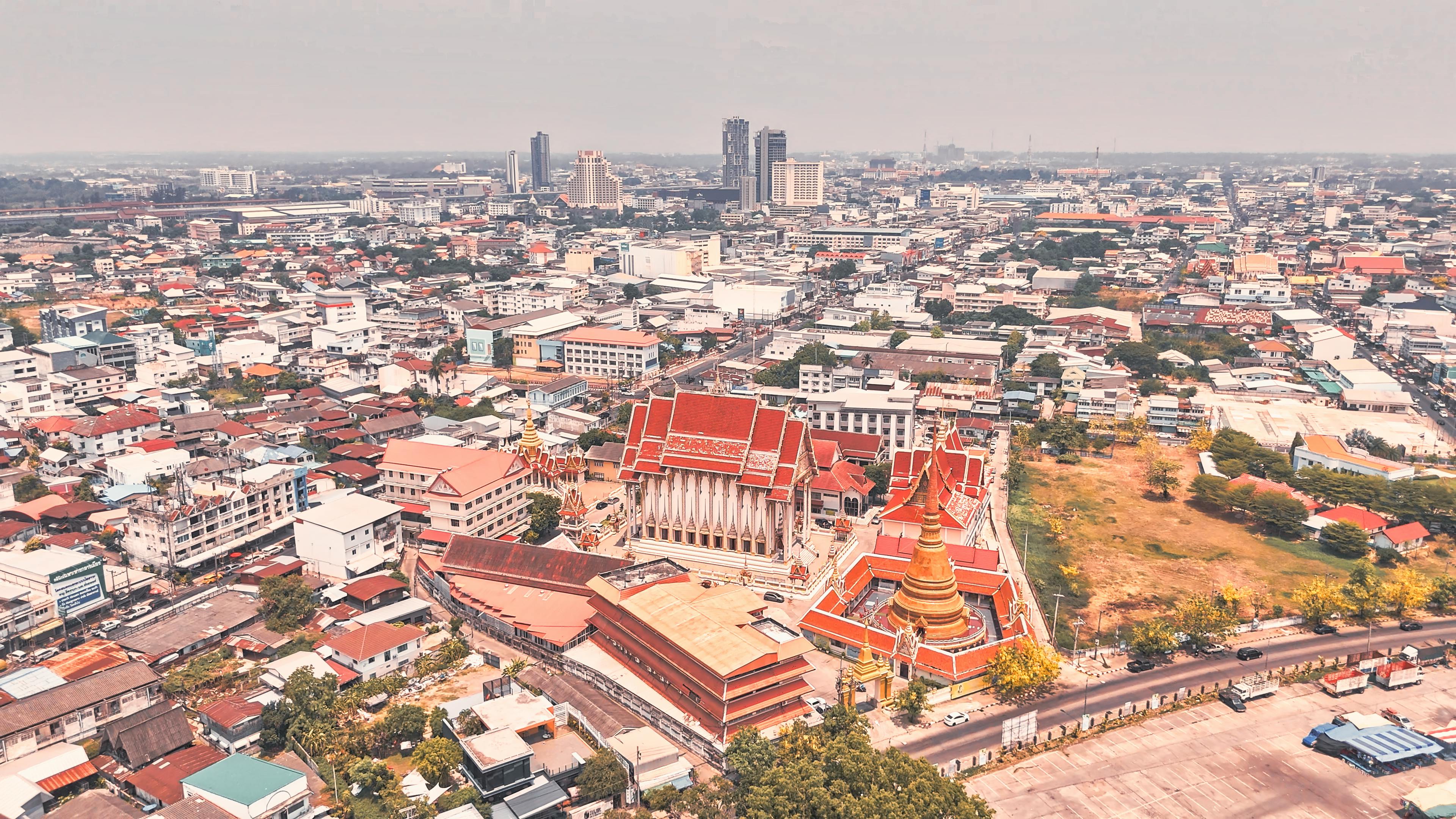
Photo by LayG Traveller on Pexels
Common Thai ATM operator fee
Choose local currency, not AUD
For international readers
First Australian account
Contents
Quick Answer
The biggest Thailand-specific mistake is assuming your card choice can eliminate every cash cost. It cannot. Foreign-card withdrawals at Thai bank ATMs commonly come with a local operator fee, usually around 220 THB, and that is separate from whatever your card provider charges. The real win is using a card that does not add extra markup on top of that local fee.
Thailand is still more cash-heavy than Japan or South Korea, so ATM behaviour matters more here than it does in more card-first destinations. For a broader Australia-wide comparison, the site’s main best travel debit card for Australians guide is the wider starting point.
Comparison Table
This table is intentionally practical. I care less about marketing copy and more about what happens when you land in Bangkok, hit an ATM, and start paying for food, ferries, and guesthouses.
Why Wise Still Wins for Most Thailand Trips
Wise remains the best all-round recommendation because it is transparent. You can see the conversion cost before you commit, hold Thai baht directly, and manage limits and card controls properly in the app. For a Thailand trip where cash withdrawals, card payments, and side trips to nearby countries are all on the table, that flexibility matters.
Australian Wise cardholders can withdraw up to A$400 per account per month without a Wise withdrawal fee. Wise charges 2.69% on the amount above A$400; separate ATM-operator fees can apply. Budget for charges above the allowance if you expect to use cash often in Thailand. Wise card fees.
If your Thailand trip is part of a wider Asia run, Wise becomes even more compelling. You can use the same setup for Thailand, then keep rolling into Bali, Vietnam, or Japan without changing your money stack. If that is your style of trip, also see the site’s country-specific guides for Bali / Indonesia, Vietnam, and Japan.
Up Bank: account comparison
Up is an AUD account for eligible Australian customers. It converts overseas card spending using Mastercard’s rate rather than holding a baht balance. Existing customers can compare its limits and fees with the Ubank and Wise setup recommended here.
The downside is control. You cannot preload baht when the rate looks attractive, and you are always at the mercy of the live Mastercard rate at the moment you tap or withdraw. That is not a disaster, but it is less flexible than Wise if you are the sort of traveller who plans ahead or moves across multiple countries in one trip.
Where YouTrip Fits
YouTrip is the strongest prepaid contender in this comparison. YouTrip Australia’s support docs currently describe overseas transaction fees as free and overseas ATM withdrawals as free up to AUD 1,500 per calendar month, with a 2% fee after that. That is materially more generous than the kind of limited free ATM allowance Wise offers on Australian cards.
For Thailand specifically, that matters because cash is still a real part of the travel pattern. If you know you will be pulling baht regularly for street food, local transport, market shopping, and small guesthouses, YouTrip can look better on paper than Wise.
Thailand ATM Tips That Matter More Than Tiny FX Differences
1. Always decline conversion
If the ATM offers to charge you in AUD, say no. Choose Thai baht and let your own card handle the conversion. That avoids dynamic currency conversion, which is usually where the ugliest exchange-rate markup shows up.
2. Withdraw fewer, larger amounts
If the machine is showing a local operator fee, paying it once on a bigger withdrawal is better than paying it three times on smaller ones. Exact withdrawal limits vary by ATM and provider, so do not assume the same limit everywhere. What matters is the logic: reduce the number of charged withdrawals where it is sensible and safe to do so.
3. Use branch ATMs when you can
Machines attached to actual bank branches are usually the lower-stress option. If a card gets retained or a machine misbehaves, you have a much better chance of sorting it out during branch hours than you do with a random standalone ATM outside a convenience store.
4. Know your card limits before you fly
Wise lets you manage limits in the app, and other providers have their own caps and controls. A lot of Thailand ATM problems are not fraud or outages. They are just people discovering their own card settings were too restrictive after they land.
5. Carry a second card and a small cash buffer
The best ATM tip is redundancy. One primary card, one backup card from a different provider, and a modest stash of emergency cash is a much better system than obsessing over a tenth of a percent in FX spread.
Cash vs Card in Thailand
Thailand is easier with cards than it used to be, but it is still not a card-only destination for most backpackers. In Bangkok malls, chain cafés, 7-Elevens, nicer restaurants, and Grab, card acceptance is usually fine. On islands, in night markets, for street food, in budget guesthouses, and with a lot of local transport, cash still shows up constantly.
That is why this post focuses more on ATM behaviour than a Europe-style tap-everywhere setup. If you are building the rest of your Thailand trip at the same time, pair this with the site’s guides on the best eSIM for Thailand and how to get around Thailand. Those two pages solve the other bits of friction that tend to sit right next to travel money.
Thailand is one of those places where your “good travel card” matters most when it quietly stays out of the way. The moment you start fighting bad conversion screens, missing backup cards, and cash-only situations, the trip gets annoying fast.
Ubank: our first Australian account for Thailand
Ubank’s Spend account and Visa debit card let an Australian traveller keep home banking and travel spending together. Ubank charges no international card-payment fee or overseas ATM-withdrawal fee. Visa converts a foreign-currency transaction into AUD; an ATM owner can still add its own charge.
That makes it useful for a trip involving both merchant payments and cash withdrawals. It does not mean every transaction is free or that every ATM will accept your card. Review the machine’s fee screen, withdraw within your account limits and keep a second card separate.
Where Wise adds value
Ubank is an AUD account, so it does not replace a multi-currency wallet or an international-transfer service. Compare Wise when you want to hold a currency, send money abroad or receive supported overseas payments. Its Australian physical card costs A$10; ATM withdrawals are free from Wise up to A$400 per month, then 2.69% on the amount above that allowance. Conversion fees and ATM-owner charges are separate.
Up account comparison
Up is an Australian AUD account with budgeting tools and Mastercard spending. The comparison below explains its features for existing customers; our travel recommendation is Ubank for eligible Australians and Wise for international readers where available.
Ubank Spend account · Ubank fees and limits · Wise Australian card pricing
My Recommended Setup for Thailand
Main card: Ubank for eligible Australians
Use Ubank for Australian everyday banking and overseas card spending. For international readers, Wise is our recommendation where available; its conversion and withdrawal fees depend on your location.
Backup card: a separate provider
Store a physical backup separately, check its actual card network, and carry baht for cash-only purchases.
Cash plan: enough baht for a couple of days
Do not try to run Thailand with zero cash. Keep enough for food, a transfer, a guesthouse payment, and the usual small interruptions where card acceptance disappears.
Optional third tool: YouTrip
Worth considering if you know you will be very cash heavy and you do not mind the prepaid-wallet trade-off.
Related Thailand Planning Links
If this page is helping you build a Thailand planning cluster rather than solve one card question in isolation, these are the next pages I would open:
- Best eSIM for Thailand
- How to get around Thailand
- How to get from Bangkok to Koh Tao
- How to get from Bangkok to Koh Samui
- How to get from Bangkok to Chiang Mai
Frequently Asked Questions
What is the best travel card for Thailand for Australians in 2026?
Ubank is our first Australian account option for Thailand and overseas card spending. It charges no Ubank international card-payment or overseas ATM-withdrawal fee; local ATM charges and daily account limits still apply. Add Wise when you need international transfers, currency balances or a separate backup card.
How much do Thai ATMs charge foreign cards?
The common number travellers see is around 220 THB per withdrawal, but the exact local operator fee can vary by ATM. The machine should show the fee before you confirm.
Should I choose THB or AUD at a Thai ATM?
Choose THB and decline conversion. Letting the ATM convert into AUD usually means accepting a weaker rate through dynamic currency conversion.
Is Up Bank good for Thailand?
Up can be used for card spending and cash withdrawals in Thailand, subject to Mastercard acceptance and account limits. Up does not charge its own international transaction or ATM-withdrawal fee, but machine operators can. It remains a secondary Australian option here; Ubank is our starting point and Wise complements international money needs.
Is Wise still worth using if it has ATM limits?
Yes, because the bigger value in Wise is not just ATM access. It is the transparency, the ability to hold baht, and the fact that the same setup still works well when your Thailand trip spills into other countries.
Can I do Thailand mostly by card?
You can do a decent chunk of Thailand by card in cities and tourist centres, but most travellers still need cash regularly. Street food, markets, local transport, and many smaller operators still lean heavily cash.
Thailand money setup
For the broader card stack behind this guide, compare MoneyHackHQ’s best travel cards for Australians.
Related guide: Up Bank Review