
Travel money
Best Overseas Travel Debit Card for Australians 2026: Ubank, Wise, Revolut and Up
Up Bank vs Ubank vs Wise vs Revolut vs YouTrip: the real fees, current limits, and the two-card setup that keeps overseas spending cheap.
Updated 8 October 2026 · fee and offer dates are stated beside each provider
The 30-second answer
- Best Australian travel account (Visa): Ubank has no international card fee, no overseas ATM fee from Ubank, and $250,000 FCS protection. Use code AFWLLL7 for a $30 bonus (offer closes 24 October 2026).
- Best for holding and receiving foreign currency: Wise holds 40+ currencies, uses the mid-market rate plus a quoted fee, and gives local bank details in 10+ countries.
- Best travel wallet with a large ATM allowance: YouTrip is a prepaid card that funds separately from your bank. Its A$1,500 monthly free ATM allowance is the largest on this list. Its cashback offer is listed in the YouTrip section below.
- Best app, tighter limits: Revolut has the most polished app here. Its free exchange and ATM allowances are the tightest, so check them against your trip.
- Our setup for most trips: Ubank as the main card, a backup from a separate network, and Wise if you need foreign currency balances. Account limits, conversion costs and ATM-owner fees still apply.
Overseas card fees are easy to miss. A 3% foreign transaction fee adds A$150 to every A$5,000 you spend abroad, before any cash withdrawal charges. Work out the total for your own spending before you open another account.
This guide compares Ubank, Up Bank, Wise, YouTrip and Revolut for Australian travellers. Choose the account that fits how you spend and withdraw cash, then keep a backup card stored separately from your main one.
Up Bank and Ubank are different banks.
Up uses Mastercard and operates under Bendigo and Adelaide Bank. Ubank uses Visa and operates under NAB. Eligible deposits at each bank share that bank’s $250,000 FCS limit with any other deposits you hold there. Ubank is our first pick for a travel account. Opening both is optional.
Complete comparison table
| Feature | Ubank | Up Bank | Wise | YouTrip | Revolut (Standard) |
|---|---|---|---|---|---|
| FX fee on card spending | 0% | 0% | From 0.33%, varies by currency | 0% | Variable rate; allowance and market-hours charges apply |
| Overseas ATM fee charged by the card | A$0 from Ubank; ATM-owner fees may apply | A$0 from Up; ATM-owner fees may apply | A$400/month free, then 2.69% | A$1,500/month free, then 2% | A$350 or five withdrawals per rolling month, whichever comes first |
| Charge after the free ATM limit | Not applicable | Not applicable | 2.69% on the excess | 2% | 2%, minimum A$1.50 |
| Weekend or out-of-hours FX markup | None | None | None; conversion fee still applies | None | 1% within allowance; 1.5% above it |
| Card fee | $0 | $0 | $10 for a physical card; digital card free | $0 | First physical card A$0; Standard delivery A$4.99 |
| Monthly fee | $0 | $0 | $0 | $0 | $0 (Standard) |
| Hold foreign currency | No (AUD only) | No (AUD only) | 40+ currencies | 10 currencies in-app | 30+ currencies |
| Receive foreign payments | No | No | Local bank details in 10+ countries | No | Limited |
| Deposit protection | FCS up to $250,000 (NAB) | FCS up to $250,000 (Bendigo and Adelaide Bank) | None; funds held in safeguarded accounts | None; funds held in trust | Eligible AUD deposits up to A$250,000; foreign currencies and investments excluded |
| Licence or status | NAB banking licence | Bendigo and Adelaide Bank licence | UK and Australian AFSL | Australian AFSL | Australian ADI licence |
| Card network | Visa | Mastercard | Visa | Mastercard | Mastercard |
| Sign-up offer | $30 with code AFWLLL7 (terms below) | Check the current invitation offer | None | 4% cashback on eligible non-AUD spending, capped at A$25/month for six months (terms below) | Varies |
Revolut Standard figures are from its Australian fee schedule. Savings rates and sign-up offers change often, so confirm them on each provider’s page before you apply. ATM-owner charges can apply with any card.
What it actually costs: a typical trip
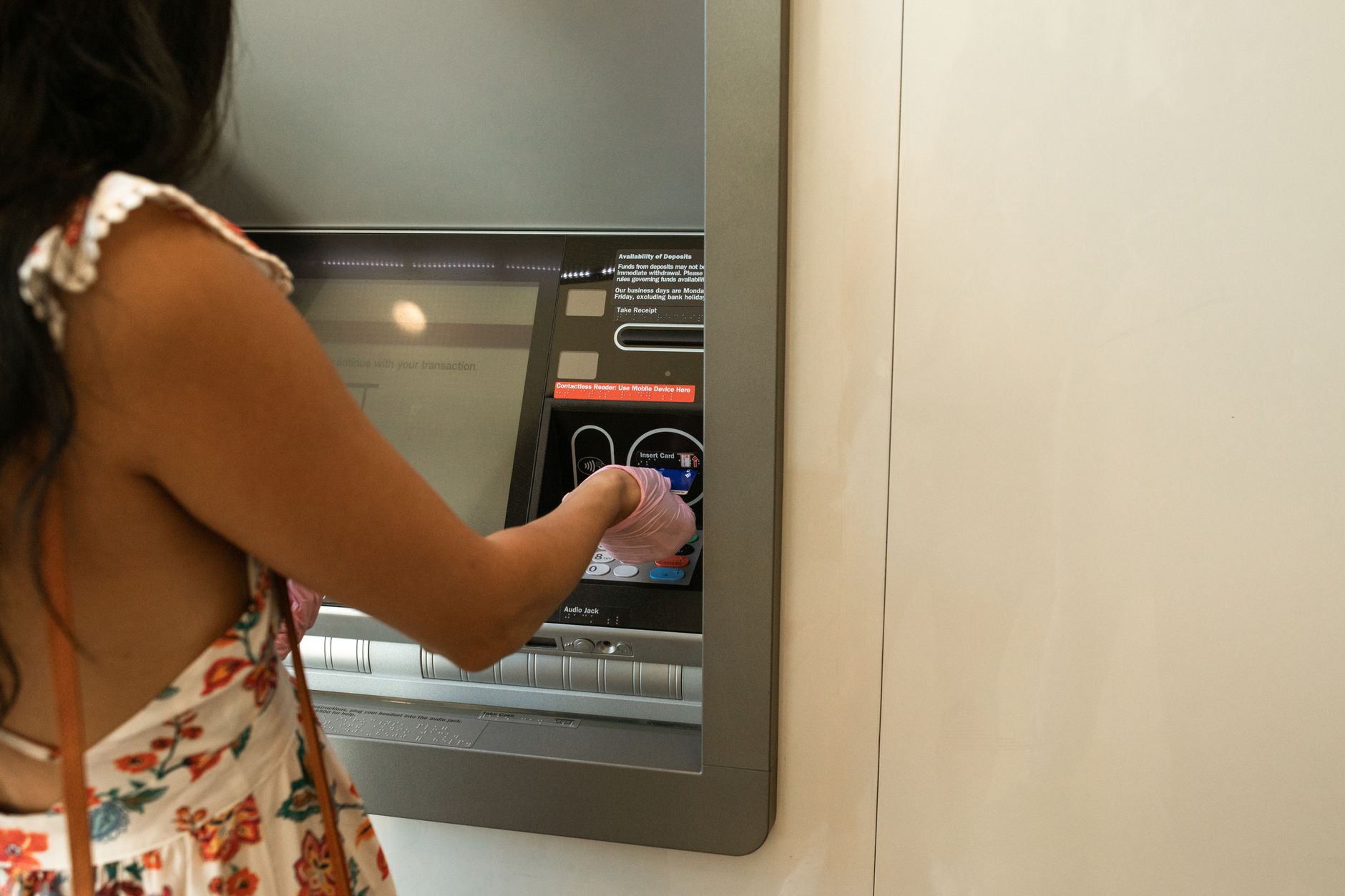
The example: A$5,000 of foreign-currency card spending, plus eight A$300-equivalent ATM withdrawals in one calendar month (A$2,400 in total), with no earlier use of any free allowance. ATM-owner charges are excluded. Your currency mix and exchange timing will change the conversion costs, so treat these as a guide.
| Scenario | Ubank | Up Bank | YouTrip | Wise | Revolut (Standard) | Big Four bank |
|---|---|---|---|---|---|---|
| A$5,000 of card spending | A$0 card FX fee | A$0 card FX fee | A$0 exchange fee; compare the quote | Conversion fee from 0.33%; varies by currency | Depends on exchange allowance and market hours | Depends on your bank and account |
| Eight A$300 ATM withdrawals in one month | A$0 from Ubank; account limits apply | A$0 from Up; daily limit applies | A$18 (A$900 above the A$1,500 free limit at 2%) | A$53.80 (A$2,000 above the A$400 free limit at 2.69%), plus conversion | 2% above the A$350 free limit, minimum A$1.50 | Check your bank’s fee schedule |
| Exchange outside market hours | No separate weekend fee | No separate weekend fee | Compare the exchange quote | No weekend surcharge; conversion fee still applies | 1% within allowance; 1.5% above | Check your bank’s fee schedule |
Revolut Standard has a rolling-month ATM allowance and an exchange allowance, and market-hours rules affect conversion charges. Check Revolut’s current Australian fees before you travel. Wise’s Australian ATM allowance is A$400 a month, then 2.69% on the excess.
What this means in practice: YouTrip’s A$1,500 allowance leaves A$900 of these withdrawals at 2%, which is A$18. Wise’s A$400 allowance leaves A$2,000 at 2.69%, which is A$53.80 before conversion. Revolut also caps the number of free withdrawals. Ubank and Up charge no fee of their own on overseas ATM withdrawals, but account limits and ATM-owner fees still apply.
Two more things to sort before you land
A no-fee card covers your money. Two other costs catch travellers out the moment they arrive: staying connected, and being covered if something goes wrong.
Data / eSIM: Skip roaming charges and airport SIM counters. Saily gives you a data plan that works as soon as you land. For country-specific picks, see our eSIM guides for Japan, Southeast Asia and Europe.
Travel insurance: A frozen card is an inconvenience. A hospital bill overseas is a serious problem. SafetyWing Nomad Insurance covers short trips and long-term travel on a flexible monthly plan. Read our full SafetyWing review first if you want the detail.
Up Bank: features and limitations

What’s great
- 0% international transaction fee, with no cap
- No Up fee on overseas ATM withdrawals; the ATM operator can still charge
- $250,000 FCS protection through Bendigo and Adelaide Bank’s licence
- Up to 5.60% Grow and 2.00% Flow savings rates (conditions below)
- Up to 50 Savers for budgeting, with custom names and emoji
- 2Up joint accounts, Apple Pay and Google Pay, and instant notifications
Trade-offs
- Converts to AUD at the point of purchase, so you cannot hold foreign currency or lock in a rate
- Uses Mastercard’s exchange rate, which can differ from the mid-market rate. Compare it for your currency and date.
- Ordinary Savers must make five qualifying debit-card purchases in the month to earn anything above 0.00%. Essentials has a purchase-requirement exemption until 28 February 2027.
- Australian residents only
- Digital-only, with no branches. Up does not refund foreign ATM operator fees.
Ordinary Up Savers should make five qualifying purchases first. After that, untouched Savers earn the Grow rate and accessed Savers earn the Flow rate for the whole month, within the published caps. Ubank’s introductory rate is higher but its ongoing rate is lower, and it requires monthly net savings growth.
Up rates and travel conditions
Savings: ordinary Savers earn 5.60% p.a. Grow when untouched, up to the combined $250,000 individual Grow cap, or 2.00% p.a. Flow when accessed. You must make five qualifying debit-card purchases in the calendar month, otherwise ordinary Savers earn 0.00%. The 2Up Grow cap is separate. Essentials earns 2.00% Flow without the purchase requirement until 28 February 2027. Up rates and conditions.
Travel: no Up international transaction fee or ATM withdrawal fee. ATM operators can charge separately. The card uses Mastercard’s exchange rate. The standard ATM cash-out limit is $1,000, subject to approved variations. Allow 15–20 business days for a physical card. Up travel information.
Ubank: Visa spending from AUD, with Australian deposit protection
Ubank is a division of NAB and uses Visa. It charges no fee of its own for international card purchases or overseas ATM withdrawals. ATM operators can still charge separately. Eligible deposits share NAB’s $250,000-per-person FCS limit. Compare current savings rates and conditions separately from travel-card fees.
What’s great
- 0% international transaction fee, with no monthly cap
- No Ubank fee on overseas ATM withdrawals; operator fees may still apply
- $250,000 FCS protection through NAB’s banking licence
- Variable savings interest with eligibility and monthly conditions. Check the current rate before you move savings.
- Simple bonus condition: hold a Spend account and grow your combined Save balance by at least $1 each month. Withdrawals are fine as long as you finish the month $1 higher.
- Visa network, a useful backup where Mastercard is not accepted
- $30 sign-up bonus with code AFWLLL7 after five eligible settled card purchases in your first 30 days
Trade-offs
- Uses Visa’s exchange rate, which can differ from the mid-market rate. Compare it for your currency and date.
- Cannot hold foreign currency. It converts from AUD at the point of purchase.
- The app has fewer features than Up or Revolut.
- $2,000 daily ATM withdrawal limit
- The welcome rate is for new customers only, with no Ubank product held in the last 24 months. Australian residents only.
$30 Ubank sign-up offer: join by 24 October 2026 (inclusive), enter AFWLLL7 in the “About you” step, and make five eligible card purchases that settle within your first 30 days. Both participants must be 18 or over. Returning-customer restrictions apply, including a 12-month exclusion. Payment can take up to 45 days after qualification. We may receive a referral reward. Full Ubank offer terms.
Ubank savings conditions
Ubank Save: 5.35% p.a. ongoing bonus interest. Eligible new customers joining from 9 October 2026 can earn 6.25% p.a. on individual Save accounts for up to four months. Earlier joiners and Shared accounts can have different welcome terms. Hold a Spend account and grow your combined eligible Save balances by $1 in the month, excluding interest, by 11:30pm Sydney time on the last day. Withdrawals can cause you to miss this test. Bonus interest is paid on up to $1 million per customer. Offset-linked balances are excluded. Ubank savings conditions.
Wise: for holding and receiving foreign currency
Wise is a global money platform, not an Australian bank. Its card converts at the mid-market rate and adds a transparent conversion fee that starts from about 0.33% and varies by currency pair. Check the quote for your currency before you pay.
What’s great
- Mid-market exchange rate with a transparent conversion fee from about 0.33%
- Hold 40+ currencies and convert when the rate suits you
- Local bank details in 10+ countries for receiving foreign payments
- Usually cheaper than bank wires for international transfers
- Wise Interest and Assets can earn a variable return on AUD and USD balances. Capital is at risk and growth is not guaranteed.
- Visa network, a good complement to Up’s Mastercard
- Business accounts available
Trade-offs
- Conversion fee on each transaction unless you convert in advance. It starts at about 0.33%, but some currencies such as the Thai baht and Indonesian rupiah can cost 1–2%, which matters across Southeast Asia.
- $10 for a physical card, one-off. Digital cards are free.
- Free ATM withdrawals up to A$400 a month, with no limit on the number of withdrawals, then 2.69% on amounts above the allowance
- Not a bank, so no FCS protection. Funds are held in safeguarded accounts at major institutions.
- Customer support is chat-only and can be slow at busy times
- A physical card takes 1–2 weeks to arrive
YouTrip: a prepaid travel card with a large ATM allowance
YouTrip launched in Australia in December 2025 after growing in Singapore and Thailand. It is a prepaid multi-currency Mastercard, not a bank account. You top it up, then spend from it. It has no international transaction fee, uses a wholesale rate for conversions, and gives you A$1,500 a month of free overseas ATM withdrawals.
YouTrip cashback (for new Australian accounts): 4% cashback on eligible non-AUD purchases for the first six months, capped at A$25 per calendar month. Sign-up and account approval must fall between 23 September and 31 December 2026 (AEST). Eligible purchases must be at least A$1. AUD payments, ATM withdrawals and refunded transactions do not qualify. Cashback is credited within 30 days after each month ends. Official offer terms.
What’s great
- 0% international transaction fee, with no cap
- A$1,500 a month of free overseas ATM withdrawals, then 2%
- A$400 a month of free domestic ATM withdrawals, then 2%
- 4% cashback on eligible non-AUD purchases for six months, capped at A$25 a month, for eligible new Australian accounts
- Hold 10 currencies in-app (AUD, USD, EUR, GBP, SGD, HKD, JPY, CHF, CAD, NZD) and spend in 150+
- No monthly fee and no card fee
Trade-offs
- Prepaid, not a bank account. You must top up before you spend.
- No FCS protection. It operates under an ASIC AFSL and holds funds in trust.
- Cannot receive international payments, unlike Wise
- In-app exchange covers 10 currencies, compared with Wise’s 40+
- Cannot be used for gambling, money transfers or securities trading
- 2% ATM fee above the monthly free limit, and a $5 card replacement fee
- Newer to Australia, so the local user base is smaller. The cashback offer ends on 31 December 2026 for sign-ups, so check the current terms before you apply.
Revolut: the best app, with tighter limits
Revolut gives you currency balances, exchange tools and clear app controls. On the Australian Standard plan, overseas ATM withdrawals are free up to A$350 or five withdrawals per rolling month, whichever comes first. After that the fee is 2%, with a minimum of A$1.50. The A$2,000 rolling-month exchange allowance carries a 0% fee during market hours and 1% outside them. Above the allowance, the fees are 0.5% and 1.5%. Check the official Standard fees.
If you spend heavily, compare a paid plan’s price and allowances with your current cards. A paid plan only saves money if its benefits outweigh its monthly cost.
What’s great
- Hold 30+ currencies in one account, with in-app conversion
- The rate is shown in the app before you exchange
- The best app on this list: budgeting, spending analytics, split bills and virtual disposable cards
- Crypto trading built in
- Paid tiers with higher limits, no weekend markup and travel insurance
Trade-offs
- A$2,000 rolling-month exchange allowance. Above it, fees are 0.5% in market hours or 1.5% outside them.
- A$350 or five free ATM withdrawals per rolling month, whichever comes first. Then 2%, minimum A$1.50.
- Exchange outside market hours: 1% within the Standard allowance, 1.5% above it
- Some users report account freezes, so keep a backup card for emergencies
- Customer support is chat-only and can be slow
- Removing weekend fees and raising limits requires a paid plan
Which setup suits your trip
Short holiday (1–3 weeks)
One card is usually enough if you keep a backup in your accommodation safe, such as a spare card or some cash. Choose the card with the best current sign-up offer that you qualify for.
Backpacking or extended travel (1–6 months)
Carry two cards on different networks and store them separately. ATM limits matter more on a long trip. Revolut’s free allowance of A$350 or five withdrawals can run out in the first week of cash-heavy travel.
Remote work or receiving foreign currency
If you need to receive USD, EUR or GBP into local accounts, Wise is the specialist here. Pair it with an Australian bank account for everyday spending, so your Wise balance stays available for transfers and conversions.
Higher balances ($250,000+)
Deposit protection: eligible Up deposits share Bendigo and Adelaide Bank’s $250,000-per-person limit, and eligible Ubank deposits share NAB’s limit. Add up any other deposits you hold at the same institution before you assume you are fully covered.
Frequently asked questions
Are Up Bank and Ubank the same bank?
No. They are separate banks. Up Bank operates under Bendigo and Adelaide Bank’s licence and uses Mastercard. Ubank is a division of NAB and uses Visa. Both are Australian banks with deposits eligible for the $250,000 FCS limit, and both charge no international card fee. You can hold accounts with both.
Which debit card has the lowest fees for overseas travel?
It depends on how you spend. Up and Ubank charge no international card-payment fee. Wise charges a conversion fee on each transaction. Revolut Standard in Australia gives you a A$2,000 rolling-month exchange allowance, with fees of 0% during market hours and 1% outside them, and 0.5% or 1.5% above the allowance.
Should I tell my bank before I travel?
Check each provider’s current travel guidance and keep access to your registered phone or authentication method. Any provider can decline or block a transaction it considers suspicious, so carry a backup card from a separate provider and save its support number.
What is Dynamic Currency Conversion, and why avoid it?
Dynamic Currency Conversion (DCC) is when an overseas merchant or ATM offers to charge you in AUD instead of the local currency. Choose the local currency. Your card provider then converts the payment with its own exchange rate, which is usually the better deal.
Can I use more than one card?
Yes. A backup card from a separate provider helps if one card is lost, blocked or declined. Store the two separately and check each provider’s fees and cash limits. Start with Ubank for everyday Australian banking, and add Wise if you send or receive money in foreign currencies.
Which has the best exchange rate?
Compare the amount you would actually receive for the same currency at the same time. Wise uses the mid-market rate plus a quoted conversion fee. Up and Ubank use card-network rates. Revolut shows a variable rate in the app, and its charges depend on your plan, allowance and market hours.
Are these cards safe to hold money on?
Check deposit protection as well as app security. Eligible Up deposits are covered under Bendigo and Adelaide Bank’s FCS limit, and eligible Ubank deposits under NAB’s. Eligible Revolut AUD bank deposits are covered up to A$250,000 per account holder. Foreign-currency balances and investments are excluded. Wise and YouTrip do not offer equivalent Australian FCS deposit cover.
What if my card is lost or stolen overseas?
Freeze the card in the provider’s app and report any unauthorised transaction straight away. Replacement options, delivery times and fees vary by provider and country. Keep your backup card separate, and do not rely on a replacement arriving during a short trip.
Do I also need a credit card?
A credit card helps with hotel and car-rental deposits, but acceptance depends on the merchant and your account. Before you book, check the card type required, the deposit amount and whose name the card must be in. Compare fees, repayments and eligibility before applying for credit.
Final verdict
Our first pick for Australians is Ubank, with Wise for anyone who needs to hold or receive foreign currency.
Up and Ubank use different card networks and banking licences. Neither charges a bank-side international card or ATM fee, but ATM-owner charges and daily limits still apply. Ubank’s 6.25% welcome rate is temporary and conditional. Up’s 5.60% Grow rate is ongoing but also conditional. Sign-up rewards depend on each provider’s separate offer terms.
YouTrip is worth considering as a separately funded travel wallet, especially for its A$1,500 free ATM allowance. Check its current exchange quote and cashback terms before you sign up.
Compare any bank or credit card you already have against these options before you open another account. A card with an annual fee can still be worth it if you use its benefits and understand the total cost.
Related Backpacking Is Life guides
Helpful next reads for planning the same trip, money setup, or travel tech.
Savings rates and promotional offers change often. Confirm the current figure on each provider’s page before you rely on it. Compliance: Up Bank is a trading name of Bendigo and Adelaide Bank Limited ABN 11 068 049 178 AFSL 237879. Deposits are FCS-protected up to $250k. Ubank is a division of National Australia Bank Limited ABN 12 004 044 937 AFSL 230686. Deposits are FCS-protected up to $250k, shared with NAB under the one licence. Wise Australia Pty Ltd ABN 87 626 065 796 AFSL 504808. YouTrip is operated by You Technologies Group (Australia) Pty Ltd ABN 20 676 703 496 AFSL 558059. Revolut’s Australian bank reports ADI status and FCS protection for eligible AUD deposits. Use its current legal terms for the applicable entity and product. Disclosure: Some links are affiliate or referral links. If you sign up through them, we may earn a commission or referral bonus at no extra cost to you. We hold personal accounts at each of the five providers reviewed. This is general information, not financial advice. Check current terms with each provider before you sign up.